UK residents made 94.6 million visits abroad in 2024, spending a staggering £78.6 billion in the process. Yet for most travellers, the exchange rate is an afterthought, something glanced at in the airport and quickly forgotten. That’s a costly mistake. The rate you get when converting your pounds into euros, dollars, or yen can quietly add or subtract hundreds from your holiday budget before you’ve even boarded the plane. This guide breaks down exactly how exchange rates work, why they fluctuate, and what you can do to make sure you’re getting genuine value every time you travel.
Table of Contents
- Why exchange rates matter for UK travellers
- How exchange rate fluctuations can alter your travel plans
- Expert strategies to protect your travel budget
- Comparing currency providers: finding the best rates
- What most guides miss about exchange rates and travel
- Find the best travel money rates before your next trip
- Frequently asked questions
Key Takeaways
| Point | Details |
|---|---|
| Exchange rates drive real costs | Every shift in currency value changes what your pounds can buy abroad. |
| Plan ahead for smart savings | Buying currency in advance and checking rates protects your travel funds. |
| Provider choice shapes outcomes | Comparing rates from various providers ensures you avoid unnecessary fees. |
| Consistency beats chasing perfection | Regularly comparing rates and acting promptly yields better results than waiting for ideal conditions. |
Why exchange rates matter for UK travellers
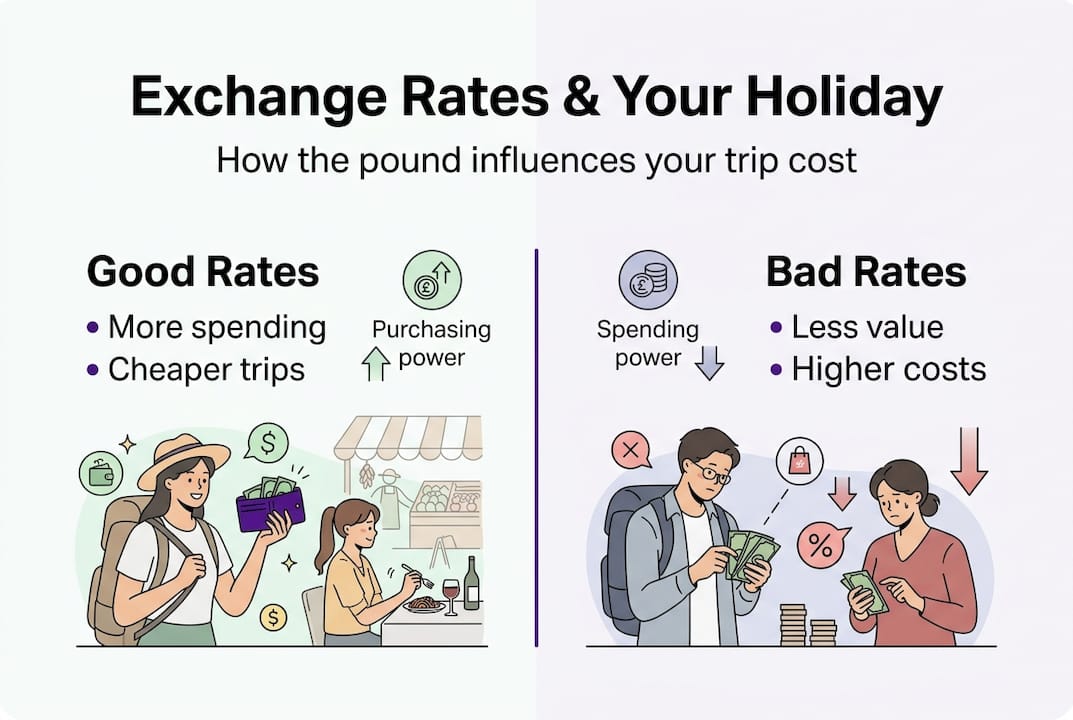
An exchange rate is simply the price of one currency in terms of another. When you convert pounds sterling into euros, the rate tells you how many euros you receive per pound. Sounds straightforward. But in practice, the rate you’re offered by a bank, bureau de change, or travel money provider is rarely the true mid-market rate (the actual rate banks use between themselves). There’s always a markup, and that markup is where your money quietly disappears.
Consider a practical comparison. If the mid-market rate for GBP to EUR is 1.18 but your provider offers 1.12, you’re losing roughly 5% before you’ve spent a single euro. On a £2,000 currency purchase, that’s £100 gone. Multiply that across millions of travellers and you begin to understand why UK travel statistics show spending remaining resilient even as the pound has faced pressure.
Here’s a snapshot of how GBP performs against three popular holiday currencies:
| Destination | Currency | Approx. GBP rate (mid-market) | Impact of 5% markup |
|---|---|---|---|
| Spain | EUR | 1.18 | Lose ~£95 per £2,000 |
| United States | USD | 1.27 | Lose ~£100 per £2,000 |
| Japan | JPY | 192 | Lose ~£100 per £2,000 |
Rates shift constantly, driven by inflation data, interest rate decisions, political events, and global sentiment. A weaker pound means your euros or dollars cost more in real terms. That directly reduces your purchasing power abroad, meaning fewer meals out, tighter accommodation budgets, and less flexibility for activities.
Key reasons exchange rates affect UK travellers so significantly:
- GBP volatility means the rate you see today may not be available tomorrow
- Provider markups add a silent cost on top of the underlying market rate
- Timing of your purchase can result in noticeably different amounts of foreign currency
- Fees and commissions vary enormously between providers
The good news is that buying currency online rather than on the high street typically yields better rates, simply because online providers carry lower overheads. Understanding your options is the first step, and a solid currency exchange options guide can help you map out the landscape before committing to any provider.
How exchange rate fluctuations can alter your travel plans
Understanding the basics is one thing, but how does this translate to the reality of your travel spending? The answer is: more than most people realise.
Imagine you’ve budgeted £3,000 for a two-week holiday to Spain. At a rate of 1.18 EUR per GBP, that converts to roughly €3,540. Now imagine the pound weakens to 1.10 before you exchange. Suddenly you’re getting €3,300, a difference of €240. That’s a full day’s activities, several restaurant meals, or a night’s accommodation simply evaporated due to a rate shift.
Spain attracts 17.8 million UK visits annually, making it the top destination for British holidaymakers. Even a modest rate movement of 3 to 5% can meaningfully alter what those millions of travellers actually experience on the ground.
Here’s how rate changes play out across three popular destinations:
| Destination | Budget (GBP) | Rate scenario | Foreign currency received |
|---|---|---|---|
| Spain (EUR) | £2,500 | 1.18 vs 1.10 | €2,950 vs €2,750 |
| USA (USD) | £2,500 | 1.27 vs 1.18 | $3,175 vs $2,950 |
| Japan (JPY) | £2,500 | 192 vs 178 | ¥480,000 vs ¥445,000 |
The categories where travellers feel rate movements most acutely are:
- Accommodation booked locally or paid on arrival in foreign currency
- Dining and entertainment, where daily costs compound over a fortnight
- Activities and excursions priced in local currency
- Cash withdrawals abroad, which carry both rate and fee risks
Research into currency appreciation effects suggests that when the pound weakens, the impact on outbound tourism demand is measurable and real. Travellers either reduce their spending, shorten their trips, or switch destinations entirely.
“A 5% shift in the GBP/EUR rate on a £3,000 holiday budget can mean losing the equivalent of two or three nights’ accommodation.”
Understanding best rates and avoiding fees is therefore not a luxury skill. It’s essential budgeting. And avoiding the airport exchange pitfalls is one of the simplest ways to protect yourself. The pound and inflation connection also plays a role, as domestic price pressures can influence the pound’s relative strength over time.
Expert strategies to protect your travel budget
With a grasp of the risks, let’s shift gears to proactive ways you can take control and save more.
The single most impactful thing you can do is plan ahead. Research shows that currency appreciation and depreciation affect UK outbound travellers asymmetrically, meaning rate rises hurt more than equivalent falls help. That makes proactive management essential rather than optional.
Here are the core strategies worth building into your travel planning:
- Buy early, not at the airport. Airport bureaux de change typically offer the worst rates available, often 10 to 15% below the mid-market rate. Buying online two to four weeks before travel almost always delivers better value.
- Set a rate alert. Most comparison platforms allow you to track a target rate and receive a notification when it’s reached. This removes the guesswork from timing.
- Split your currency. Carry some cash for markets, taxis, and smaller vendors, but use a multi-currency card for larger purchases where rates and fees are more competitive.
- Avoid dynamic currency conversion. When paying by card abroad, always choose to pay in the local currency, not pounds. The merchant’s conversion rate is almost always unfavourable.
Pro Tip: Before any trip, check the buyback rate offered by your provider alongside the buying rate. A provider with a strong buying rate but a poor buyback rate can cost you twice: once when you buy and again when you return unused currency.
When it comes to the cash vs currency card debate, there’s no universal winner. It depends on your destination, your spending habits, and the specific products available. For US trips, a dedicated guide to getting the best US dollar rates can highlight which providers are consistently competitive. For broader planning, the travel tips archive covers destination-specific advice that goes beyond currency alone.
To manage forex risk effectively, treat your currency purchase the same way you’d treat any significant financial decision: compare, research, and don’t rush.
Comparing currency providers: finding the best rates
Even the best strategy can’t succeed without the right provider. Here’s how to compare and choose wisely.
The UK travel money market includes a wide range of providers, each with different pricing structures, fee models, and rate transparency. Understanding the differences helps you avoid overpaying.
| Provider type | Typical rate quality | Fees | Convenience |
|---|---|---|---|
| High street bank | Below average | Often high | Very convenient |
| High street bureau | Average | Variable | Convenient |
| Online specialist | Above average | Usually low | Requires planning |
| Airport bureau | Poor | High | Very convenient |
| Prepaid currency card | Good to excellent | Low to none | Flexible |
Despite weak GBP conditions, UK travel demand has remained strong, which means providers know travellers will exchange currency regardless of conditions. That’s why transparency and comparison matter so much.
Key things to look for when assessing any provider:
- The exchange rate offered versus the current mid-market rate (the gap is the markup)
- Any fixed fees or commissions charged per transaction
- Minimum and maximum order amounts, which can affect the rate you receive
- Delivery options and lead times for online orders
- Buyback rates for returning unused currency after your trip
Pro Tip: A provider offering a slightly lower buying rate but a strong buyback rate can represent better overall value if you’re likely to return with leftover cash. Always calculate the round-trip cost, not just the buying rate.
Using a dedicated currency exchange guide helps you understand what each provider type offers before you commit. And running a quick check through travel money comparisons takes minutes but can save you a meaningful amount on every trip.
What most guides miss about exchange rates and travel
Now, let’s step back for a broader view. Most travel money guides focus on the obvious: don’t use the airport, compare online, avoid dynamic currency conversion. All solid advice. But there’s a subtler truth that rarely gets discussed.
Even a 1% difference in your exchange rate, on a £3,000 holiday budget, equates to £30. That’s a decent meal, an activity, or a taxi to and from the airport. Across a family of four exchanging £10,000, it’s £100. These aren’t dramatic numbers in isolation, but they accumulate across every trip you take.
Research confirms an asymmetric impact in currency movements: appreciation of the foreign currency hurts tourism demand more than equivalent depreciation helps it. In plain terms, losing ground on the rate stings more than gaining the same amount feels good. That’s a compelling reason not to wait for the perfect rate.
The travellers who consistently get the best value aren’t those who time the market perfectly. They’re the ones who compare consistently, use reliable tools, and treat currency exchange as a planned step rather than a last-minute chore. Understanding the Brexit and pound impact on long-term GBP trends also helps set realistic expectations rather than hoping for a windfall rate.
Consistency beats cleverness every time.
Find the best travel money rates before your next trip
If you’re ready to apply these insights, here’s where to start finding the best deals for your next trip.
At CompareTravelCash.co.uk, you can compare live travel money rates from dozens of providers in seconds, covering all major currencies and a wide range of exchange amounts. Whether you’re planning a city break to New York or a fortnight in the Canaries, the comparison tools show you exactly who’s offering the best rate right now.
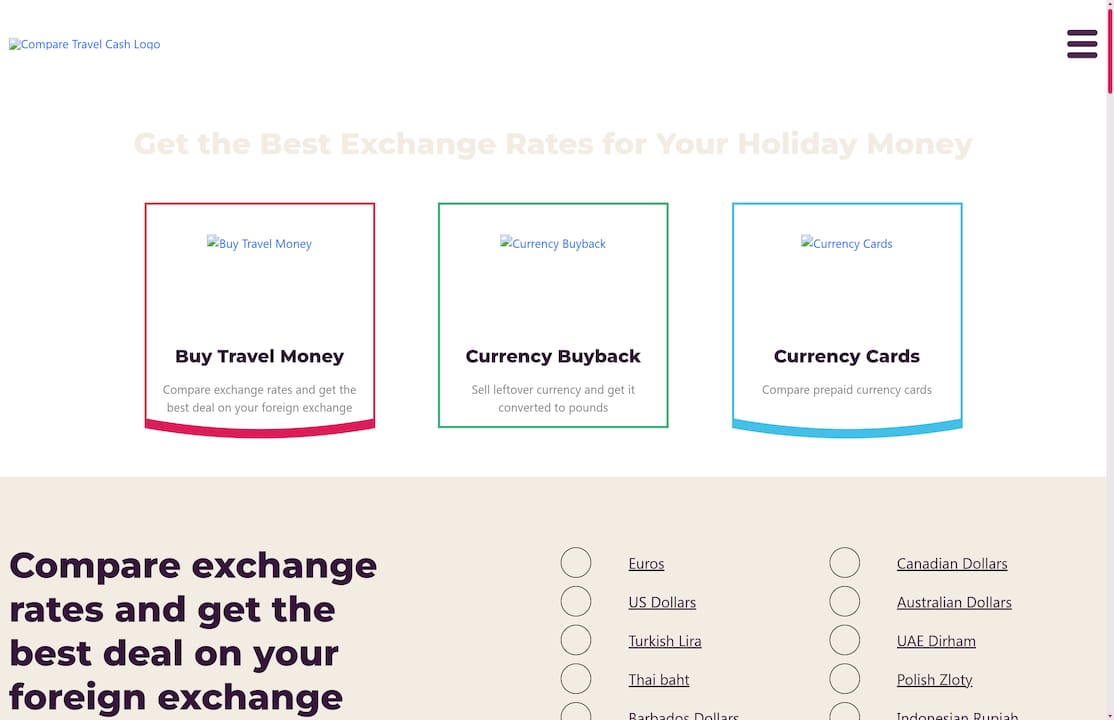
You can also compare providers such as Hays Travel money rates and Marks and Spencer exchange rates side by side, so you know you’re choosing the strongest deal available. And if you return with leftover currency, the buyback comparison tool helps you recoup as much as possible. Don’t leave money on the table before or after your trip.
Frequently asked questions
How do exchange rates directly affect what I spend on holiday?
The value of your pounds determines how much foreign currency you receive; a weaker GBP means your budget stretches less far abroad, as UK travel data consistently reflects.
Is it better to buy currency before or during travel?
Buying currency in advance, particularly online, almost always secures a better rate and helps you sidestep the costly fees found at airport bureaux de change.
What are the risks of sudden exchange rate swings?
Sharp currency movements can increase your real travel costs significantly; research shows currency appreciation hurts outbound tourism demand more than equivalent depreciation benefits it.
How can I ensure I get the best rate?
Use travel money comparison tools to check multiple providers at once, which surfaces the best available rate and makes hidden fees far easier to spot.
Does the choice between cash and currency cards make a difference?
Yes, significantly. As the cash vs currency card guide explains, currency cards often offer sharper rates and lower fees, though cash remains essential in many destinations.