The pound in your pocket is worth more US dollars right now than it has been in years. With GBP/USD sitting around 1.33 to 1.34 in April 2026, that means £100 buys you roughly $134 today compared to just $103 at the 2022 low. That is $31 more for the exact same outlay. Over a £1,000 holiday budget, that difference becomes $310. Yet many UK travellers still assume exchange rates are more or less the same wherever they go and whenever they buy. This article explains how US dollar exchange rates actually work, what drives them, and precisely how to make sure you are not leaving money on the table.
Table of Contents
- How does the US dollar exchange rate work?
- What influences the GBP to USD rate?
- How the current GBP/USD rate affects travellers
- Tips to get the best US dollar exchange rate in 2026
- The truth about getting ahead on US dollar exchange
- Compare and get the best US dollar exchange rates online
- Frequently asked questions
Key Takeaways
| Point | Details |
|---|---|
| GBP/USD rates always change | The pound to dollar rate fluctuates daily due to economic factors and market news. |
| Timing matters for exchanges | Even small shifts in exchange rates can mean more dollars for your holiday spend. |
| Compare rates for best value | Always compare providers and avoid airport exchanges to get the most dollars for your pounds. |
| Extra fees eat into your cash | Watch out for commissions and poor rates, which can reduce your spending money more than rate differences. |
How does the US dollar exchange rate work?
Now that we have seen the effect on your travel budget, let us break down what actually drives US dollar exchange rates.
An exchange rate is simply the price of one currency expressed in another. When you see GBP/USD quoted as 1.34, it means one British pound buys 1.34 US dollars. Flip it around and one US dollar costs roughly 75 pence. This figure is not set by any single bank or government. It is the product of a vast, continuously operating global market known as the foreign exchange market, or forex. As a UK traveller’s USD guide explains, understanding this basic mechanism helps you avoid being caught off guard by sudden rate changes before your trip.
The forex market operates 24 hours a day across financial centres in London, New York, Tokyo, and Sydney. Trillions of dollars are traded every single day. The GBP/USD rate you see quoted online reflects what traders, banks, corporations, and institutions are collectively willing to pay at that moment. It is a live, moving target. According to exchange rate fundamentals, rates are determined by supply and demand in the forex market, shaped by a range of economic forces.
The main factors influencing that supply and demand include:
- Interest rates: Higher UK interest rates tend to attract foreign investment into pound-denominated assets, increasing demand for sterling and pushing GBP/USD up.
- Economic growth (GDP): Strong UK GDP figures signal a healthy economy, which typically supports a stronger pound.
- Inflation: High inflation erodes purchasing power and often weakens a currency over time.
- Unemployment data: Low unemployment generally points to a robust economy and can lift the pound.
- Political stability: Uncertainty, such as during the Brexit negotiations, can cause sharp drops in GBP.
- Market sentiment: Sometimes traders simply react to news headlines, and that can move rates significantly within hours.
Because both the pound and the US dollar are free-floating currencies, neither government directly controls the rate. That means global events and rates are intertwined in ways that can shift your travel budget overnight.
Here is a snapshot of how GBP/USD has moved over the past five years:
| Year | Approximate GBP/USD rate | Context |
|---|---|---|
| 2021 | 1.37 to 1.42 | Post-Brexit optimism, economic recovery |
| 2022 | 1.03 (low) | UK mini-budget crisis, market panic |
| 2023 | 1.20 to 1.27 | Gradual recovery, inflation pressures |
| 2024 | 1.25 to 1.31 | Stabilisation, US rate expectations |
| 2026 | 1.33 to 1.34 | Pound at three-year high vs dollar |
This table makes one thing clear: the rate is never static, and the difference between a good year and a bad one is substantial. Understanding what the market exchange rate actually represents is the first step to spending your pounds wisely.
What influences the GBP to USD rate?
Understanding what sets the exchange rate leads us to what actually affects those rates from day to day or year to year.
The GBP/USD rate is particularly sensitive because both the UK and US economies are large, globally connected, and covered intensely by financial media. A single announcement from the Bank of England or the US Federal Reserve can shift the rate by half a percent within minutes. As exchange rate research confirms, interest rates and GDP are among the most powerful levers driving currency movements between free-floating pairs like USD/GBP.

Here is a comparison of the key factors and how they play out in practice:
| Factor | Effect on GBP/USD | Real-world example |
|---|---|---|
| Bank of England rate rise | Pound strengthens | GBP rose after BoE hiked rates in 2023 |
| US Federal Reserve rate rise | Pound weakens | USD surged when Fed raised rates aggressively in 2022 |
| Strong UK GDP data | Pound strengthens | Better-than-expected growth lifts sterling |
| Political uncertainty in UK | Pound weakens | September 2022 mini-budget caused GBP to plummet |
| Higher US inflation | Pound strengthens | Dollar softens as US purchasing power drops |
| Lower UK unemployment | Pound tends to rise | Labour market resilience supports sterling |
Political events deserve special mention. The 2022 mini-budget crisis is a perfect illustration. When the UK government announced unfunded tax cuts, the pound fell to its lowest level against the dollar in decades. Within weeks, the policy was reversed, and sterling recovered. That kind of volatility is not theoretical for travellers. It directly affects how many dollars you walk away with.
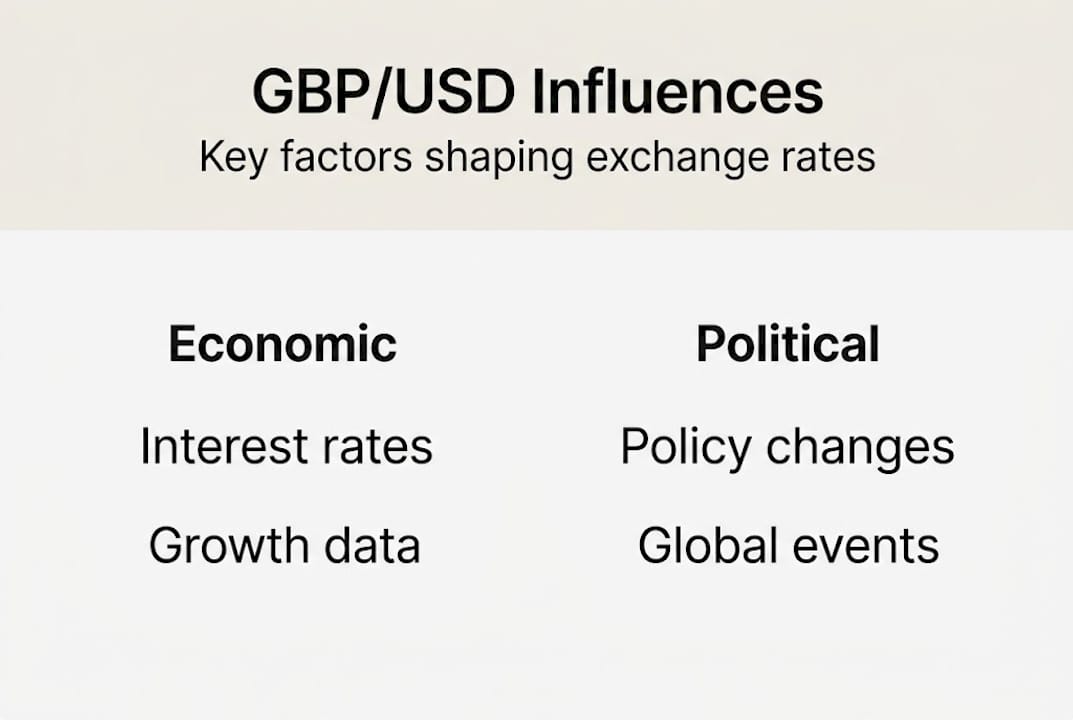
Looking at inflation and Brexit effects gives a sobering picture of just how much domestic policy can ripple through to your holiday spending. Similarly, watching how global economic events unfold gives you a much better sense of when the pound might rise or fall before you commit to buying dollars.
Key signals worth monitoring include:
- Bank of England Monetary Policy Committee (MPC) meeting dates: Rate decisions often cause immediate GBP movement.
- US Non-Farm Payrolls data: A strong US jobs report often strengthens the dollar.
- UK inflation (CPI) reports: High inflation can weaken the pound if markets expect rate cuts.
- US Presidential or political announcements: US policy shifts, particularly around trade, can affect USD strength.
Pro Tip: Set a Google alert for “Bank of England interest rate decision” and “US Federal Reserve rate.” These announcements frequently move GBP/USD by meaningful amounts, and knowing they are coming lets you time your purchase more intelligently. Understanding rates and your budget before you travel can genuinely save you money.
How the current GBP/USD rate affects travellers
Once you understand what moves the rate, it is easier to see why those changes matter to you in practical terms.
The current GBP/USD rate of approximately 1.33 to 1.34 is good news for UK travellers heading to the US in 2026. The pound has not been this strong against the dollar for three years. That matters enormously when you translate real holiday spending into numbers.
Consider these scenarios for a traveller exchanging £500:
- At 2022’s low (GBP/USD 1.03): £500 = $515
- At 2024’s midpoint (GBP/USD 1.28): £500 = $640
- At today’s rate (GBP/USD 1.34): £500 = $670
That is a difference of $155 between the worst recent rate and today’s rate on just £500. For a family converting £3,000 before a two-week US holiday, the same calculation produces a swing of over $900. That is a genuine difference in what you can afford to do, eat, and experience.
Here are practical scenarios where timing your exchange matters most:
- Booking a long-haul trip months in advance: If you spot a strong GBP/USD rate while planning, buying your dollars early locks in that advantage.
- Extended trips to the US: The longer you are away, the more currency you need, so even marginal rate improvements add up quickly.
- Travelling during periods of UK political instability: Elections, budget announcements, and referendums can cause short-term pound weakness. Buying before such events can protect your spending power.
- Large-budget trips: If you are spending £5,000 or more, a 2% rate difference means £100 lost or gained purely from where and when you exchange.
The effect on your travel budget is not always obvious until you sit down and do the sums. But once you do, the motivation to find best US dollar rates becomes very clear indeed.
Pro Tip: Before you exchange, look up the live mid-market rate on a source like Google Finance or XE.com. Then compare that to what your provider is offering. A difference of more than 2 to 3% is a sign you are paying a significant markup. A difference of less than 1% means you are getting a competitive deal.
Tips to get the best US dollar exchange rate in 2026
Now, with the impact clear, let us look at exactly how you can grab the best possible rates and avoid common traps.
Currency exchange fundamentals tell us that rates in the retail market are always worse than the mid-market rate, because providers add a margin to make their money. The question is not whether you pay a margin, it is how large that margin is and whether you can minimise it. The difference between providers can be surprisingly large. Here is how to approach it step by step:
-
Check the mid-market rate first. Look up GBP/USD on Google, XE.com, or a similar source. This is your benchmark. Any provider rate will be below this, but you want to be as close to it as possible.
-
Use an online comparison tool. Websites that compare US dollar rates aggregate offers from multiple UK providers so you can see at a glance who is offering the best deal today. Rates change daily, so check on the day you plan to buy.
-
Order online rather than in-store. Most currency providers offer better rates online than at their high-street counters. Many also offer free home delivery above a minimum order or free click-and-collect.
-
Avoid airport bureaux de change. Airport exchange counters are notorious for poor rates and high commissions. The convenience is real, but so is the cost. You could easily lose 5 to 8% compared to what an online provider offers.
-
Consider a prepaid currency card. These cards let you load dollars at a locked-in rate before you travel. Look at types of exchange rates to understand how prepaid card rates compare to cash rates.
-
Look into buyback guarantees. Some providers offer to buy back unspent dollars at the same rate you purchased. This removes the risk of being stuck with leftover currency at an unfavourable sell rate.
-
Watch for hidden fees. Commission-free advertising can be misleading if the exchange rate itself carries a steep markup. Always calculate the total dollars you receive per pound, not just the headline rate. Checking a reliable exchange explained for holidays guide can help you spot these traps.
Common pitfalls to avoid include:
- Exchanging at your hotel’s front desk, which typically offers among the worst rates available.
- Using a standard debit card abroad without checking foreign transaction fees, which can add 3% or more per purchase.
- Leaving currency exchange to the last minute and accepting whatever rate is available.
Pro Tip: Set up a rate alert through a currency comparison site or app. You specify a target rate, and you receive a notification when GBP/USD hits that level. This takes the guesswork out of timing and lets you act quickly without watching the market obsessively.
The truth about getting ahead on US dollar exchange
There is a temptation, once you understand how rates work, to become fixated on timing the perfect exchange. Many travellers spend hours tracking GBP/USD movements hoping to catch the absolute peak. In practice, this rarely pays off as much as people expect.
The honest reality is this: unless you are exchanging thousands of pounds, the difference between buying at 1.33 versus 1.34 is modest. On £500, it is $5. That is not nothing, but it is unlikely to change your holiday. Where travellers consistently lose significant money is not through rate timing but through avoidable fees. A 5% airport markup on £1,000 costs you $67 at today’s rates. No amount of patient rate watching recovers that loss if you then exchange at Heathrow.
According to forex market research, rates are shaped by forces far beyond any individual’s ability to predict reliably. Chasing the perfect rate is not a productive strategy for most travellers. What is productive is avoiding high-fee providers, comparing rates before you buy, and understanding the real travel budget realities of currency exchange. Focus your energy on eliminating unnecessary costs rather than predicting market movements. That is where real savings live.
Compare and get the best US dollar exchange rates online
If you are ready to put these tips into practice, here is the easiest way to start.
CompareTravelCash.co.uk brings together live US dollar rates from trusted UK travel money providers in one place, so you can see immediately who is offering the most competitive deal today. No guesswork, no ringing around.
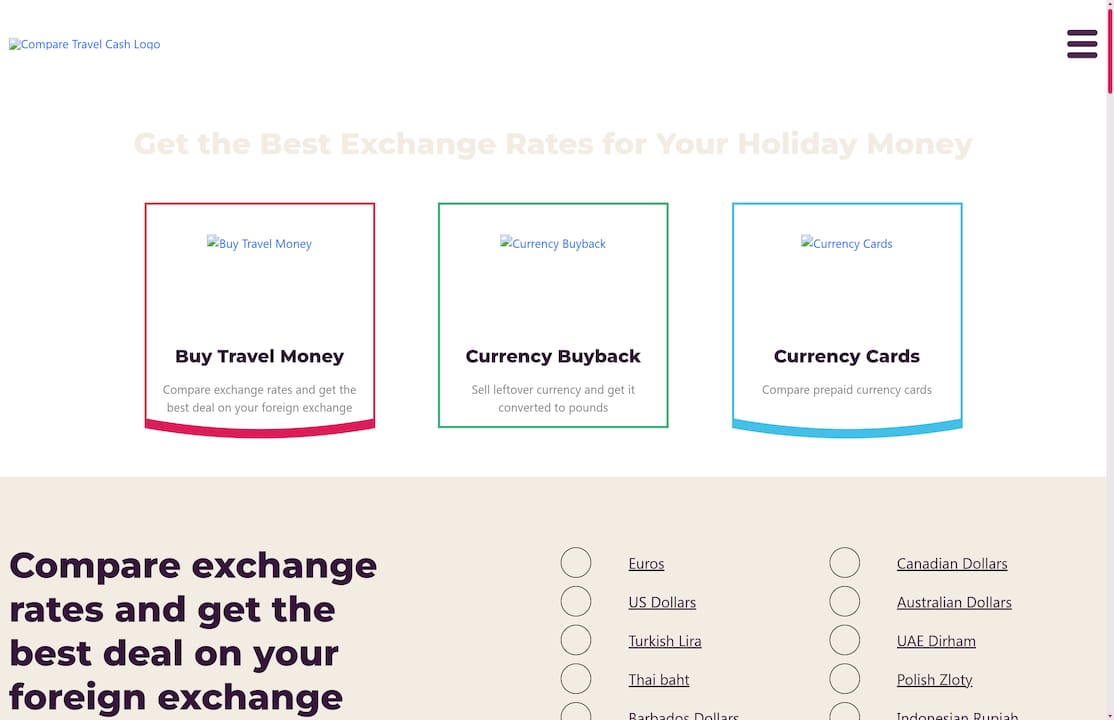
You can compare cash rates, check Hays Travel rates alongside other major providers, and explore prepaid currency cards to find the option that suits your travel style. Whether you are planning a city break in New York or a road trip across California, getting your dollars sorted in advance through a comparison tool is one of the simplest ways to protect your holiday budget. Rates update daily, so bookmark the page and check back as your travel date approaches.
Frequently asked questions
Why does the US dollar exchange rate change every day?
US dollar exchange rates fluctuate daily because they are set by the global forex market, where supply and demand shift constantly in response to economic data, interest rate expectations, and world news.
How do I know if I’m getting a good US dollar rate in the UK?
Compare the rate you are offered against the live mid-market rate; with GBP/USD currently around 1.33 to 1.34, a provider offering 1.30 or below is taking a significant margin and you should shop around.
Is it better to exchange pounds for dollars in advance or at the airport?
Exchanging in advance, either online or on the high street, almost always gives you a better rate than airport bureaux, where forex market margins applied by retailers are typically much higher due to captive demand.
What is the difference between a buy and sell rate for US dollars?
The buy rate is the rate at which a provider sells you US dollars (what you pay), while the sell rate is what they will pay you for any dollars you bring back; the gap between these two rates is how the provider makes its margin.
Can small rate changes really impact my holiday money?
Absolutely. The difference between GBP/USD at 1.03 and 1.34 means over £150 more in dollars for every £500 exchanged, which is a meaningful amount for any traveller’s spending budget.