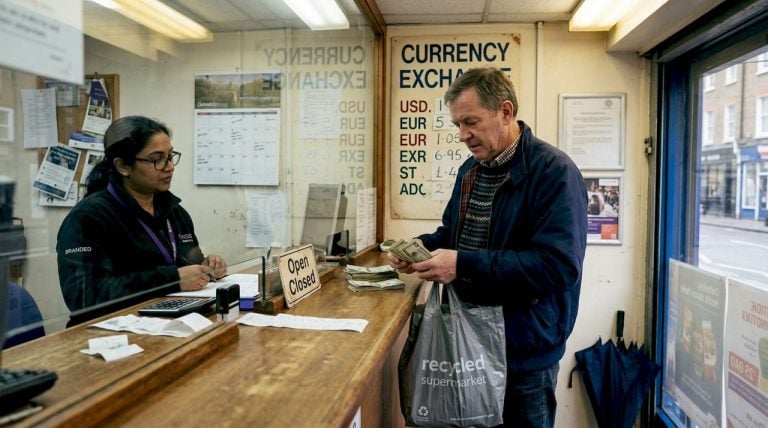
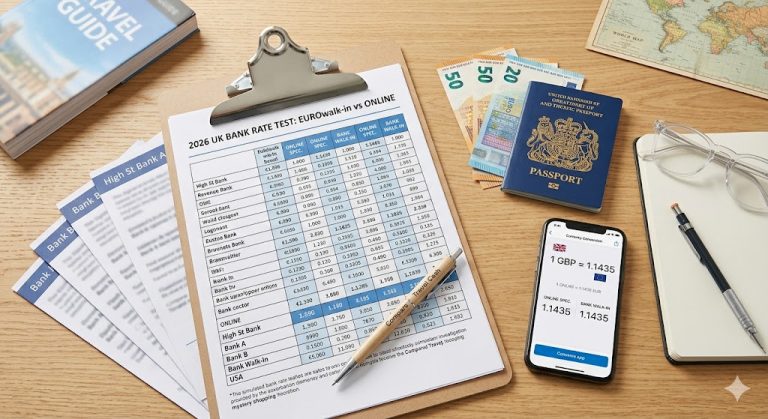
Imagine arriving at the airport, joining the queue at the currency kiosk, and handing over £500 only to receive far fewer US dollars than you expected. It happens to thousands of UK travellers every year, and the frustrating part is that it is almost entirely avoidable. Poor exchange rates, hidden markups, and last-minute decisions quietly drain your travel budget before your trip even begins. This guide covers everything you need to know: how rates are set, which methods to use, and exactly how to verify you are getting a fair deal when converting pounds to US dollars.
Table of Contents
- What affects US dollar rates for UK travellers?
- Choosing the right method to buy US dollars
- Step-by-step guide to getting the best rate
- Maximising your money abroad and when you return
- The hidden traps most travellers miss when buying US dollars
- See live US dollar rates and compare your options
- Frequently asked questions
Key Takeaways
| Point | Details |
|---|---|
| Compare exchange rates | Shopping around online helps you avoid poor rates and unnecessary fees. |
| Prepaid cards save money | Using prepaid cards often results in better exchange rates and added security. |
| Sell leftover dollars smartly | Sell unused US dollars online for higher returns than at airports. |
| Plan ahead for best value | Set up alerts and avoid last-minute exchanges for the best possible rates. |
What affects US dollar rates for UK travellers?
An exchange rate is simply the price of one currency expressed in another. When you convert pounds sterling to US dollars, the rate tells you how many dollars you receive per pound. Most people assume the rate they see advertised is the real rate. It rarely is.
The interbank rate (also called the mid-market rate) is the wholesale rate that banks use when trading with each other. It is the fairest benchmark available. Retail providers, whether banks, bureaux de change, or airport kiosks, add a markup on top of this rate. That markup is their profit. The gap between what you see and the true interbank rate is where your money quietly disappears.
Several factors shape the rate you are offered as a UK consumer:
- Market exchange rates: GBP/USD fluctuates constantly based on economic data, interest rate decisions, and political events.
- Provider margins: Each provider sets its own markup. High street banks tend to charge more than specialist online dealers.
- Card charges: Some debit and credit cards add foreign transaction fees of 2.75% or more on top of the exchange rate.
- Volume and timing: Buying in larger amounts or during quieter periods can sometimes secure a marginally better rate.
The table below illustrates how rates can vary across provider types for a £500 exchange:
| Provider type | Approximate USD received | Notes |
|---|---|---|
| Airport kiosk | $590 | Highest markup, lowest value |
| High street bank | $615 | Moderate markup |
| Online bureau | $635 | Competitive rates |
| Prepaid card (loaded online) | $630 | Good rates, check fees |
As provider rate differences show, the gap between the interbank rate and what retail customers receive can be substantial. Knowing this gap exists is the first step to closing it.
Choosing the right method to buy US dollars
Once you understand how rates are built, the next question is practical: where should you actually buy your US dollars? The options each carry different trade-offs between rate quality, convenience, speed, and security.
Banks are familiar and trusted, but they rarely offer the best rates. Their margins tend to be higher, and some charge additional service fees on top.
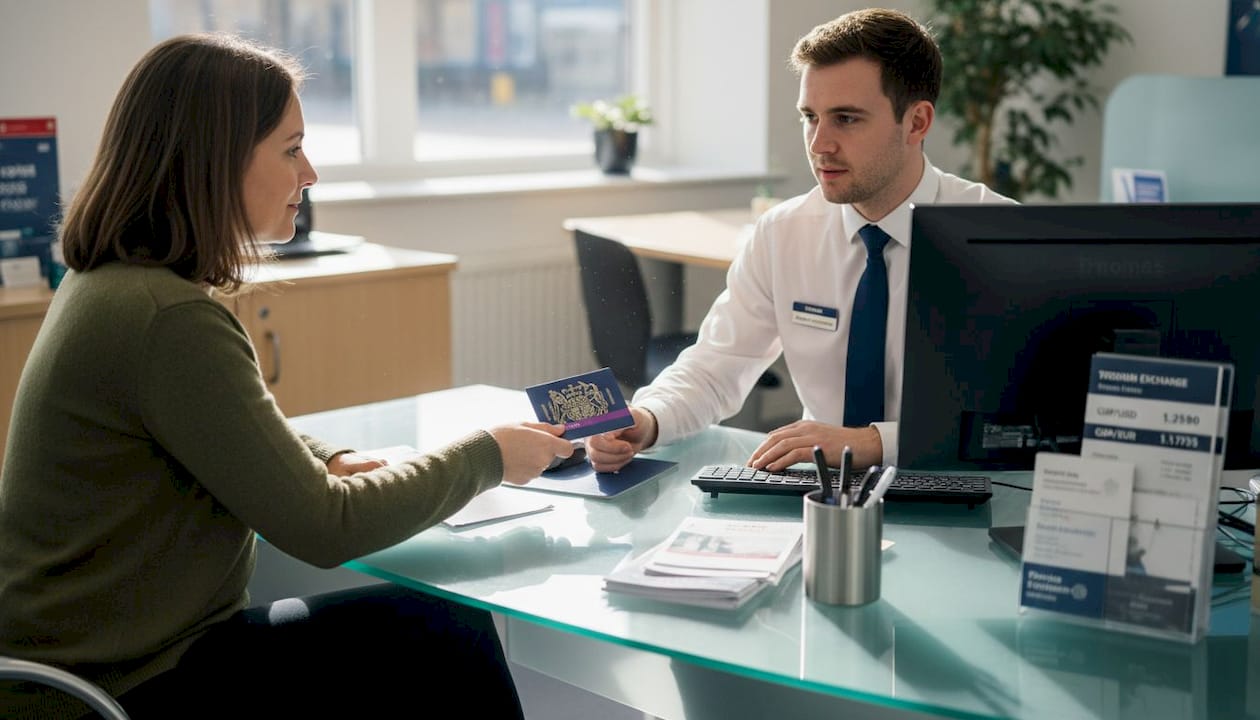
High street travel money bureaux such as Post Office or Travelex are more competitive than banks but still lag behind online specialists. They are useful if you need cash quickly and prefer a face-to-face transaction.
Airport kiosks are the worst option for rates. You are paying a premium for convenience at the worst possible moment. The markup at airport exchanges can be 10% or more above the interbank rate.
Online exchange platforms consistently offer the most competitive rates. You order online, and the currency is either delivered to your home or collected from a local branch. Online providers and prepaid currency cards typically offer better rates than the high street or airport kiosks, making them the go-to choice for savvy travellers.
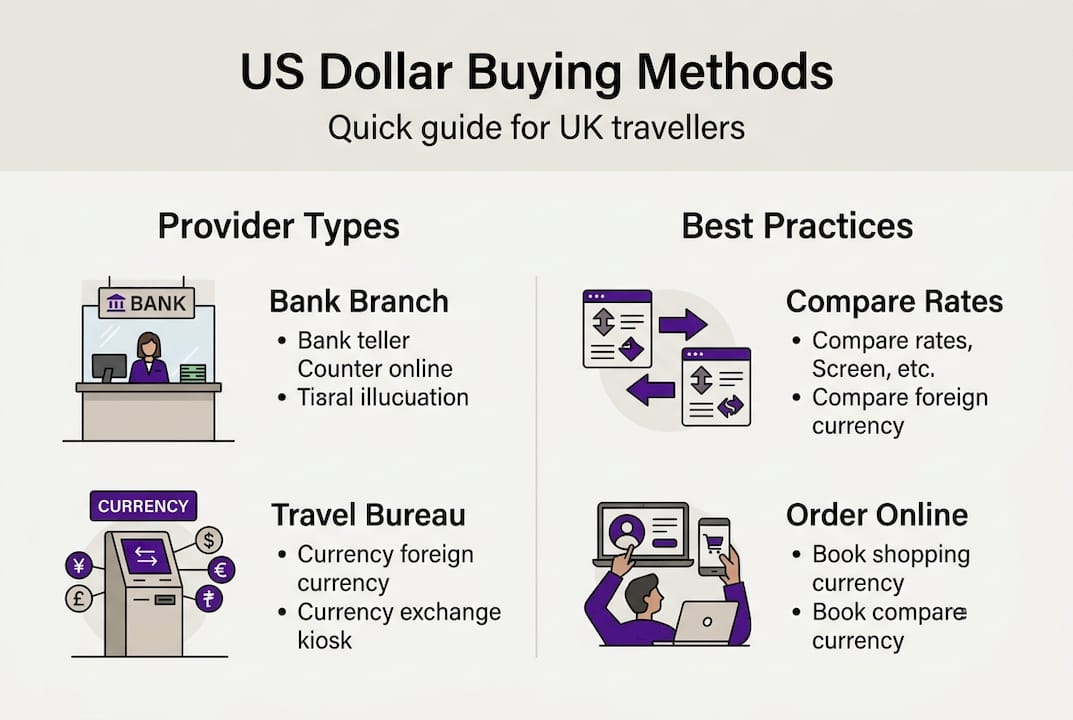
Prepaid currency cards allow you to load US dollars at a set rate before you travel. They also offer added security since they are not linked to your main bank account. You can explore prepaid currency cards to compare current deals and fees side by side.
Here is a quick comparison of the main methods:
| Method | Rate quality | Convenience | Security | Best for |
|---|---|---|---|---|
| Airport kiosk | Poor | High | Moderate | Emergency only |
| High street bank | Moderate | High | High | Last-minute local |
| Online bureau | Good | Moderate | High | Pre-trip planning |
| Prepaid card | Good | High | Very high | Frequent travellers |
Key considerations when choosing:
- Check whether delivery fees apply for home delivery orders.
- Confirm the refund or buyback policy before committing.
- Verify whether the rate is locked at the time of order or at collection.
Pro Tip: Pre-ordering online at least a week before travel almost always beats last-minute airport rates. Even ordering 24 hours in advance from an online provider can save you a meaningful amount on a typical holiday budget.
Step-by-step guide to getting the best rate
Knowing your options is one thing. Executing well is another. Follow these steps to make sure you lock in the best possible rate every time.
-
Check the interbank rate first. Use a free tool such as Google Finance or XE.com to see the current GBP/USD mid-market rate. This is your benchmark. Any retail rate will be lower, but knowing the benchmark tells you how much margin a provider is adding.
-
Calculate how much you need. Work out your estimated spend in US dollars, then add a 10% buffer for unexpected costs. Buying too little means a costly top-up abroad; buying too much means selling back at a loss.
-
Set a rate alert. Most comparison platforms and currency apps let you set alerts for a target rate. When GBP strengthens against USD, you get notified and can act quickly.
-
Compare rates and total costs. Do not just look at the headline rate. Factor in delivery charges, collection fees, and any minimum order amounts. Comparing US dollar rates across multiple providers in one place saves time and reveals the true cost.
-
Choose your collection or delivery method. Home delivery is convenient but adds a fee. Branch collection is often free and just as fast if you order a day or two ahead.
-
Verify before you finalise. Before confirming your order, check the exact amount of USD you will receive and the total GBP cost. If those numbers do not match what was advertised, walk away.
-
Keep your confirmation. Save your order confirmation. If the amount you receive differs from what was agreed, you have a clear record to dispute it.
Pro Tip: Use a dedicated comparison site for real-time rates rather than relying on individual provider websites. Providers advertise their best-case rates; comparing travel money rates side by side gives you the full picture, including fees that would otherwise be buried in the small print.
As comparing rates online consistently demonstrates, avoiding airport exchanges and planning ahead can make a measurable difference to your total spend.
Maximising your money abroad and when you return
Getting a good rate before you travel is only half the job. How you use your money in the US and what you do with any leftover dollars when you return matters just as much.
Using cash and cards wisely in the US:
- Always pay in US dollars when given the option. If a card terminal asks whether you want to pay in pounds or dollars, always choose dollars. Paying in pounds triggers dynamic currency conversion, which lets the merchant apply their own exchange rate, usually a poor one.
- Use a travel-friendly debit or credit card with no foreign transaction fees for larger purchases. Cards such as Starling, Monzo, or specialist travel credit cards typically offer near-interbank rates.
- Keep some cash for tips, taxis, and smaller vendors who do not accept cards.
- Avoid withdrawing cash from ATMs in the US unless necessary, as fees can stack up quickly.
Selling leftover US dollars when you return:
Most travellers ignore this step and lose money as a result. Airport buyback counters apply some of the worst sell rates available. Selling leftover US dollars online rather than at the airport typically returns significantly more to your pocket.
Use a dedicated US dollar buyback rates comparison tool to find the best offer from UK providers before you hand over your cash.
Always compare buyback rates before returning your currency. The difference between the best and worst buyback providers can easily exceed £30 on a modest amount of leftover dollars.
A few final tips for the return leg:
- Do not leave it too long. Rates shift, and some providers have minimum amounts.
- Check whether postal buyback services are available for added convenience.
- Avoid splitting small amounts across multiple providers as fees can outweigh any rate benefit.
The hidden traps most travellers miss when buying US dollars
Most guides tell you to avoid airports and compare online. That is solid advice, but it only scratches the surface. There are subtler traps that even experienced travellers walk into regularly.
The biggest one is the 0% commission claim. Providers that advertise zero commission are not being generous. They simply build their profit into a worse exchange rate instead. You pay either way; the commission-free label just makes it harder to see where.
Another overlooked issue is prepaid card top-up timing. Loading a prepaid card when the pound is weak locks in a poor rate for your entire trip. The card itself is not the problem; the timing of the top-up is. Watch the best US dollar exchange rates for a few days before loading and act when GBP is performing well.
Then there are guaranteed rate clauses. Some providers offer a rate guarantee but include conditions that make it nearly impossible to claim. Always read the terms before assuming your rate is protected.
Finally, rates move hourly. Setting a rate alert is smart, but acting slowly after the alert fires means the opportunity may already have passed. Speed matters once you have decided to buy.
See live US dollar rates and compare your options
Ready to put these strategies into action? The next step is straightforward. Check live US dollar rates across multiple UK providers in real time, so you can see exactly which deal offers the most dollars for your pounds today.
CompareTravelCash.co.uk brings together travel money rate comparisons from a wide range of providers, including bureaux de change, online dealers, and banks, all in one place. You can also browse top prepaid currency card deals to find a card that suits your travel style and spending habits. Whether you are heading to New York, Los Angeles, or anywhere in between, the tools are there to make sure you arrive with more dollars in your wallet.
Frequently asked questions
When is the best time to buy US dollars from the UK?
Monitor the GBP/USD rate regularly and avoid purchasing at airports or during periods of sharp currency volatility. Comparing rates online regularly helps you catch seasonal swings and act when the pound is stronger.
Are prepaid currency cards a good way to get US dollars?
Yes, they often offer better rates and added security compared to cash or standard debit cards, but always check for top-up and usage fees before committing. Prepaid cards typically undercut high street and airport pricing when used correctly.
How can I avoid poor exchange rates at airports?
Order your US dollars in advance online or collect from a local branch for better rates and lower fees. Airport exchanges are consistently the least competitive option available to UK travellers.
What’s the best way to sell leftover US dollars after my trip?
Use an online buyback service rather than handing your dollars over at an airport counter. Online buyback consistently offers more competitive rates than in-person airport counters.