TL;DR:
- Choosing the right currency exchange method can save travelers significant money on fees and rates.
- Combining a prepaid travel card, small cash reserves, and a credit card offers flexibility and cost savings.
- Avoid dynamic currency conversion offers, as they typically result in higher costs for travelers.
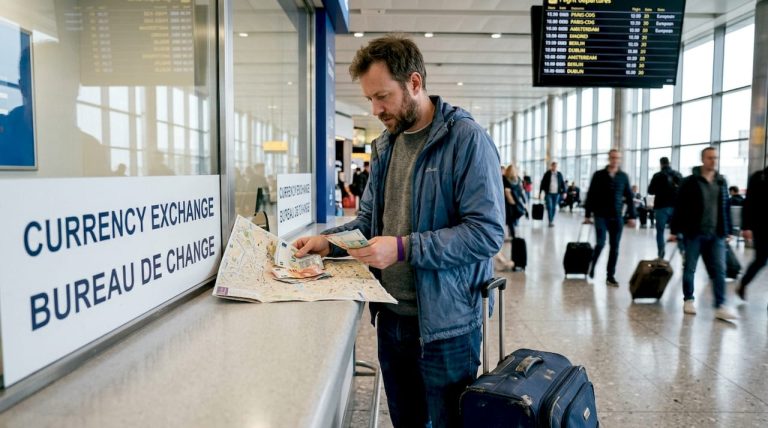
Every pound you spend on fees and poor exchange rates is a pound that could have paid for a meal, an excursion, or an extra night away. Yet most UK travellers still head to the airport kiosk or use their regular bank card abroad without a second thought, often losing far more than they realise. The difference between a well-chosen exchange method and a careless one can easily run into tens of pounds on a typical holiday budget. This guide breaks down the most common currency exchange options available to UK travellers, compares their real costs, and helps you decide which approach suits your trip.
Table of Contents
- How to evaluate currency exchange options
- Prepaid multi-currency travel cards
- Traditional currency exchange: cash and bureaux de change
- Bank cards and credit cards for travel spending
- Comparison table: finding the right exchange option for your trip
- Our take: what most guides miss about currency exchange
- Find the best currency exchange deals with Compare Travel Cash
- Frequently asked questions
Key Takeaways
| Point | Details |
|---|---|
| Know your options | Each currency exchange method—prepaid cards, cash, or bank cards—offers different rates, fees, and fits for travellers. |
| Compare rates and fees | Checking both rates and potential fees (ATM, card, cash margins) prevents costly surprises during your trip. |
| Blend approaches | Combining a prepaid card with some cash provides flexibility, security, and often the best value for most UK travellers. |
| Always pay in local currency | Reject dynamic currency conversion at shops or ATMs to avoid hidden mark-ups on transactions. |
How to evaluate currency exchange options
Before comparing specific methods, it helps to know what you are actually comparing. Not all exchange options are created equal, and the cheapest-looking deal is not always the best value once you factor in all the costs involved.
Here are the key criteria worth examining for any currency exchange option:
- Exchange rate: How close is it to the mid-market rate? The mid-market rate is the “real” rate you see on Google, sitting between the buy and sell price. The further a provider strays from it, the more you pay.
- Fees and charges: Some providers charge a flat service fee, others build their profit into the rate. Both cost you money.
- Convenience: Can you order online and collect in store? Is there a mobile app? How quickly can you access your currency?
- Safety: Cash can be lost or stolen. Cards can be blocked. Consider what happens if something goes wrong.
- Acceptance abroad: Not every destination is card-friendly. Rural areas, local markets, and smaller businesses often require cash.
ATM fees deserve special attention. Even if your card has no foreign transaction fee, the local ATM operator may charge its own withdrawal fee on top. These charges are not always displayed clearly, and they add up fast.
Traveller type also matters. Families travelling to popular European resorts have different needs from solo backpackers in Southeast Asia or business travellers making quick city trips. Reviewing the travel money FAQs is a good starting point for understanding which option fits your profile. It is also worth reading up on high street vs online options before committing to any single method.
Pro Tip: Always calculate the total cost of an exchange, not just the headline rate. Add up any service fees, delivery charges, and ATM costs to get the true picture.
Prepaid multi-currency travel cards
Prepaid travel cards have become one of the most popular options for UK travellers, and for good reason. You load money onto the card before your trip, convert it into your chosen currency at that point, and then spend it abroad like a regular debit card.
Leading providers include Wise, Revolut, and Caxton. Prepaid multi-currency travel cards from these brands allow you to load currencies at near mid-market rates with fees typically ranging from 0% to 1%, enjoy fee-free spending in your preloaded currency, and benefit from low ATM withdrawal fees within monthly allowances.
Key features to know:
- Rates: Near mid-market, which is significantly better than most banks or airport kiosks.
- Weekend fees: Some providers, including Wise, apply a small markup at weekends when the currency markets are closed.
- ATM limits: Free ATM withdrawals are usually capped monthly. Exceed the limit and you pay a small percentage fee.
- Security: If the card is lost or stolen, you can freeze it instantly via the app.
- Locking in rates: Some cards let you convert currency in advance, protecting you from rate fluctuations before your trip.
The savings can be substantial. Users switching from a standard high street bank to a prepaid travel card have reported saving up to 87% on exchange rate costs for the same transaction. That is not a rounding error; it reflects just how much traditional banks mark up their rates.
The limitations are worth noting too. Some hotels and car hire firms will not accept prepaid cards for pre-authorisations, as they require a credit card to hold a deposit. Destinations that are heavily cash-reliant may also make a card-only approach impractical.
Pro Tip: Load your card mid-week when currency markets are fully open to avoid weekend markup fees.
Explore the best currency card deals currently available, or read a detailed breakdown of currency card pros and cons before deciding.
Traditional currency exchange: cash and bureaux de change
Cash is not going away anytime soon. For many destinations and situations, it remains essential. The question is where you buy it and how much it costs you.
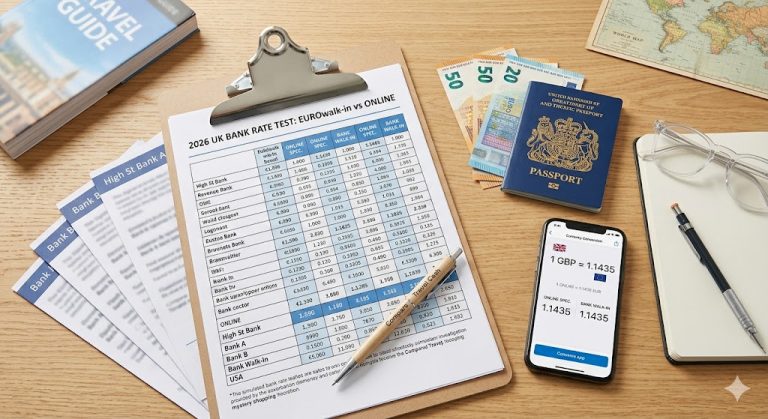
You can buy foreign currency in person at a bank branch, a high street bureau de change, or an airport kiosk. Alternatively, many providers now allow you to order online and collect in store or have currency delivered to your home. Online ordering typically offers better rates than walking in off the street.
What to expect with cash exchange:
- Airport kiosks: Consistently the most expensive option. The convenience comes at a steep price, often 10% to 15% above the mid-market rate.
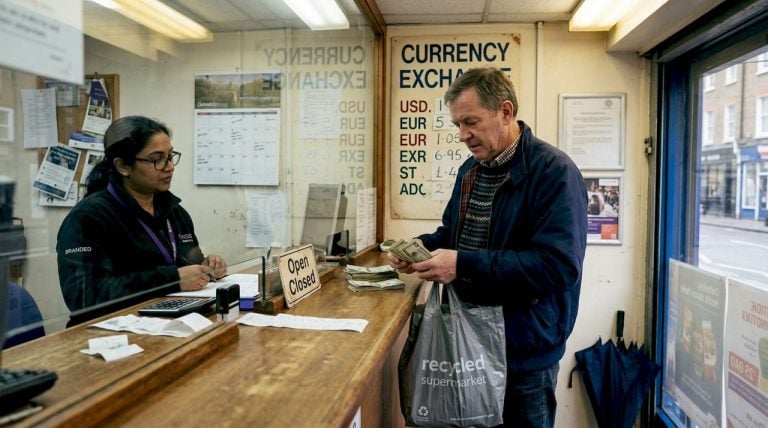
- High street bureaux: More competitive, especially if you compare rates before visiting. Some offer rate-match guarantees.
- Online ordering: Usually the best rates for cash, with the added benefit of home delivery for larger amounts.
- ID requirements: For purchases above certain thresholds, you may need to show a passport or driving licence under anti-money laundering rules.
Cash still has genuine advantages. It is universally accepted, works without signal or battery, and is essential for tipping, local markets, and smaller merchants. For destinations like Turkey, Morocco, or parts of Southeast Asia, having some local cash from the moment you land is often a practical necessity.
The risks are real though. Cash can be lost, stolen, or damaged. Carrying large amounts is both impractical and risky. And the margins charged by many providers mean you are paying a noticeable premium compared to digital alternatives.
For a clear breakdown of how buying cash currency online compares to the high street, it is worth reading before you book.
Bank cards and credit cards for travel spending
Many UK travellers simply use their everyday debit or credit card abroad. It is the path of least resistance. But that convenience can come with a significant cost.
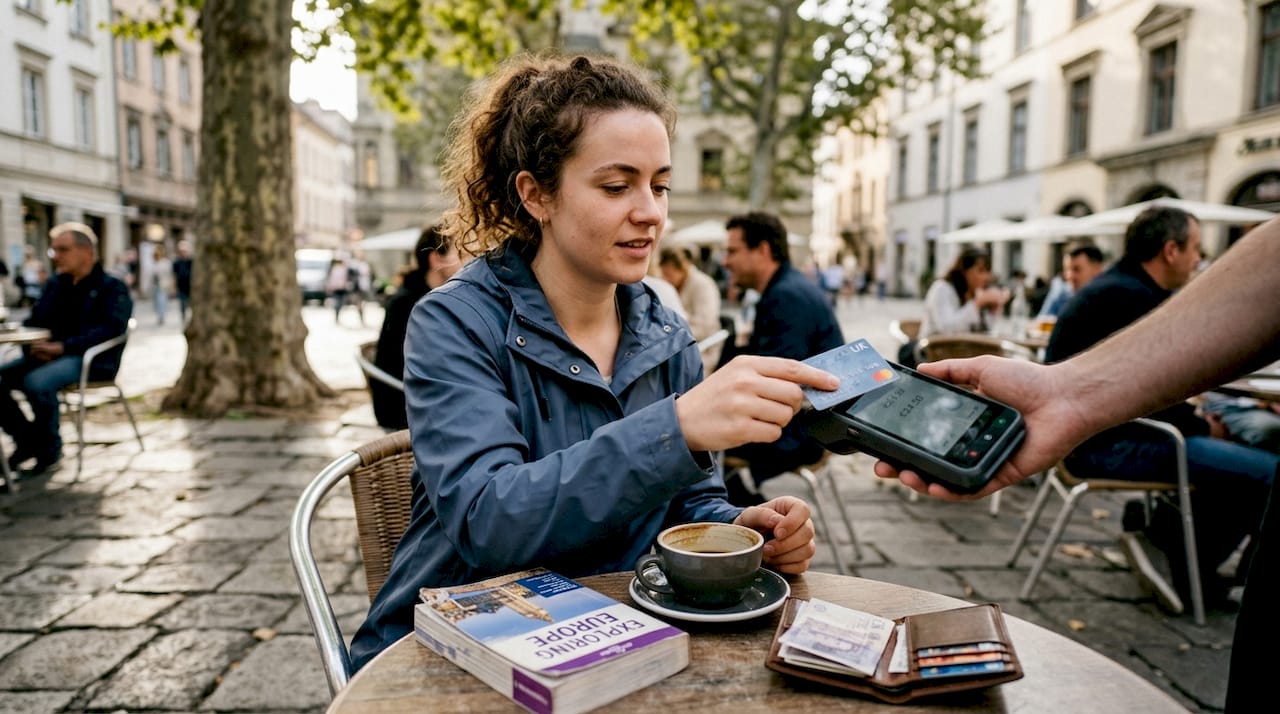
Standard UK bank cards typically charge a non-sterling transaction fee of around 2.75% to 3% on every purchase made in a foreign currency. Some also charge a flat fee per transaction on top. Use your card a dozen times on holiday and those charges accumulate quickly.
Key points about using regular cards abroad:
- Wide acceptance: Visa and Mastercard are accepted almost everywhere.
- Section 75 protection: Credit cards offer legal purchase protection on items costing between £100 and £30,000, which is a genuine advantage for booking hotels or tours.
- ATM charges: Many banks charge a cash withdrawal fee abroad, often 2% to 3% plus a minimum flat fee.
- Dynamic currency conversion (DCC): This is one of the most costly traps. When a terminal abroad offers to charge you in pounds instead of the local currency, it applies its own poor exchange rate. Always choose to pay in the local currency.
Always decline the offer to pay in pounds when using your card abroad. Dynamic currency conversion typically adds 3% to 7% to the transaction cost, and the choice is entirely yours to make.
For travellers who move frequently between countries or spend heavily abroad, a specialist fee-free travel credit card is worth considering. Cards from providers such as Halifax Clarity or Barclaycard Rewards charge no foreign transaction fees and offer reasonable ATM rates.
Factors like inflation and Brexit continue to affect the pound’s strength, making it even more important to minimise unnecessary fees on top of already shifting rates.
Comparison table: finding the right exchange option for your trip
With the main options covered, here is a direct comparison to help you decide:
| Feature | Prepaid travel card | Cash (bureau/online) | Regular bank card |
|---|---|---|---|
| Exchange rate | Near mid-market | Moderate to poor | Poor (fees added) |
| Fees | 0 to 1% (some weekend fees) | Varies; airport worst | 2.75% to 3% per transaction |
| Convenience | High (app-based) | Moderate | Very high |
| Security | High (freeze via app) | Low (loss/theft risk) | High (card protection) |
| Acceptance | Broad, some exceptions | Universal | Very broad |
| Best for | Most everyday spending | Cash-reliant destinations | Emergencies, Section 75 |
For most trips, the smartest approach combines more than one method. Here is a practical guide based on common travel scenarios:
- Family holiday in Europe: Use a prepaid card for most spending, carry a small cash reserve for markets and tips, and keep a credit card for hotel check-in.
- Backpacking in Southeast Asia: Prioritise cash for local spending, use a prepaid card for larger purchases and ATM withdrawals within free limits.
- Business travel: A fee-free credit card for expenses and receipts, with a prepaid card for day-to-day spending.
- Short city break: A prepaid card alone is usually sufficient for most Western European cities.
It is worth noting that heavy cash needs are best handled by combining a card with a limited cash amount, as car hire and hotel pre-authorisations may reject prepaid cards, and Revolut users spending over £1,000 per month will face a 1% fee, with ATM operator charges applying separately.
For a deeper look at how these two main approaches stack up, the guide on cash vs currency cards covers the detail well.
Our take: what most guides miss about currency exchange
Most currency exchange guides stop at the comparison table and leave you to figure out the rest. But the real mistakes happen in the moments between planning and spending.
The biggest one is dynamic currency conversion. Countless travellers accept the offer to pay in pounds at a foreign terminal, assuming it is simpler or safer. It is neither. It is simply more expensive, and the choice is always yours to decline.
Another overlooked issue is over-reliance on a single method. If your card is declined, lost, or blocked by your bank’s fraud system, you need a backup. We have seen this happen at the worst possible times, and it is entirely avoidable.
Our experience consistently points to one conclusion: a blend of a prepaid travel card for the bulk of spending, a small cash reserve for situations where cards are not accepted, and a credit card for pre-authorisations and emergencies is nearly always the most cost-effective and resilient approach.
The expert travel tips on our blog go further into the practical side of managing money abroad. The key insight is this: flexibility is not just convenient, it is financially smart.
Find the best currency exchange deals with Compare Travel Cash
Once you know which approach suits your trip, the next step is finding the best available rates right now.
At Compare Travel Cash, you can compare prepaid currency cards side by side, checking real fees and rates from multiple providers in one place. You can also browse live travel money exchange rates for cash purchases, so you know exactly what you will get before you commit. Whether you are heading to Europe, the US, or further afield, the tools on the site help you avoid overpaying and travel with more confidence. Smarter currency exchange starts before you pack.
Frequently asked questions
Are prepaid travel cards always the cheapest way to get foreign currency?
Prepaid cards usually offer competitive rates and lower fees than banks, but some fees apply at weekends or once you exceed certain monthly limits, so it is worth checking the specific terms of your chosen card.
What should I do if I need a lot of cash whilst travelling?
It is best to combine a prepaid card with a limited amount of cash, as large cash exchanges tend to cost more and carry greater risk of loss or theft.
Are there risks to using UK bank cards abroad for spending?
Yes, most standard UK bank cards charge foreign transaction fees of around 2.75% to 3%, and extra costs apply if you accept payment in pounds rather than the local currency through dynamic currency conversion.
Can I use travel cards for car hire or hotel deposits?
Many car hire firms and hotels will not accept prepaid travel cards for pre-authorisations, so keeping a credit card available for deposits and check-in is strongly advisable.
Recommended
- Inflation, Brexit & the Pound: What Travellers Need to Know
- Travel Tips Archives – Compare Travel Cash Blog
- Compare Travel Money Exchange Rates Online
- Buying Currency Online vs Buying on the High Street
- Compare taxi options in Edinburgh for better travel
- How to select airport transfer options for comfort