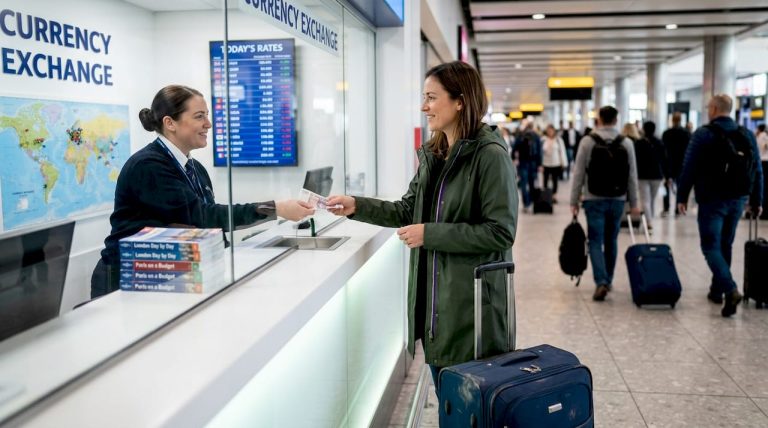
UK travellers collectively lose hundreds of millions of pounds each year simply by exchanging currency at the wrong place or the wrong time. Most people assume exchange rates are broadly similar wherever they go. They are not. The difference between buying currency at an airport kiosk and using a specialist online provider can easily cost you £50 to £150 on a typical £1,000 holiday budget. This guide explains what foreign exchange actually means, how rates are set, and what practical steps you can take to protect your spending money before you board the plane.
Table of Contents
- What is foreign exchange?
- How exchange rates impact your holiday budget
- Options for exchanging money: comparison and tips
- Smart strategies for getting the best rates
- What most UK travellers miss about foreign exchange
- Compare and secure the best travel exchange rates now
- Frequently asked questions
Key Takeaways
| Point | Details |
|---|---|
| Exchange rates matter | Small changes in rates can significantly affect your holiday budget. |
| Avoid airport markups | Airport kiosks often charge much higher fees than specialist providers. |
| Combine cards and cash | Using both gives you flexibility and helps you avoid surprise fees abroad. |
| Plan ahead for best rates | Buying currency early helps protect you from poor rates and last-minute costs. |
| Use trusted comparison tools | Online rate comparison sites help you secure the top deals on travel money. |
What is foreign exchange?
Foreign exchange (FX) is the process of converting one national currency into another, typically at an exchange rate determined by the global foreign exchange market. For UK travellers, this is the mechanism that turns your pounds into euros, dollars, or Thai baht. It sounds simple, but the rate you receive depends on a complex chain of events.
The global forex market is the largest financial market in the world, with trillions of dollars traded every single day. Participants include central banks, commercial banks, investment institutions, and currency brokers. Retail travellers sit at the very end of this chain, which is why the rates offered to holidaymakers are rarely as favourable as the rates institutions trade between themselves.
Exchange rates are set by supply and demand. When demand for a currency rises, its value increases. When confidence in a country’s economy falls, its currency often weakens. Political events, interest rate decisions, and inflation figures all push rates up or down. This is why the pound’s value against the euro or dollar can shift noticeably from one week to the next.
For everyday travellers, the key things to understand are:
- The mid-market rate (also called the interbank rate): this is the midpoint between the buy and sell price of a currency. It is the rate you see on Google or XE.com. Retail providers never offer this rate exactly.
- The retail rate: the rate you are actually offered. It includes a markup, which is how providers make their profit.
- The spread: the difference between the mid-market rate and the retail rate. A wider spread means a worse deal for you.
- Service fees: some providers charge a flat fee on top of the spread, which can make a seemingly good rate far less attractive.
You can explore common questions about this in our travel money FAQs, or read a broader breakdown of your currency exchange options before you decide where to buy.
How exchange rates impact your holiday budget
With the basics clear, let’s see how these rates could affect your actual travel costs.
The gap between the mid-market rate and what you are charged is where your holiday money quietly disappears. Every provider adds a markup to the interbank rate, and those markups vary enormously. According to independent analysis of currency costs, UK banks average a 3 to 4% markup, specialist FX providers charge around 0.8 to 1%, digital providers such as Wise charge 0.35 to 2%, and airport kiosks charge a staggering 5 to 15%.
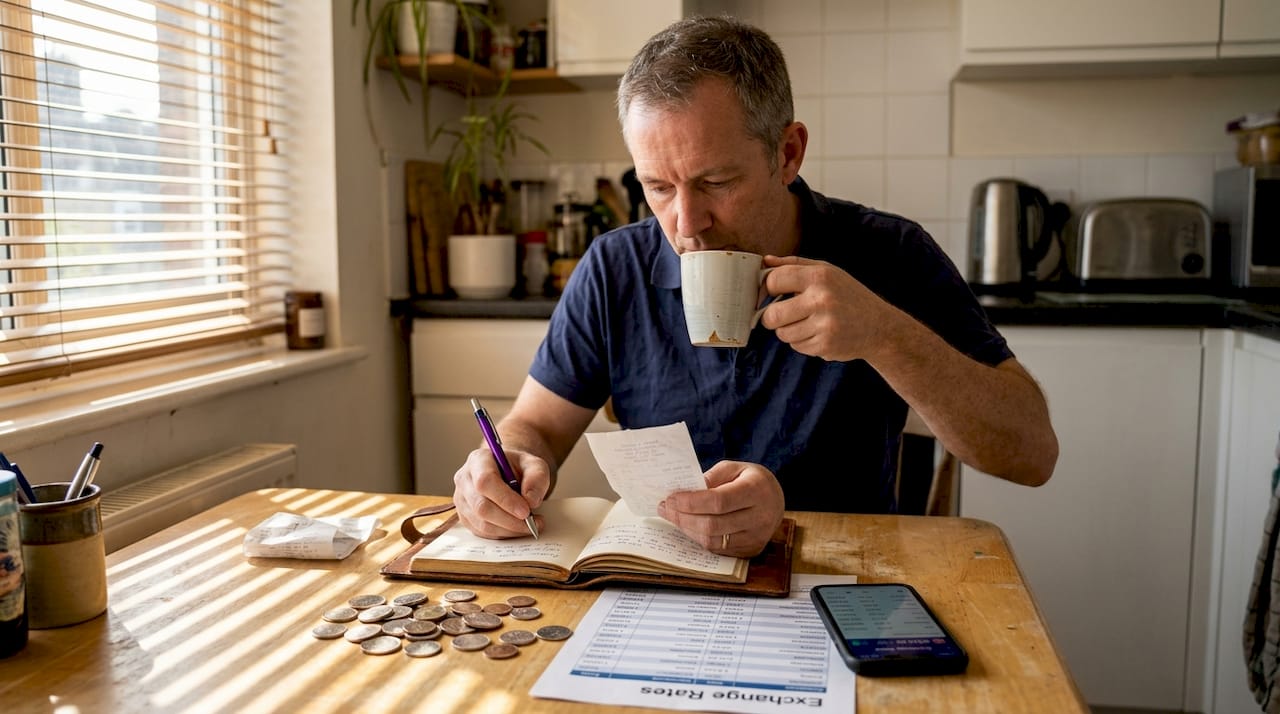
To put that into concrete terms, here is what a £1,000 currency exchange looks like across different providers:
| Provider type | Typical markup | Amount lost on £1,000 |
|---|---|---|
| Airport kiosk | 10% (mid-range) | £100 |
| High street bank | 3.5% | £35 |
| Specialist FX provider | 1% | £10 |
| Digital provider (e.g. Wise) | 0.5% | £5 |
The figures above make the case plainly. Exchanging £1,000 at an airport costs you roughly twenty times more than using a digital specialist.
“Airport kiosks and in-branch bank counters remain the most expensive places to buy travel money in the UK. Convenience has a price, and that price is often measured in tens of pounds per transaction.”
The impact compounds over a full holiday. If you exchange £2,000 for a two-week trip and use an airport kiosk, you could lose £200 before you have even checked into your hotel. That is money that could cover a day trip, a meal, or a taxi home from the airport.
Key takeaways on rate impact:
- A 5% markup on £500 costs £25. On £2,000, it costs £100.
- Flat service fees can make low-markup providers less competitive for smaller amounts.
- Rates fluctuate daily, so the same provider may offer different value on different days.
For practical guidance on reducing these costs, our article on saving on travel money covers the most effective approaches. You can also read more about avoiding currency fees to understand where charges are often hidden.
Options for exchanging money: comparison and tips
Understanding why rates vary, it’s crucial to choose the right method for exchanging your money.
Not all exchange methods suit every traveller or every trip. Here is a comparison of the main options available to UK holidaymakers:
| Method | Typical rate quality | Fees | Best for |
|---|---|---|---|
| Airport kiosk | Poor (5-15% markup) | Often none, but rate is the fee | Last-minute, convenience |
| High street bank | Below average (3-4%) | Possible flat fee | Existing customers, small amounts |
| Online specialist | Good (0.8-1%) | Low or none | Pre-trip planning |
| Prepaid currency card | Good to very good | Loading fee possible | Budget control, multiple currencies |
| Digital bank (e.g. Starling) | Very good (near mid-market) | Varies by transaction | Frequent travellers |
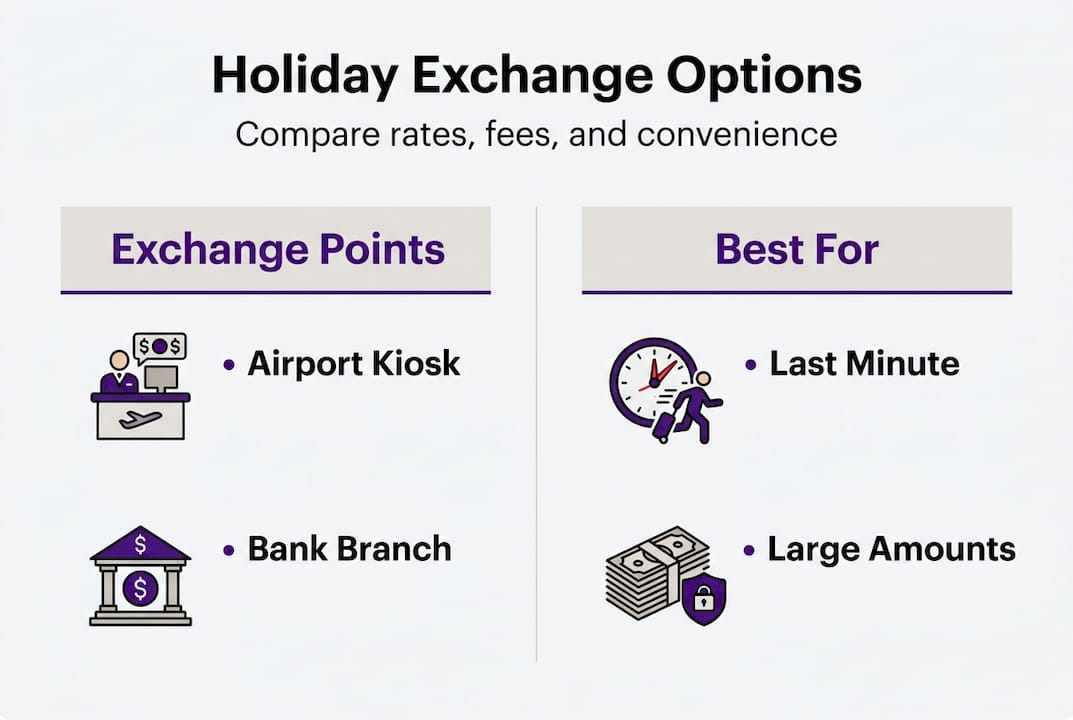
As the retail rate mechanics show, the retail rate is always the interbank rate plus a spread. Locking your rate in advance via a forward contract or pre-loading a currency card protects you from sudden rate movements.
Here are the most important steps to take when choosing your exchange method:
- Compare before you commit. Never accept the first rate you see. Rates between providers can vary by several percentage points.
- Avoid the airport. Unless it is truly your only option, airport kiosks are consistently the worst value.
- Pre-order online. Most specialist providers allow you to order online and collect in store or have currency delivered, often at better rates than walk-in prices.
- Check for hidden fees. A low headline rate may come with a service fee that erodes the saving.
- Consider a prepaid card. These allow you to load currency at a set rate and spend abroad without additional transaction fees.
Pro Tip: If you are travelling to multiple countries, a multi-currency prepaid card can save you the hassle of exchanging cash separately for each destination. Load it when rates are favourable and spend at your locked rate throughout the trip.
For more on this, our guides on using cards on holiday and cash versus currency cards offer a thorough breakdown of which approach suits different travel styles.
Smart strategies for getting the best rates
To make the most of your money, here is how to apply your knowledge for smarter travel spending.
Knowing the theory is one thing. Putting it into practice is another. These strategies are used by experienced travellers and are backed by solid financial reasoning.
Mix your methods. Use a travel-friendly debit or credit card for most of your spending abroad, and carry a modest amount of local cash for smaller vendors, markets, and places that do not accept cards. This combination approach reduces your exposure to poor cash exchange rates while keeping you covered in all situations.
Notify your bank before you travel. Failing to do this can result in your card being blocked for suspicious activity abroad. A quick call or app notification takes two minutes and prevents a very stressful situation.
Use rate-tracking tools. Apps and comparison websites let you monitor exchange rates in real time. Set an alert for your target rate and buy when it is reached, rather than scrambling at the last minute.
Here is a practical checklist before any international trip:
- Check the current mid-market rate for your destination currency
- Compare at least three providers using a comparison tool
- Order online at least one week before departure
- Notify your bank of your travel dates and destination
- Load a prepaid card if you want to fix your rate in advance
- Keep a small cash reserve for emergencies
Pro Tip: Currency rates tend to be slightly more favourable mid-week. Monday and Friday often see wider spreads as markets adjust to weekend news. If you have flexibility, Tuesday to Thursday is generally a better time to buy.
For destination-specific guidance, our article on best value travel currency covers the most popular holiday currencies for UK travellers. You will also find broader holiday travel tips to help you plan more cost-effectively.
What most UK travellers miss about foreign exchange
Most people who research travel money focus almost entirely on the headline exchange rate. That is understandable. It is the most visible number. But it is rarely the whole story.
The rate is just the starting point. What actually determines the value you receive is the combination of rate, fees, timing, and the amount you are exchanging. A provider offering a slightly lower rate but no flat fee can be better value than a competitor with a sharper rate and a £5 service charge, particularly on smaller amounts.
There is also the question of habit. Many UK travellers default to their high street bank simply because it feels familiar and trustworthy. Banks are trustworthy, of course. But that trust does not translate into competitive exchange rates. Banks are not in the business of offering you the best FX deal. Specialist providers are.
Planning ahead is the single biggest factor that separates travellers who get good rates from those who do not. Buying currency two to three weeks before departure gives you time to monitor rates, compare providers, and avoid the panic-buying premium that comes with last-minute exchanges. Our currency exchange guide is a useful resource if you want to go deeper on this.
The travellers who consistently get the best deals are not financial experts. They are simply the ones who plan ahead and compare properly.
Compare and secure the best travel exchange rates now
You now understand how foreign exchange works, where the costs hide, and how to avoid overpaying. The next step is putting that knowledge to work before your next trip.
At CompareTravelCash.co.uk, you can compare live rates from multiple UK providers in seconds. Whether you want to buy cash, load a prepaid card, or check buyback rates for leftover currency, the tools are all in one place. Browse travel rates from Hays Travel, explore prepaid currency card deals, or view all travel money rates to find the best deal for your destination. Acting early gives you the best chance of securing a strong rate before market movements or last-minute demand push prices up.
Frequently asked questions
How do I find the best exchange rate for my holiday?
Compare rates from specialist online providers before you travel, and avoid airport kiosks where markups reach 5 to 15%. Booking online in advance almost always secures a better rate than buying in person at the last minute.
Should I use a card or cash abroad?
A mix works best: use a low-fee travel card for most purchases and carry a small amount of local cash for markets, taxis, and smaller vendors. This combination approach keeps you covered without over-relying on expensive cash exchanges.
When is the best time to buy holiday money?
Buy currency one to three weeks before your trip to avoid last-minute markups, and consider locking your rate via a prepaid card or forward contract if you are concerned about volatility.
What fees should I watch out for when exchanging currency?
Beyond the headline rate, watch for flat service fees and wide spreads over the mid-market rate. Banks average 3 to 4% markup while airports charge even more, so always check the total cost rather than just the displayed rate.
Recommended
- Compare Travel Cash | Travel Money Comparisons
- Best Euro exchange rates | Compare Euro rates
- Find the best value travel currency for your holiday
- Find the best buyback rates for selling Euros(EUR) for Pounds
- FX4 (Deutsche Bank) – Prominence Bank
- Why switch carriers abroad for cheaper, reliable data | Lumo eSIM Store