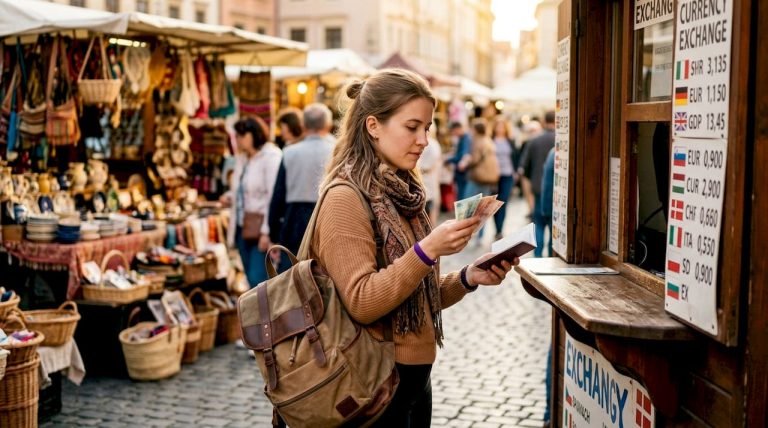
Choosing the wrong currency or exchange method before an international trip can quietly drain your holiday budget before you’ve even landed. Many UK travellers assume any exchange will do, but the difference between a bank rate and a specialist rate can be staggering. Specialist providers typically charge a margin of just 0.5 to 1%, whereas banks and airport kiosks can charge 3 to 15% more, meaning a £500 currency purchase could cost you £75 in unnecessary fees. This guide walks you through which currencies to take, where to exchange them, and how to keep more money in your pocket.
Table of Contents
- How to decide which currencies to take abroad
- Top currencies for UK travellers to carry abroad
- Comparing exchange rates and fees: Where to get the best value
- Situational recommendations: What to carry for different trip types
- Our take: Why beating airport rates is easier than you think
- Compare top travel cash rates and cards for your next trip
- Frequently asked questions
Key Takeaways
| Point | Details |
|---|---|
| Local currency is best | Paying in the local currency nearly always offers better rates and universal acceptance. |
| Compare providers | Banks and airports charge high fees; use online tools to find specialist rates and save money. |
| Mix your payment types | Carry a combination of cards and cash tailored to your trip to handle any payment scenario. |
| Plan before you go | Setting your currency strategy prior to travel prevents costly mistakes at your destination. |
How to decide which currencies to take abroad
Let’s start with understanding what factors matter most when picking your travel money. The decision isn’t simply about which notes to stuff into your wallet. It involves weighing up acceptance rates, exchange margins, card infrastructure, and your own spending habits.
The single most important rule is straightforward: always use the local currency of your destination. The mid-market rate is the fairest benchmark for any exchange, and local currency transactions tend to track it most closely. When you pay in a foreign currency that isn’t local, such as spending US dollars in Thailand, you typically trigger a secondary conversion with added markup.
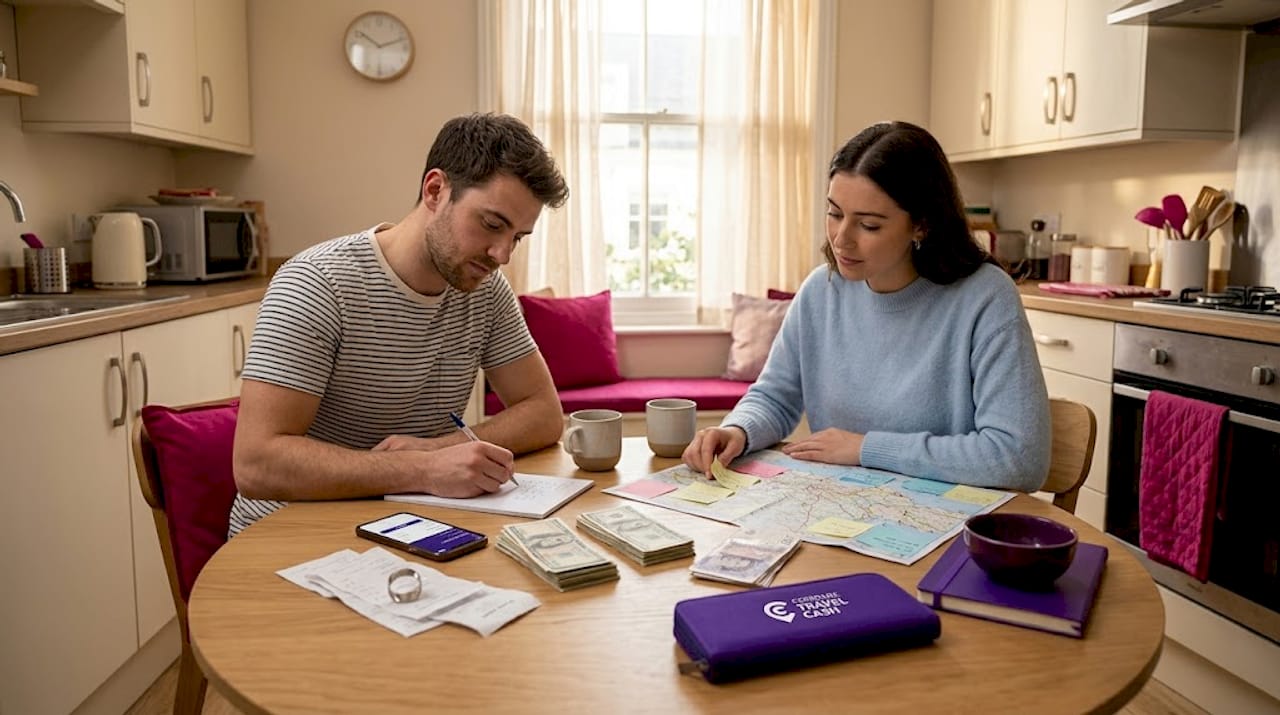
Card acceptance varies enormously by region. In Scandinavia, you can travel almost entirely cashless. In parts of Southeast Asia, Vietnam for example, cash is still king for street food, transport, and markets. Digital wallets like Apple Pay are spreading, but acceptance is patchy in rural areas across most continents.
Here are the core factors to consider when planning your currency mix:
- Local currency availability: Can you source it easily in the UK before departure?
- Card acceptance at your destination: Is it a cashless-friendly country or cash-dependent?
- ATM access: Are there reliable, low-fee ATMs available locally?
- Trip type: A beach resort differs hugely from a multi-city backpacking route.
- Emergency reserve: Always carry a small cash buffer, even if you plan to use cards.
When choosing exchange options, it helps to plan your spend in advance. Work out roughly how much you’ll spend on meals, transport, accommodation top-ups, and activities. This lets you order the right amount without over-buying currency you’ll later struggle to sell back.
For longer or more complex trips, it’s worth budgeting for multiple currencies from the outset. Multi-stop itineraries, such as a route taking in Japan, South Korea, and Thailand, each require separate currency planning. Never assume your euros or dollars will bridge the gap abroad.
Pro Tip: Order your travel money at least a week before departure. Rates online are almost always better than in-branch or at the airport, and you’ll have time to shop around.
Top currencies for UK travellers to carry abroad
With your selection framework in mind, here are the top currencies UK travellers should consider, and when to use them. The currencies below cover the most popular destinations for UK holidaymakers, with honest notes on where each one works best and where it falls short.
| Currency | Best for | Typical UK rate quality | Key pitfall |
|---|---|---|---|
| Euro (EUR) | Eurozone (France, Spain, Italy, Greece) | Good via specialists | Airport rates frequently 3 to 15% worse |
| US Dollar (USD) | USA, parts of Caribbean and Latin America | Good via specialists | Poor value if used outside the US |
| Japanese Yen (JPY) | Japan | Fair, limited competition | Japan is still very cash-heavy; carry plenty |
| Thai Baht (THB) | Thailand | Good via specialists | Dynamic currency conversion in ATMs is a trap |
| Australian Dollar (AUD) | Australia, nearby Pacific | Good availability in UK | Rates vary widely; compare before buying |
| Swiss Franc (CHF) | Switzerland, Liechtenstein | Reasonable | Often overlooked for Swiss stopovers |
| Turkish Lira (TRY) | Turkey | Highly competitive online | Volatile currency; buy closer to departure |
A few important notes for the most popular currencies:
- Euro: The most commonly purchased currency by UK travellers. Rates from specialist online bureaux de change are consistently competitive. Never buy euros at the airport if you can help it.
- US Dollar: Widely accepted in tourist areas across the Caribbean, Central America, and parts of Africa. However, using dollars outside the US often means accepting a merchant’s own unfavourable conversion rate.
- Japanese Yen: Japan remains a cash-first society. Many restaurants, shrines, and rural businesses do not accept cards. Bring more yen than you think you’ll need.
- Thai Baht: Always decline the ATM’s own conversion offer (known as dynamic currency conversion) in Thailand. Let the transaction process in baht and let your UK bank handle the conversion.
- Turkish Lira: One of the most volatile currencies for UK travellers. Buying lira too far in advance can cost you if the rate shifts significantly.
Use your holiday currency checklist to confirm you’ve covered each currency you’ll need, including any stopover currencies. A Swiss transit on the way to Asia, for example, may require a small amount of francs for airport purchases.
Pro Tip: If you’re travelling to a destination with a volatile currency, like Turkey or Argentina, consider buying in stages rather than all at once. Spreading your purchase can help average out your rate.
Comparing exchange rates and fees: Where to get the best value
Now that you know which currencies work best, let’s see how to maximise your value by picking the best exchange providers and payment methods. The provider you choose matters just as much as the currency itself.
The gap between providers is considerable. Banks and airport kiosks routinely charge markups that sit at the higher end of the 3 to 15% range. Specialist online bureaux de change and fintech cards, on the other hand, operate with margins close to the mid-market rate. Some specialist providers offer savings of up to 87% compared to banks, which is a genuinely significant sum on larger exchanges.
Here’s a simplified comparison of typical provider types and what to expect:
| Provider type | Typical margin above mid-market | Fees | Convenience |
|---|---|---|---|
| Airport kiosk | 8 to 15% | Often additional | Very high |
| High street bank | 3 to 8% | May include service fee | High |
| Post Office | 2 to 5% | Delivery fees vary | Moderate |
| Online specialist | 0.5 to 2% | Low or none | Moderate (pre-plan needed) |
| Fintech card (e.g., Wise) | 0.5 to 1% | Small transaction fee | High (once set up) |
“The difference between buying currency at an airport and buying from a specialist provider online can easily amount to £50 or more on a typical holiday budget of £500. That’s money better spent at your destination.”
To secure the best deal consistently, follow this three-step approach:
- Compare rates online at least several days before you travel. Use a rate comparison tool to check multiple providers side by side.
- Calculate the total cost, not just the headline rate. Include delivery fees, transaction charges, and any minimum order values.
- Collect or receive your currency in the most practical way. Home delivery is convenient; click-and-collect at a bureau is often quick and free.
Learning the signs of a poor deal is just as valuable as knowing where to find a good one. Knowing about spotting bad rates early will save you considerable frustration. The key red flags are “commission-free” claims that hide inflated margins, low headline rates buried under hefty service fees, and ATMs abroad that offer to convert your transaction into pounds.
For a broader picture of how the foreign currency market works and what drives the rates you’re quoted, the foreign exchange tips guide provides clear, practical context.
Situational recommendations: What to carry for different trip types
Ultimately, every trip and traveller is unique, so here’s how to tailor your currency plan for different types of journeys.
City break to a major European destination
A eurozone city break is probably the easiest to plan. Buy euros from a reputable online specialist before you travel and use a low-fee card for larger purchases like hotel extras or restaurant bills. A reserve of €100 to €200 in cash covers taxis, tips, and market stalls. As local currency is almost always best for payments, resist the temptation to use your sterling card and accept the merchant’s conversion.
Multi-country trip (e.g., Southeast Asia)
This is where preparation matters most. Research each country individually. For Thailand, you need baht. For Vietnam, dong is essential as card acceptance is limited outside major hotels. For Singapore, the dollar is widely accepted and card infrastructure is excellent. Pre-load a multi-currency prepaid card for flexibility, but back it up with local cash for each country. Keep your different currencies in clearly labelled envelopes to avoid confusion.
All-inclusive resort holiday
Your spending on property may be minimal, but excursions, tips, and off-resort meals add up. Bring local currency for all off-resort activities and keep some for tipping hotel staff, which is customary in many destinations. A card with no foreign transaction fees handles larger discretionary spends well.
Adventure or remote destination travel
Rural areas in Africa, Central Asia, or South America often have minimal card infrastructure. Prioritise cash heavily. Research ATM availability at your specific destinations, not just the capital city. Carry a mix of USD and local currency in remote areas, as USD is often accepted as a backup, though always at a cost.
Here are the key principles regardless of trip type:
- Always carry some cash on arrival. ATMs can be down, and card readers can fail.
- Keep a small emergency reserve in a separate part of your luggage.
- Notify your bank before travelling to avoid fraud blocks on your card.
- Use a prepaid multi-currency card as a flexible backup for multiple destinations.
Smart travel budgeting starts with knowing your destination inside out. Reading up on practical saving tips for travellers before you go can genuinely change how much you bring back at the end of your trip.
Pro Tip: A prepaid multi-currency card, topped up at a good rate before departure, is one of the most practical tools for multi-country trips. It limits your exposure to poor ATM rates and gives you control over when you exchange.
Our take: Why beating airport rates is easier than you think
Having covered the practical options, it’s worth reflecting on why so many UK travellers still pay inflated rates, and what it would take to change that.
There’s a persistent myth that the extra cost of airport currency exchange is simply the price of convenience. It isn’t. The reality is that airport rates can be up to 15% worse than specialist alternatives, and exchanging £600 at an airport could cost you nearly £90 more than using an online provider. That’s a decent dinner for two at your destination, gone before you’ve arrived.
The barrier isn’t effort. It’s habit. Most people know they should sort their travel money in advance, but the urgency never quite materialises until they’re standing in a departure lounge. At that point, any rate feels acceptable because the trip feels imminent.
The honest truth is that comparing rates online takes about five minutes. Ordering currency for home delivery or click-and-collect adds one small task to your pre-trip checklist. The best rates process is not complicated. It simply requires doing it before you reach the terminal.
What surprises most travellers is how much the savings accumulate over multiple trips. If you travel twice a year and save £60 each time, that’s £120 a year. Over five years, that’s £600 returned to your holiday fund simply by changing one habit. That framing shifts currency planning from a chore into something genuinely worthwhile.
The travellers who consistently get the best value are not financial experts. They’re simply people who spend a few minutes comparing before buying. That’s the whole difference.
Compare top travel cash rates and cards for your next trip
Ready to put these strategies into practice and save on your next trip?
CompareTravelCash.co.uk makes it simple to see live rates from multiple providers side by side, so you know exactly who’s offering the best value right now. Whether you’re buying euros for a city break or Thai baht for a fortnight in the sun, comparing before you buy is the single most effective thing you can do.
Check out Hays Travel rates as one of the UK’s most recognised travel money providers. If you prefer flexibility across multiple destinations, explore best currency card deals to find a prepaid card that suits your travel style. And when you return, don’t leave leftover currency sitting in a drawer. Use compare travel cash to find the best buyback rates and get money back on what you didn’t spend.
Frequently asked questions
Is it better to take cash or a card abroad as a UK traveller?
A mix is usually the safest approach. Use cards where widely accepted for convenience, but always carry some local cash for smaller purchases, emergencies, and destinations where card acceptance remains limited.
Which currency gives the best overall rates for UK holidaymakers?
There’s no universal answer, but the local currency of your destination almost always gives the best rates and widest acceptance, regardless of where you’re travelling.
Are airport currency exchanges that much worse than at-home options?
Yes, significantly so. Airport and bank rates are typically 3 to 15% worse than specialist providers, which can amount to tens of pounds on a standard holiday budget.
Can I use US dollars or euros in countries outside the US or eurozone?
They may be accepted in tourist areas, but merchants typically apply their own conversion rate, which is rarely favourable. Using the local currency almost always gives better value than relying on dollars or euros outside their home regions.
What’s the single best tip for saving money on travel currency?
Compare rates online before you buy or travel. Specialist providers can offer margins up to 87% better than banks and airports, so a quick comparison genuinely pays off.
Recommended
- How to get the best exchange rate: UK traveller guide
- Travel money exchange: How UK travellers get the best rates
- Compare currency exchange options: a guide for UK travellers
- Why exchange money before travel? Tips for UK travellers
- Svaras D. Britanijos valiuta GBP | Svaro kursas | Valiuta24.lt
- Banko ir keityklos kursai palyginimas: 5 geriausi 2026