Imagine landing in Barcelona with £800 worth of euros, only to realise you accepted an airport bureau rate that was 5% worse than you could have secured online two days earlier. That single decision cost you roughly £40 in lost spending money before your first coffee. Most UK travellers focus on flights, hotels, and packing lists, yet the exchange provider question often gets left to the last minute. A seemingly small 3% markup or fee can mean losing £30 for every £1,000 exchanged, and across a family holiday that figure adds up fast. This guide breaks down how to pick the right provider and avoid the traps that quietly drain your travel budget.
Table of Contents
- Why provider choice really matters: rates, fees and transparency
- How payment method affects your cost: cards, DCC, and paying in local currency
- Not all ‘best’ providers are equal: product limits, fine print, and user profiles
- When convenience outweighs the perfect rate: practical tips for UK travellers
- The uncomfortable truth: there is no single best provider for everyone
- Compare providers easily: find your best fit before you travel
- Frequently asked questions
Key Takeaways
| Point | Details |
|---|---|
| All-in cost matters | Comparing full exchange rates and all possible fees is the only way to find the best value. |
| Pay in local currency | Always ask to pay in the destination’s currency to avoid hidden markups from DCC and poor ATM exchange rates. |
| Provider terms change value | Check provider caps, timing restrictions, and hidden product fees before you commit. |
| Convenience vs. savings | In emergencies, convenience may trump getting the best rate—but don’t make it the default habit. |
| Ongoing comparison wins | Regularly comparing providers ensures you don’t miss out as rates and offers change. |
Why provider choice really matters: rates, fees and transparency
The starting point for any fair comparison is the mid-market rate, sometimes called the interbank rate. This is the midpoint between the buying and selling price of a currency on the global market. No retail provider offers it to ordinary customers, but it acts as a neutral benchmark from which you can measure how much each provider is charging above cost.
The gap between the mid-market rate and what you actually receive is where providers make their money. That gap is often called the markup. A 2% markup on a £1,000 exchange costs you £20 instantly, and that is before you factor in any explicit service fees. Benchmarking against mid-market and adding all fees together, including ATM withdrawal charges and dynamic currency conversion costs, gives you the only reliable way to compare providers on a like-for-like basis.
To illustrate how dramatically outcomes can differ, consider this simplified comparison for exchanging £500 into euros at a typical rate:
| Provider type | Approximate rate (EUR per GBP) | Euros received | Effective cost vs. mid-market |
|---|---|---|---|
| Mid-market (benchmark) | 1.18 | €590 | £0 |
| Specialist online provider | 1.16 | €580 | £8.60 lost |
| High street bank | 1.12 | €560 | £25.40 lost |
| Airport bureau de change | 1.08 | €540 | £42.40 lost |
| Prepaid travel card (loaded online) | 1.15 | €575 | £12.90 lost |
The differences are stark. Choosing the airport bureau over an online specialist on a £500 exchange costs you roughly £34 in real terms. Scale that to a family of four exchanging £2,000 in total and the airport option could leave you more than £135 worse off.
Beyond the headline rate, there are several additional costs to watch for:
- ATM withdrawal fees: Some providers charge a flat fee per withdrawal abroad, typically £1.50 to £3, plus a percentage of the amount withdrawn.
- Non-sterling transaction fees: Standard debit and credit cards often apply a 2.75% to 2.99% charge on every foreign currency transaction.
- Dynamic currency conversion (DCC): A trap where a foreign merchant or ATM offers to convert your purchase into pounds at an often very poor rate. More on this shortly.
- Misleading “no fee” claims: Some providers advertise zero commission but quietly widen their markup instead, meaning you still pay, just less obviously.
Transparency is a genuine problem in this space. The FCA has found cases where transaction fees and markups were not clearly displayed before purchase, making direct comparison difficult for consumers. Checking the best exchange rates guide and learning how to avoid costly travel traps before you travel is time well spent.
With the risks now mapped, it is crucial to explore how specific payment methods and even the choices you make at the point of sale impact your bottom line.
How payment method affects your cost: cards, DCC, and paying in local currency
Dynamic currency conversion is one of the most costly traps for UK travellers, and it is deliberately designed to feel like a helpful service. When you use your card abroad, a terminal or ATM may offer to convert the transaction into pounds sterling on the spot. This sounds convenient. In reality, it hands conversion to the merchant rather than your card provider, and the rate used is almost always significantly worse.
Here is what DCC can cost on a realistic holiday spend:
| Transaction type | Amount (local currency) | Paying in local currency | Paying in GBP via DCC | Extra cost |
|---|---|---|---|---|
| Restaurant meal | €80 | £68.97 | £73.60 | £4.63 |
| Hotel bill | €300 | £258.62 | £277.50 | £18.88 |
| Shopping | €150 | £129.31 | £138.75 | £9.44 |
| Total | €530 | £456.90 | £489.85 | £32.95 |
Based on a mid-market rate of EUR 1.16 to GBP 1, with a typical DCC markup of 7%.
That is nearly £33 lost on a modest week of spending purely because of the currency you chose to be charged in. Across a two-week holiday, the cost mounts substantially.
How to avoid DCC every time:
- When a card machine asks “Would you like to pay in pounds or euros?” always select the local currency.
- At ATMs, decline any offer to convert the amount into pounds and choose to proceed in the local currency.
- If a merchant insists on charging in pounds without asking, query it and ask for a reversal before completing the transaction.
- Check your bank statement after the first day abroad to confirm no DCC charges have appeared.
Pro Tip: Set your phone to show notifications for every card transaction while you are abroad. If you spot a sterling amount appearing for a euro purchase, contact your card provider immediately. Many transactions can be disputed within a short window.
Paying in local currency abroad is one of the simplest free savings available to any traveller.
Not all ‘best’ providers are equal: product limits, fine print, and user profiles
Many travellers read a positive review of a travel card or currency app, sign up, and assume they are covered. The reality is more nuanced. The suitability of a top-rated provider can shift considerably depending on your travel pattern, how often you use the product, and whether your usage falls outside the advertised sweet spot.
Take weekend FX fees as a concrete example. Some popular fintech travel cards, including Revolut at certain usage levels, apply an additional markup of around 0.5% to 1% on currency exchanges made during weekends. The reason is that global currency markets are closed over the weekend, so providers use Friday’s closing rate plus a buffer to protect themselves. If most of your spending happens on a Saturday or Sunday, a card that advertises “great rates” could silently cost you more than a straightforward prepaid card loaded before departure.
Hidden costs that are worth checking before you commit to any provider:
- Monthly fee-free limits: Some cards offer zero fees only up to a set monthly limit, for example £200 or £500, with charges applied above that threshold.
- Inactivity fees: Prepaid cards you do not use regularly may deduct a monthly charge after a period of inactivity, gradually eroding any leftover balance.
- ATM fee caps: Many “fee-free” cards only waive ATM charges up to a certain monthly amount, typically £200 to £400, before fees kick in.
- Annual or monthly subscription costs: Premium tiers on fintech apps often require a monthly fee to unlock the best rates, which may not be worth it for occasional travellers.
- Reload fees: Adding money to certain prepaid cards from a credit card rather than a debit card may trigger a cash advance fee from your credit card provider.
Pro Tip: Before choosing a provider, write down roughly how much you plan to spend, on which days, and whether you will mostly pay by card or withdraw cash. Then match that profile against the provider’s actual terms rather than its marketing headline.
Understanding the travel money exchange process and knowing why exchanging money before travel tends to give you more control can help you avoid paying a premium for last-minute convenience.
When convenience outweighs the perfect rate: practical tips for UK travellers
There will be moments when finding the best rate simply is not possible. A delayed flight means you land without any local currency and the airport bureau is the only option open. A cash-only restaurant catches you unprepared. These situations are real, and it would be unrealistic to pretend otherwise.
“Sometimes convenience or having some cash immediately outweighs rate optimisation, especially for last-minute emergencies. But reputable sources still recommend ordering or choosing beforehand to avoid poor rates.” AJ Bell
The key is to distinguish between an unavoidable compromise and a costly habit. Using an airport bureau because you have no other option is understandable. Relying on it every trip because you did not plan ahead is an expensive choice.
Practical steps for minimising the cost of last-minute currency needs:
- Order ahead online whenever possible. Even ordering 24 hours before departure and collecting at the airport from a pre-booked provider almost always beats walking up to a bureau with no booked rate.
- Use a travel card as your safety net. Loading a prepaid travel card before you leave means you always have a backup that converts at a reasonable rate, even if your cash runs low.
- Avoid exchanging at hotels. Hotel exchange desks routinely offer some of the worst rates available, often even worse than airport bureaux.
- Take a small emergency float. Bringing £50 to £100 worth of local currency obtained at a good rate before travel covers you for taxis, tips, and immediate needs on arrival.
- Know your bank’s emergency options. Some banks allow you to use your regular account card abroad at a reasonable fee, which can be useful when all else fails.
The worst mistakes to avoid when you are under pressure tend to be impulsive decisions: accepting the first rate you see, ignoring fee disclosures, or paying in sterling without realising it. A little preparation removes nearly all of the scenarios where those mistakes happen.
The uncomfortable truth: there is no single best provider for everyone
Here is what the comparison articles do not always say clearly enough: the concept of a single “best” provider is largely a myth. It persists because it is a tidy answer to a genuinely complicated question, and people understandably want a simple recommendation they can act on.
The reality is that provider advantages shift constantly. A fintech card that was market-leading two years ago may have introduced weekend fees or subscription tiers since then. An online currency specialist that offered excellent euro rates may have narrowed its margins on dollars. Exchange rates move daily. Provider terms change. What worked brilliantly for your neighbour’s trip to Portugal last summer may not be the right choice for your trip to Japan in autumn.
The travellers who consistently get the best value are not the ones who found a single perfect provider and stuck with it forever. They are the ones who compare before each trip, stay aware of which product suits their specific travel pattern, and keep a flexible mix of options available, some cash obtained at a good pre-trip rate, a travel card for day-to-day spending, and awareness of when to decline DCC.
There is also real value in honest self-assessment. If you are a traveller who consistently leaves currency exchange to the last minute, the most practical advice is to fix that habit rather than to find a provider that partially offsets it. Even a basic guide to best-value travel currency read a week before departure can shift your outcomes meaningfully.
Knowledge and consistent comparison put you ahead of the majority of UK travellers. That is not a small advantage. On a family holiday with significant spending, it can genuinely mean the difference between coming home with money left over or overspending your budget.
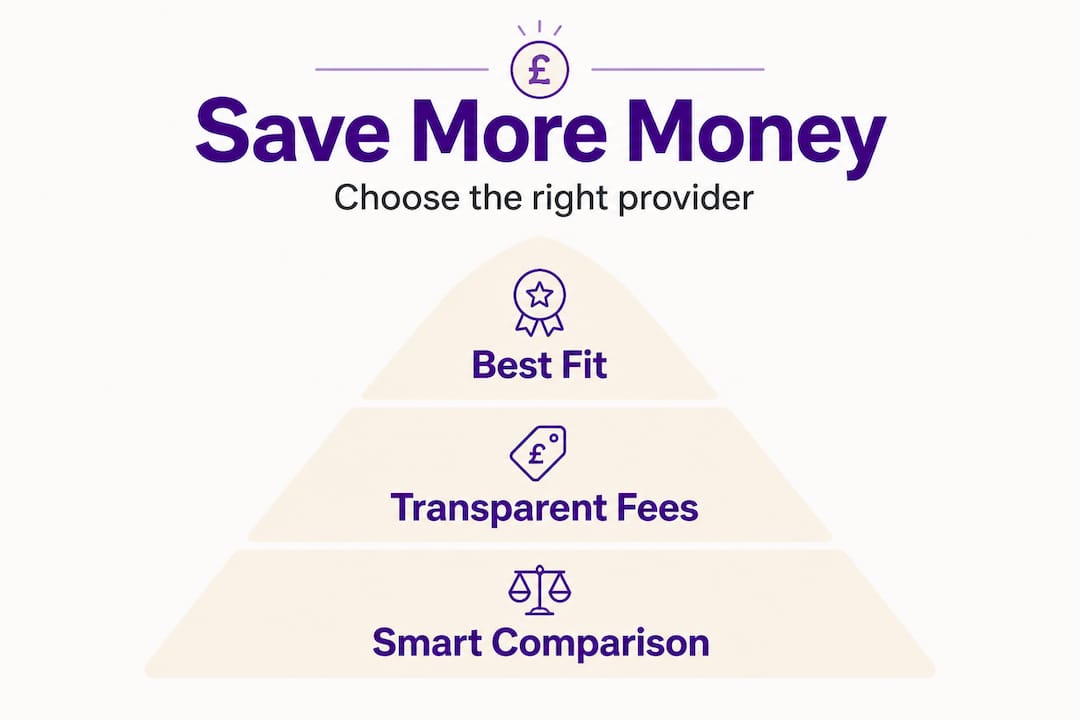
Compare providers easily: find your best fit before you travel
Understanding the variables is the first step. Acting on them before you travel is what actually protects your budget.
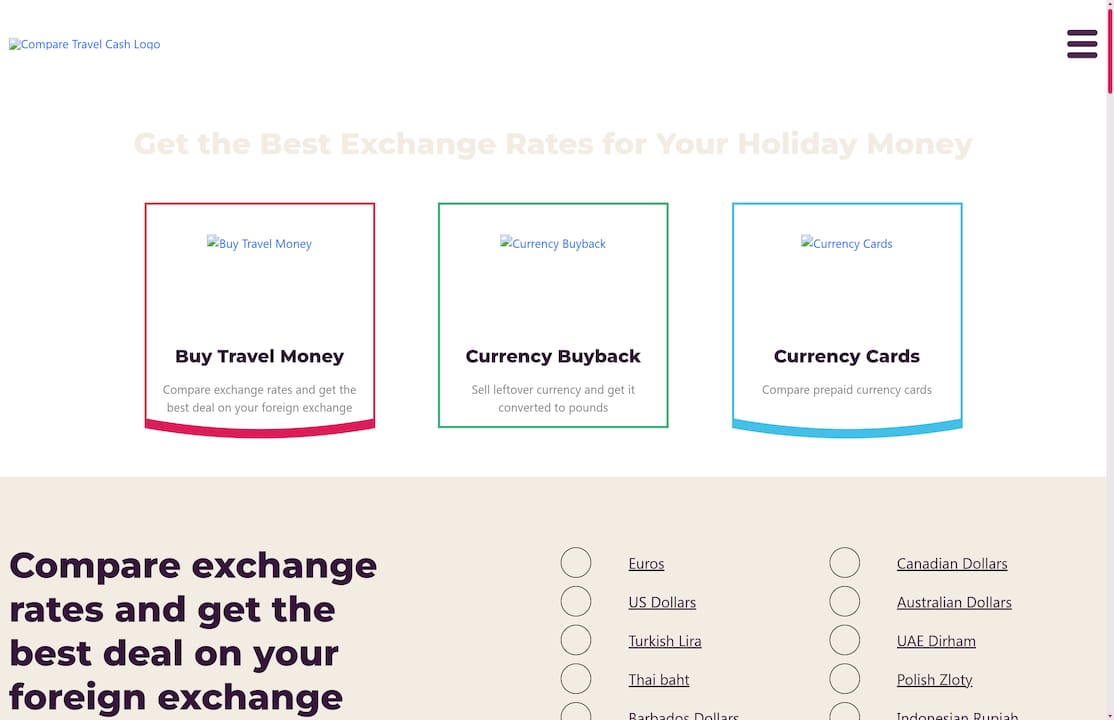
CompareTravelCash.co.uk makes it straightforward to put this knowledge into practice. You can compare live exchange rates across multiple UK providers in seconds, seeing the real cost rather than just headline figures. Whether you are looking for the best cash rate, want to review currency card options side by side, or want to check specific provider rates such as Hays Travel’s travel money rates, everything is in one place. Decide smarter before you head abroad, because the best time to compare is always before you book.
Frequently asked questions
What is the safest way to get travel money before a trip?
Order your currency in advance from a reputable provider or use a regulated prepaid travel card for both safety and better rates, rather than relying on airport options.
How do I avoid being overcharged by dynamic currency conversion (DCC)?
Always ask to pay in local currency rather than pounds when using your card abroad, ensuring your card provider handles the conversion at a more competitive rate.
Do all exchange providers display their fees and rates clearly?
Not always. UK regulators have found cases where providers failed to display transaction fees and markups clearly before purchase, so always verify the full cost before you commit.
Is there one exchange provider that is always best for UK travellers?
No. As Which? notes, the best provider depends on your trip pattern, spending habits, and product usage, so comparing before each trip is essential.
Recommended
- Travel money exchange: How UK travellers get the best rates
- How to get the best exchange rate: UK traveller guide
- Compare Travel Cash | Travel Money Comparisons
- Why compare exchange rates: save more as a UK traveller
- How to Pick a Safe Crypto Exchange in 2026: A Practical Buyer’s Checklist | Crypto Watchdog