The best time to buy holiday money is typically 2–3 weeks before your departure date, on a Tuesday, Wednesday, or Thursday morning. This is not a rough estimate. It reflects how foreign exchange markets actually behave, when liquidity is highest and dealer spreads are tightest. Currency exchange, the formal term for what most UK travellers call “buying holiday money,” follows predictable patterns that you can use to your advantage. This guide draws on 2026 market data to show you exactly when to buy, how to plan ahead, and how to avoid the most common and costly mistakes.
What is the best time to buy holiday money?
The best time to buy holiday money falls on mid-week mornings, specifically between Tuesday and Thursday, during the windows of 06:00–07:00, 11:00–13:00, and 19:00–21:00 GMT. These windows align with peak trading activity across European and US markets, which pushes spreads down and gives retail buyers a better rate. Mondays and Fridays carry higher volatility as markets open and close the weekly cycle, making those days less predictable for locking in a rate.

The table below shows how different days and times compare for rate stability:
| Day | Time Window (GMT) | Market Stability | Recommended? |
|---|---|---|---|
| Monday | Any | Low (post-weekend gaps) | No |
| Tuesday | 06:00–07:00, 11:00–13:00 | High | Yes |
| Wednesday | 11:00–13:00, 19:00–21:00 | High | Yes |
| Thursday | 06:00–07:00, 11:00–13:00 | High | Yes |
| Friday | Afternoon | Low (pre-weekend thin liquidity) | No |
| Weekend | Any | Very low | No |
Lower volatility mid-week during morning hours typically means more stable spreads from dealers. That stability translates directly into more foreign currency in your pocket for the same pounds spent.
Pro Tip: If you are ordering online, place your order on a Tuesday or Wednesday morning. Many providers update their rates overnight, so early-week orders often capture the best published rates before any intraday adjustments.
How far in advance should you buy holiday money?
Ordering holiday money 2–3 weeks before departure gives you the best balance of competitive rates, adequate delivery time, and reduced stress. That window is wide enough to catch a favourable rate movement without exposing you to excessive long-term currency risk. For peak summer travel or bank holiday periods, extending that to 3–4 weeks is sensible, as demand from other travellers can slow delivery and push some providers to widen their margins.
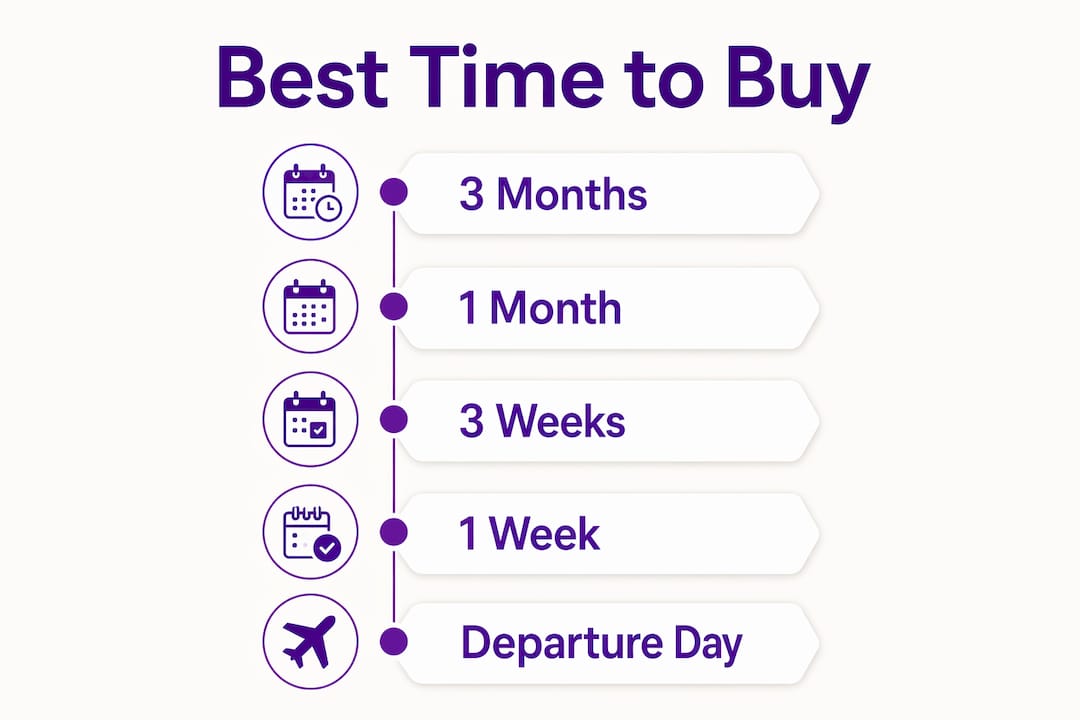
Buying too early carries its own risk. Locking in a rate three months out means you miss any improvement in the pound’s position. Buying too late, particularly at the airport on departure day, is the most expensive option available.
Here is a clear breakdown of the trade-offs:
Buying early (3–4 weeks ahead)
- Avoids last-minute stress and delivery delays
- Allows time to compare providers properly
- Misses potential rate improvements closer to travel
- Suits larger amounts where certainty matters more than marginal gains
Buying last-minute (at the airport or day before)
- Airport walk-up rates are typically 5–10% worse than pre-ordered online rates
- No time to compare or reconsider
- Convenient only in genuine emergencies
- The “convenience tax” here is real and measurable
Pro Tip: Set a calendar reminder for 3 weeks before your departure date. That single habit removes the temptation to leave it until the airport and saves you money every time.
What strategies help smooth out currency rate fluctuations?
The split exchange strategy is the most practical tool for managing rate risk. Rather than converting your full holiday budget in one transaction, you divide it into two or three purchases spread over several weeks. Experts recommend a split exchange approach for larger amounts, as it averages out daily market movements and reduces the chance of converting everything on a poor-rate day. If you need £1,000 worth of euros, buying £500 worth four weeks out and £500 worth two weeks out gives you a blended rate that is usually more favourable than a single transaction.
Seasonal patterns add another layer of opportunity. GBP tends to be stronger in april and october, with average gains of 0.7%–0.9%, while february and august are historically weaker months for sterling. GBP seasonal strength in April and October often aligns with fiscal events, giving travellers a slight edge if planning accordingly. If your holiday falls in august, buying your currency in late july or early october for the following year’s trip can make a meaningful difference.
Here are the practical steps to put these strategies into action:
- Identify your travel dates at least six weeks out and note the seasonal pattern for that period.
- Set rate alerts using a rate tracking tool so you are notified when the pound reaches a target level.
- Make your first split purchase 3–4 weeks before departure on a mid-week morning.
- Monitor the rate for one to two weeks and make your second purchase if the rate holds or improves.
- Avoid checking rates obsessively in the final week. Panic-buying on a Friday afternoon is how people end up with poor rates.
- Review your leftover currency after the trip and use a currency buyback comparison to recover value on unspent notes.
Tracking exchange rates in advance with alerts and acting during stable, favourable market periods about 1–2 weeks before travel is the approach used by experienced travellers. It requires minimal effort but pays off consistently.
What are the best tips for buying travel money safely?
Choosing the right provider and purchase method matters as much as timing. Currency exchange providers vary significantly in fees, delivery speed, and rate competitiveness, so comparing them before you buy is not optional if you want value. Home delivery typically takes 1–3 business days, with earlier-in-the-week orders processed faster. Branch collection is usually available next day if pre-ordered. Airport walk-up is the slowest route to value, not the fastest.
The table below compares the most common purchase methods for UK travellers:
| Method | Rate Quality | Speed | Convenience | Recommended? |
|---|---|---|---|---|
| Online, home delivery | Excellent | 1–3 days | High | Yes |
| Online, branch collection | Very good | Next day | Medium | Yes |
| High street bureau | Good | Same day | Medium | Situational |
| Airport pre-order | Fair | Same day | High | Only if pre-ordered |
| Airport walk-up | Poor | Immediate | Very high | No |
| Prepaid travel card | Good to excellent | Order 2+ weeks ahead | Very high | Yes |
Prepaid multi-currency travel cards deserve specific mention. Cards from providers available through platforms like Comparetravelcash let you load multiple currencies at a fixed rate, which removes the risk of spending at a poor live rate abroad. Order these at least two weeks before travel to allow for delivery and activation. You can compare prepaid currency cards across multiple UK providers to find the best deal for your destination.
For a broader view of your options, Comparetravelcash has a detailed guide covering types of foreign currency providers available to UK travellers, which is worth reading before you commit to any single method.
Pro Tip: Never exchange money at a hotel reception or tourist-area bureau de change. These outlets rely on captive customers and consistently offer the worst rates outside of airport walk-up counters.
Why i think most travellers overcomplicate this
Most of the anxiety around buying holiday money comes from treating it like a financial trading decision. It is not. You are not trying to beat the market. You are trying to avoid the worst outcomes, and that is a much simpler goal.
From years of watching how UK holidaymakers approach this, the biggest losses come from one of two places: buying at the airport on the day of departure, or doing nothing until the week before and then panic-comparing rates in a rush. Both are avoidable with a single decision made three weeks out.
The split exchange strategy sounds sophisticated, but in practice it just means buying half your currency one week and half the next. Most people who try it once never go back to single-transaction buying. The psychological benefit alone is worth it. You stop worrying about whether you bought at the “right” moment because you know you averaged it out.
Seasonal patterns are real, but do not let them paralyse you. If you are travelling in august and the pound is weak, you still need euros. Buy them mid-week, compare providers on Comparetravelcash, and move on. The difference between a good rate and a great rate is rarely more than a few pounds on a typical holiday budget. The difference between a good rate and an airport walk-up rate is often £50 or more.
Plan ahead, use a comparison tool, and resist the airport bureau. That is genuinely all most travellers need to know.
— Jason
How Comparetravelcash helps you get the best rates
Comparetravelcash compares live exchange rates from multiple trusted UK currency providers in one place, so you can see exactly who is offering the best deal for your currency before you commit.
Whether you are buying euros for a summer break or US dollars for a long-haul trip, the platform shows you real rates from providers including Hays Travel, The Currency Club, and others, updated regularly so you are never working from stale data. You can check current rates from Hays Travel or browse all travel money rates across the full provider list. Online ordering and delivery options mean you can lock in a mid-week rate from your sofa, with no airport queues and no inflated walk-up fees. Start your comparison now and give your holiday budget the value it deserves.
FAQ
When is the best time of year to buy holiday money?
April and October are historically the strongest months for GBP, making them the best times of year to buy foreign currency if your travel schedule allows. February and August tend to see weaker sterling, so buying earlier in those periods is advisable.
Is it cheaper to buy holiday money online or at the airport?
Online pre-orders are consistently cheaper. Airport walk-up rates are typically 5–10% worse than rates available from online providers, making airport exchange the most expensive option for most travellers.
How many days before travel should i order holiday money?
Order at least 2–3 weeks before your departure date. This allows time for home delivery, gives you access to competitive rates, and removes the pressure of last-minute decisions.
What days of the week offer the best currency exchange rates?
Tuesday, Wednesday, and Thursday offer the most stable rates due to higher market liquidity and tighter spreads. Mondays and Fridays carry more volatility and are best avoided for large currency purchases.
Does a split exchange strategy actually save money?
Yes, for larger amounts. Split purchases reduce rate risk by averaging out daily market fluctuations across two or more transactions, which is more reliable than trying to time a single perfect purchase.