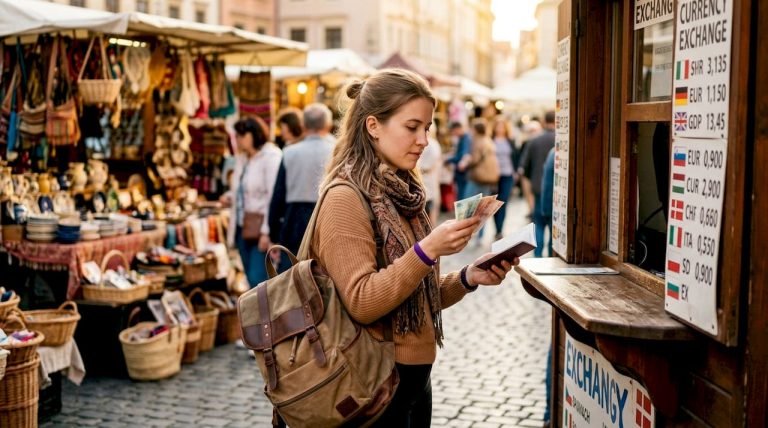
Smart student travel money tips are practical budgeting and currency management strategies that help young travellers reduce fees, get better exchange rates, and stretch every pound further while abroad. The difference between a well-planned trip and an expensive one often comes down to where you exchange your money, which card you carry, and whether you know about pitfalls like Dynamic Currency Conversion. This guide covers the most effective methods for managing travel money in 2026, from pre-ordering currency online to using cards like Wise, Monzo, and Starling that charge no foreign transaction fees.
1. Smart ways to exchange currency before and during travel
Currency exchange is where most students lose money without realising it. Airport bureaux de change typically charge 5–15% above the mid-market rate. That means on a £500 exchange, you could lose £30–£70 compared to ordering online or using a fee-free card. That is a significant chunk of a student budget gone before you have even left the terminal.
Pre-ordering currency online through providers like Travelex Online or Eurochange consistently delivers better rates than any airport option. You lock in a rate in advance, collect at a convenient location, and avoid the last-minute panic that leads to poor decisions. For a detailed breakdown of your options, the currency exchange guide from Comparetravelcash is worth reading before you book.
The Post Office is a solid middle-ground option for students who prefer collecting cash in person. Post Office travel money typically sits 2–4% above the mid-market rate. That is noticeably cheaper than airport rates, though still not as competitive as online pre-orders or fee-free debit cards.
| Exchange method | Typical markup above mid-market | Convenience |
|---|---|---|
| Airport bureau de change | 5–15% | Very high |
| Post Office in-branch | 2–4% | High |
| Online pre-order (Travelex, Eurochange) | 1–3% | Medium |
| Fee-free debit card (Wise, Monzo) | 0–0.5% | Very high |
| Reputable bank ATM abroad | 0–2% | High |
Pro Tip: Always decline the option to pay in pounds when a foreign card machine or ATM offers it. This is Dynamic Currency Conversion, and it adds hidden fees on top of an already poor exchange rate. Always choose to pay in the local currency.
2. How to budget and manage money daily while travelling
Effective daily budgeting is the backbone of any student travel money strategy. Set a realistic daily spending limit before you leave, based on researched costs for food, accommodation, and transport at your destination. Apps like Trail Wallet, TravelSpend, or even a simple spreadsheet help you track spending in real time and flag when you are drifting over budget.
Travelling in shoulder seasons such as spring or autumn cuts costs on flights and accommodation significantly compared to peak summer travel. Fewer tourists also means cheaper local restaurants, shorter queues, and a more authentic experience. This is one of the most underrated levers students have for reducing total trip costs.
Slow travel is another powerful tactic. Staying in one city for a week rather than hopping between three destinations in the same period reduces transport costs and often unlocks weekly accommodation rates. You also spend less on rushed tourist meals and more on local markets and self-catering, which is far cheaper.
Here are the core daily budgeting habits that make the biggest difference:
- Research local prices for meals, public transport, and entry fees before you arrive so your daily budget is grounded in reality, not guesswork.
- Use free and discounted attractions wherever possible. Many European museums offer free entry on specific days, and student cards unlock further reductions.
- Avoid impulse purchases in tourist areas. Prices near major sights are routinely 30–50% higher than a few streets away.
- Track every transaction on the day it happens. Reviewing spending weekly means you have already overspent before you notice.
Pro Tip: Book flights mid-week and well in advance. Early booking and flexible dates can reduce flight costs by 30–60% and accommodation by up to 50% in some destinations.
3. Which travel cards save students the most money abroad?
The right payment card is the single most impactful tool in a student’s travel money kit. Wise, Monzo, Starling, and Chase UK all offer mid-market exchange rates with no foreign transaction fees, making them far cheaper than standard UK bank cards for overseas spending. Wise and Chase in particular stand out: Chase also provides 1% cashback on overseas spending, which adds up across a longer trip.
Prepaid multi-currency cards work differently. You load them with foreign currency at a set rate before you travel, which protects you against rate fluctuations. They are useful if you are travelling to a destination with a volatile currency or if you want a strict spending cap. The trade-off is that you are locked into the rate at the time of loading, which may not always be the best available. You can compare prepaid currency cards on Comparetravelcash to see current rates side by side.
| Card | Foreign transaction fee | Exchange rate | Cashback |
|---|---|---|---|
| Wise debit card | None | Mid-market | None |
| Monzo | None (up to limits) | Mid-market | None |
| Starling | None | Mid-market | None |
| Chase UK | None | Mid-market | 1% |
| Standard UK bank card | 2–3% | Bank rate | Varies |
Key points to keep in mind when choosing a card:
- Avoid cards with annual fees unless the rewards clearly outweigh the cost for your travel pattern.
- Check whether your card charges ATM withdrawal fees abroad, even if it has no transaction fees.
- Always notify your bank before travelling to prevent your card being blocked for suspected fraud.
- Carry at least two payment methods and store them separately. Multiple payment methods protect you if one card is lost, stolen, or blocked.
For a full comparison of cash versus card options, the travel cash vs currency card guide on Comparetravelcash covers the trade-offs clearly.
4. How to avoid common money mistakes while travelling
The most costly student travel mistakes are not dramatic. They are small, repeated errors that stack up quietly. Fee stacking is the main culprit: combining ATM operator charges, poor exchange rates, and Dynamic Currency Conversion fees on a single withdrawal can cost you significantly more than any single fee suggests.
Withdrawing cash less frequently but in larger amounts reduces per-transaction costs. Fewer, larger withdrawals are more economical than daily small ones. Treat the combined cost of the exchange rate and any ATM fee as one unit, and you will make better decisions about when and where to withdraw.
Unbranded tourist ATMs are a specific trap to avoid. Standalone tourist ATMs in high-footfall areas often charge high operator fees on top of whatever your bank charges. Always use ATMs attached to a recognised local bank branch where possible.
Student discount cards are an underused resource. The International Student Identity Card (ISIC) unlocks discounts of 10–50% on transport, accommodation, and attractions globally. Many students carry one but forget to use it. Make a habit of asking about student rates before paying for anything.
5. Planning your trip finances: what to do before you leave the UK
Pre-trip financial preparation prevents the majority of problems students encounter abroad. Contact your bank at least a week before departure to inform them of your travel dates and destinations. Banks routinely block cards flagged for unusual overseas activity, and a blocked card in a foreign country is a stressful and expensive problem to fix remotely.
Order any cash you need online in advance rather than at the airport. Use a comparison tool to find the best rate available at the time of ordering. Rates fluctuate daily, so checking a few days before travel and setting a rate alert gives you the best chance of ordering at a favourable moment.
Research the destination’s cash culture before you go. Some countries, particularly in Southeast Asia and parts of Eastern Europe, are still heavily cash-based. Arriving with only a card and no local currency can leave you stuck at the airport or paying inflated rates at the first ATM you find. A small amount of local currency in your pocket from the moment you land removes that stress entirely.
Pack a written note of your bank’s emergency contact number separately from your wallet. If your card is lost or stolen, you need that number without relying on your phone having battery or signal.
My honest view on student travel money management
I have watched students make the same expensive mistakes on repeat, and the pattern is always the same: they focus on finding cheap flights and cheap hostels, then haemorrhage money on currency exchange and card fees once they arrive. The savings from a budget airline ticket can disappear entirely in a week of poor spending decisions abroad.
The single biggest shift I would recommend is treating your payment card as seriously as your passport. Choosing Wise or Starling over a standard bank card before you travel takes ten minutes and saves you real money every single day you are away. There is no complexity involved. It is simply a better tool for the job.
I would also push back on the idea that slow travel is a sacrifice. Spending a week in one city rather than rushing through five in the same time is not just cheaper. It is a better way to travel. You eat where locals eat, you find the cheap transport routes, and you stop paying tourist prices for everything. Your budget stretches further and the experience is richer.
Finally, do not underestimate the ISIC card. Students consistently overlook it, yet the discounts it unlocks on trains, museums, and accommodation across Europe and beyond are substantial. It costs very little and pays for itself within the first day of use in most destinations.
— Jason
How Comparetravelcash helps you find the best student travel money rates
Planning your travel money before you leave the UK is the most reliable way to avoid overpaying. Comparetravelcash makes that process straightforward by comparing live exchange rates from multiple UK providers in one place, so you can see at a glance who is offering the best deal on your currency.
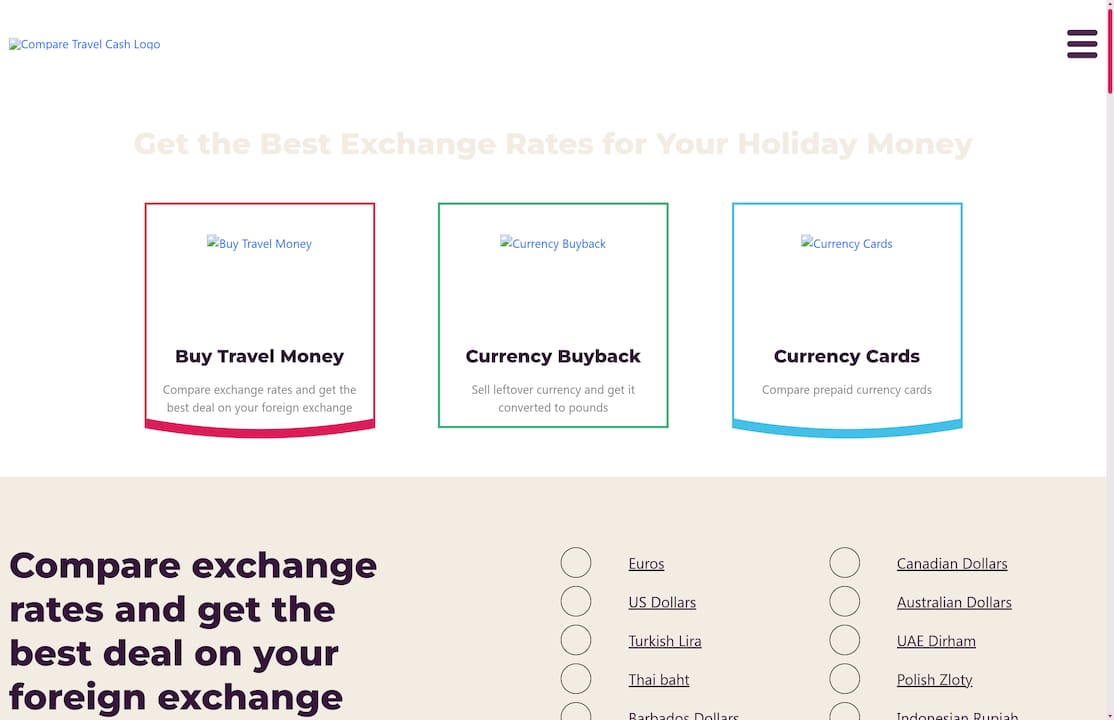
Whether you need to compare travel money rates across providers, check the latest rates from specific suppliers like Hays Travel, or find the best prepaid currency card for your trip, Comparetravelcash has the tools to help you decide quickly and confidently. Students who compare rates before ordering consistently get more foreign currency for their pounds. Check your currency before you book, not at the airport.
FAQ
What is the cheapest way for students to exchange currency?
Pre-ordering currency online through providers like Travelex or Eurochange, or using a fee-free debit card such as Wise or Starling, delivers the lowest costs. Airport bureaux de change are the most expensive option, typically charging 5–15% above the mid-market rate.
Should students use cash or card abroad?
A combination of both works best. Use a fee-free debit card like Monzo or Chase UK for most spending, and carry a small amount of local cash for markets, taxis, and cash-only venues. Always keep backup payment methods stored separately.
What is Dynamic Currency Conversion and why should students avoid it?
Dynamic Currency Conversion (DCC) is when a foreign card machine or ATM offers to charge you in pounds instead of local currency. It applies a poor exchange rate and adds hidden fees. Always choose to pay in the local currency to avoid these extra charges.
How can students get discounts while travelling abroad?
The International Student Identity Card (ISIC) provides discounts of 10–50% on transport, accommodation, and attractions in countries worldwide. Always ask about student rates before paying, as many venues offer reductions that are not prominently advertised.
When is the best time for students to travel to save money?
Travelling in shoulder seasons such as spring (march to may) or autumn (september to november) reduces costs on flights and accommodation compared to peak summer periods. Mid-week flights booked well in advance can save 30–60% on airfares.