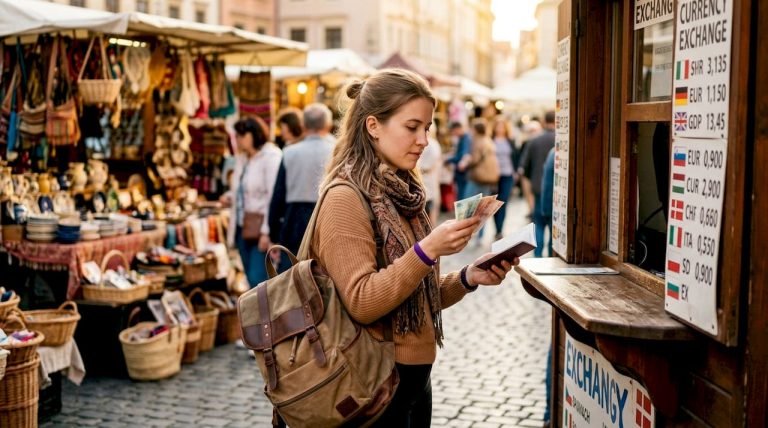
Travel money mistakes are financial errors that cost UK travellers hundreds of pounds through poor exchange rates, unnecessary fees, and avoidable charges every year. The most damaging errors are not obvious. Currency fees hide inside exchange rates, making losses invisible until you check your bank statement at home. Whether you are heading to Europe, the US, or further afield, knowing which travel money mistakes to avoid before you leave can protect a significant portion of your holiday budget. This guide covers the most costly errors and exactly how to sidestep them.
1. What are the most costly travel money mistakes to avoid?
The single most expensive habit is exchanging currency at airport kiosks. Airport exchange rates run 8–15% worse than the mid-market rate, meaning you could lose £80–£150 on every £1,000 you convert. That is a significant slice of a two-week holiday budget gone before you reach the hotel.
Below are the most common travel budgeting errors UK travellers make, along with why each one costs more than it appears.
- Exchanging at the airport. Kiosk rates are the worst available. The convenience comes at a steep price, and the losses are baked into the rate rather than shown as a visible fee.
- Using a standard debit or credit card abroad. Foreign transaction fees of 1–3% apply per purchase on most standard UK bank cards. On a two-week trip, that adds up to £150–£300 in extra charges.
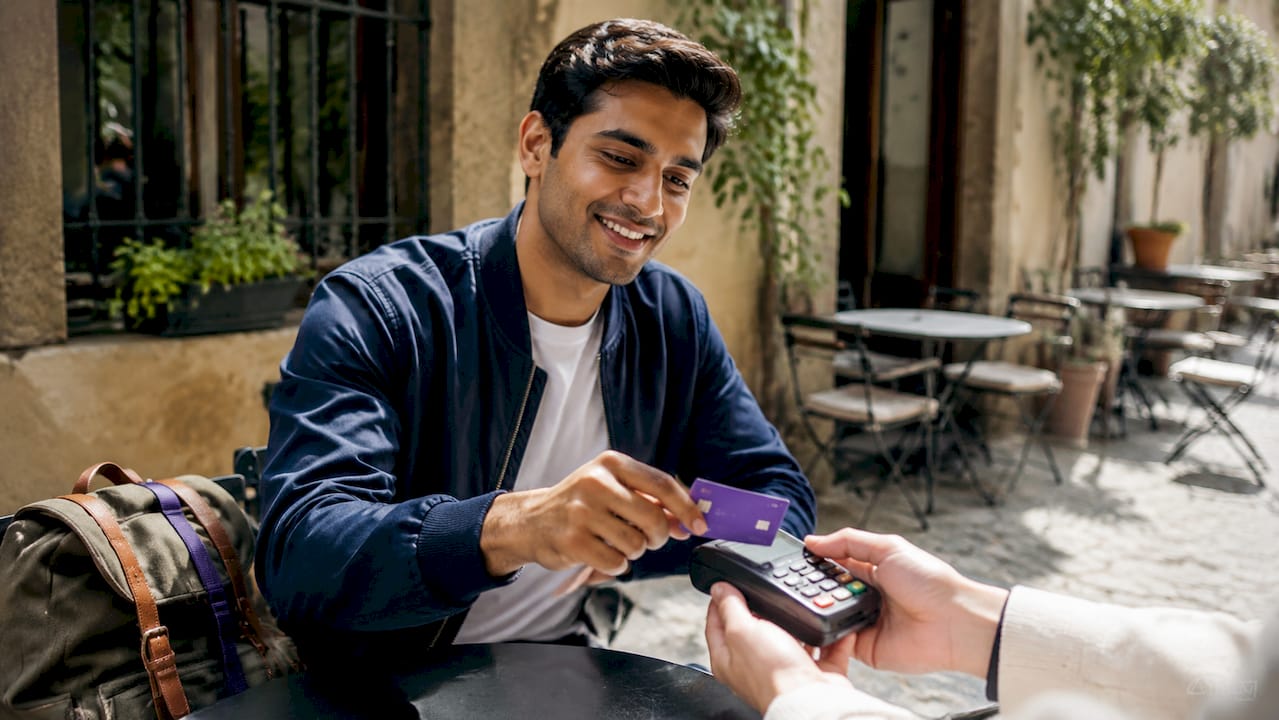
- Accepting Dynamic Currency Conversion (DCC). When a card terminal abroad offers to charge you in pounds rather than the local currency, decline it. DCC adds 3–7% extra cost on top of the already unfavourable rate.
- Making frequent small ATM withdrawals. Each withdrawal can trigger a fixed fee of £3–£5 plus a percentage charge from the foreign ATM operator. Doing this daily multiplies those costs fast.
- Carrying only one card. Bank fraud systems and technical failures can block a card without warning. A backup card stored separately prevents you from being stranded without access to funds.
- Not telling your bank you are travelling. Banks flag overseas transactions as suspicious and block cards. A quick call or app notification before departure avoids this entirely.
- Carrying excessive cash. Large amounts of cash increase your exposure to theft, particularly in busy tourist areas. Carry only what you need for the day.
Pro Tip: Check whether your destination is predominantly cash-based or card-friendly before you travel. Countries like Germany and Japan still rely heavily on cash, while Scandinavia is almost entirely card-driven. Matching your payment method to the destination saves both money and stress.
2. How can UK travellers secure the best currency exchange rates?
The mid-market rate is the real exchange rate, the one you see on Google or Reuters. Every bureau de change, bank, and airport kiosk adds a markup on top of that rate. Your goal is to close the gap between what you pay and the mid-market rate as much as possible.
Use a comparison tool before you book
Comparetravelcash aggregates live rates from high street bureaux, online providers, and travel card suppliers in one place. Checking rates before you commit takes minutes and can save a meaningful amount, particularly on larger currency orders. You can also learn how to spot bad exchange rates before they catch you out.
Pre-order travel money online
Online currency orders consistently offer better rates than walk-in purchases. Providers compete harder for online business, and you avoid the premium charged for counter service. Order at least 48 hours before travel to allow for delivery or collection.
Consider a multi-currency prepaid travel card
Multi-currency travel cards from providers such as Wise or Revolut offer rates close to the mid-market rate with low or no foreign transaction fees. ATM withdrawals at destination bank ATMs come within 1–2% of the mid-market rate, far better than airport kiosks. These cards also let you lock in a rate when it is favourable, which is useful if you are travelling in a period of currency volatility. Read more about multi-currency cards explained for a full breakdown of how they work.
Avoid “0% commission” booths
The phrase “0% commission” is a marketing claim, not a guarantee of a good rate. These providers simply embed their profit in a wider spread between the buy and sell rate. The commission is zero; the markup is not.
Pro Tip: Monitor the exchange rate for your destination currency in the weeks before travel using Google Finance or a rate alert service. If the rate moves significantly in your favour, that is the moment to convert.
| Exchange method | Typical cost vs mid-market rate | Convenience |
|---|---|---|
| Airport kiosk | 8–15% worse | Very high |
| High street bureau (walk-in) | 3–6% worse | High |
| Online pre-order | 1–3% worse | Medium |
| Multi-currency travel card | 0.5–2% worse | High |
| Destination bank ATM | 1–2% worse | Medium |
3. What are the best card and ATM practices to avoid hidden fees abroad?
Card fees abroad are one of the most overlooked travel finance mistakes. Most UK travellers assume their bank card works like it does at home. It does not.
- Carry at least two cards and store them separately. Keep one in your wallet and one locked in your accommodation. If your primary card is lost, stolen, or blocked, you have immediate access to funds without a crisis.
- Activate a travel notice on your cards before departure. Most UK banks, including Barclays, HSBC, and Lloyds, allow you to set a travel notification via their app. This reduces the chance of a fraud block on your account.
- Always pay in local currency. When a terminal asks whether you want to pay in pounds or the local currency, always choose local. Paying in pounds triggers DCC, which hands the exchange rate decision to the merchant rather than your card network. Visa and Mastercard rates are consistently better.
- Withdraw larger amounts less frequently. Repeated small ATM withdrawals compound fixed fees rapidly. One larger withdrawal every few days is cheaper than daily small ones.
- Use bank-branded ATMs in city centre locations. Standalone ATMs in tourist areas, petrol stations, and convenience stores typically charge higher fees and offer worse rates. A branch ATM from a recognised local bank is the safer choice.
- Never use a credit card for ATM cash withdrawals. Credit card cash advances attract immediate interest charges from the moment of withdrawal, with no grace period. Use a debit card or a dedicated travel card instead.
- Manage security holds carefully. Hotel and car rental deposits can freeze large sums on a credit card for days. Use a credit card with a high limit for deposits and a separate low-fee travel card for daily spending to keep your available funds accessible.
Pro Tip: Before travelling, check whether your bank charges a non-sterling transaction fee and a separate ATM withdrawal fee. Some accounts charge both. Switching to a travel-friendly account such as those offered by Starling Bank or Chase UK before your trip can eliminate both charges entirely.
4. How to budget and carry cash wisely
Cash is not obsolete, but carrying too much of it is a liability. The right approach is to carry enough for immediate needs and rely on cards or ATMs for the rest.
Bring a small amount of local currency on arrival to cover transport from the airport, tips, and your first meal. You do not need to exchange a large sum at the airport to achieve this. Pre-order a modest amount online before departure at a better rate, or withdraw a small sum from a bank ATM on arrival.
Avoid exchanging large amounts at hotel reception desks. Hotels offer some of the worst exchange rates available, often worse than airport kiosks, because they know you are captive and unlikely to shop around.
Keep your cash and cards in separate locations at all times. If your wallet is stolen, you want at least one card and some emergency cash stored elsewhere, such as a hotel safe or a hidden travel pouch. Pickpocket risk is highest in crowded tourist areas, on public transport, and at busy markets.
Research your destination’s cash norms before you travel. In some countries, cash is the only accepted payment method at local restaurants, markets, and smaller hotels. In others, you can go an entire fortnight without touching a note. Knowing which applies to your destination lets you plan your cash needs accurately and avoid over-exchanging at poor rates.
Emergency funds should always exist in a form separate from your main wallet. A small amount loaded onto a travel card, or a backup card registered to a different account, gives you a fallback if your primary funds are compromised.
What I have learned watching UK travellers get it wrong
The pattern I see most often is not ignorance. It is urgency. Travellers know airport rates are bad. They exchange there anyway because they ran out of time to sort it beforehand. The fix is not a better exchange rate app. It is booking your travel money at the same time you book your flights.
The invisible fee problem is the one that genuinely surprises people. Currency fees are deliberately embedded in exchange rates so that travellers cannot easily see what they are paying. A bureau advertising “0% commission” is not lying. It is simply hiding its margin in the spread. Once you understand that the rate itself is where the profit lives, you start reading every exchange offer differently.
My strongest advice is to treat your travel money as a separate line in your holiday budget, not an afterthought. Decide how much you need, compare rates using a tool like Comparetravelcash, pre-order online, and load a travel card as your backup. That combination covers almost every scenario you will encounter abroad. The travellers who lose the most are the ones who make three or four separate decisions under time pressure at the airport. Make one good decision at home, and you are done.
— Jason
Compare rates before your next trip with Comparetravelcash
Sorting your travel money before you leave is the single most effective step you can take to protect your holiday budget.
Comparetravelcash makes it straightforward to compare travel money rates from high street bureaux, online providers, and prepaid card suppliers side by side. You can also compare prepaid currency cards to find the lowest-fee option for your destination. Rates are updated regularly, so you are always seeing current offers rather than outdated figures. Check the tips for exchanging money abroad guide for additional strategies before you book.
FAQ
What is the worst place to exchange currency?
Airport currency kiosks offer rates 8–15% worse than the mid-market rate, making them the most expensive place to exchange money for most travellers.
What is Dynamic Currency Conversion and should I avoid it?
Dynamic Currency Conversion (DCC) is when a foreign card terminal charges you in pounds instead of the local currency. It adds 3–7% extra cost, so always choose to pay in local currency.
How many cards should I take abroad?
Carry at least two cards stored in separate locations. Bank fraud systems can block a card without warning, and a backup prevents you from being left without access to funds.
Is it cheaper to use an ATM abroad or exchange cash before I travel?
Bank-branded ATMs at your destination offer rates within 1–2% of the mid-market rate, which is competitive with pre-ordered online currency. Both options are significantly cheaper than airport kiosks or hotel desks.
Do “0% commission” bureaux actually offer better rates?
No. Zero-commission providers embed their profit in the exchange rate spread rather than charging a visible fee. Always compare the actual rate offered against the mid-market rate, not the commission label.