Buying currency online is the most cost-effective way for UK travellers to obtain foreign cash before a trip abroad. Online foreign exchange, the industry term for purchasing currency through digital platforms, consistently delivers better rates, greater convenience, and more transparent pricing than banks or airport kiosks. Platforms like Comparetravelcash, Post Office Money, and Cambridge Currencies give you the tools to compare, track, and buy at the right moment. The benefits of buying currency online are not marginal. They translate into real savings and far less stress on travel day.
1. How does buying currency online save you money?
Online currency specialists offer rates 1%–2.5% better than high-street banks and 4%–7% better than airport kiosks. On a £1,000 exchange, that gap could mean the difference between walking away with €1,150 or €1,080. That is a meaningful sum, not a rounding error.
The reason online providers beat physical outlets comes down to overheads. Online platforms carry lower operating costs than branches or airport concessions, and they pass those savings on through tighter margins. Airport kiosks, in particular, charge what amounts to a convenience tax. You pay for the location, not the service.
| Method | Typical rate vs mid-market | Common fees |
|---|---|---|
| Online specialist | 0.5%–2% below mid-market | Low or none |
| High-street bank | 2%–3.5% below mid-market | Service charges may apply |
| Airport kiosk | 5%–8% below mid-market | Often additional commission |
Pro Tip: Never judge a deal by the headline rate alone. The effective cost metric combines the exchange rate margin, any booking fee, and delivery charges. Add all three before you decide.
For larger transfers above £10,000, specialist brokers such as Cambridge Currencies are preferred over apps due to tighter margins and personalised service. The saving on a £20,000 transfer can run into hundreds of pounds compared with a bank rate.
2. What convenience advantages do online currency purchases offer?
Online exchange platforms operate 24/7, so you are never constrained by branch opening hours or lunchtime queues. You can order at midnight on a Sunday from your sofa, which is simply not possible with a high-street bureau.
The practical advantages stack up quickly:
- Order from anywhere. Buy at home, at work, or on the commute. No physical trip required.
- Delivery or collection. Most online providers offer home delivery or click-and-collect at a local branch or Post Office.
- Rate alerts. Services like Comparetravelcash let you track live rates and notify you when your target rate is reached.
- Access to rare currencies. Online platforms carry broader currency stock, meaning you can order Thai Baht or Turkish Lira without the multi-day delays common at physical branches.
- Digital records. Every transaction generates a confirmation email and transaction history you can access anytime, which simplifies expense tracking.
Pro Tip: Set a rate alert at least two to three weeks before your departure. Currency markets move daily, and catching a favourable rate early is far better than panic-buying at the airport.
The removal of the physical errand is underrated. Last-minute airport exchanges are almost always the most expensive option. Planning your purchase online a week or two ahead removes that pressure entirely.
3. How does buying currency online give you better control and transparency?
Online buyers feel less pressured to accept unfavourable rates. At a physical counter, there is an implicit expectation to complete the transaction quickly. Online, you can take your time, compare multiple providers, and walk away without awkwardness.
Transparency is the other major gain. Online platforms display their margins, booking fees, and delivery charges clearly before you confirm. That is rarely the case at a bureau de change, where the rate on the board may not reflect the actual cost once commission is added.
Here is a practical checklist to verify costs before you buy:
- Check the mid-market rate. Use Google or XE.com to find the real interbank rate as your benchmark.
- Calculate the margin. Subtract the provider’s offered rate from the mid-market rate to find the markup percentage.
- Add all fees. Include booking fees, delivery charges, and any minimum order surcharges.
- Compare the effective cost. The effective cost is the only figure that matters. It combines every charge into one comparable number.
- Check for zero-commission traps. Providers advertising zero commission often embed a higher margin in the rate itself. The headline looks attractive; the effective cost does not.
Some specialist brokers also allow you to lock in a forward rate, fixing today’s exchange rate for a future purchase date. This is particularly useful when rates are favourable but your trip is weeks away.
4. Is it safe to buy currency online?
Buying currency online is safe when you use regulated providers. In the UK, reputable platforms are authorised by the Financial Conduct Authority (FCA), which sets standards for how customer funds are handled and what disclosures providers must make.
The verification process is straightforward. Online orders above certain thresholds require photo ID, proof of address, and sometimes a selfie. This is anti-money-laundering compliance, not an obstacle. It protects you as much as the provider.
For a detailed breakdown of what to check before placing an order, Comparetravelcash has a dedicated guide on buying currency safely online that covers FCA authorisation, payment methods, and what to do if something goes wrong.
5. What are the practical tips for buying foreign currency online?
Knowing the advantages of online currency exchange is one thing. Using them effectively is another. These are the steps that make the difference between a good deal and a great one.
- Verify FCA authorisation. Check the FCA register before using any provider. Unregulated platforms carry real financial risk.
- Prepare your documents. Have your passport, a recent utility bill, and a bank statement ready. Verification delays can cost you a good rate.
- Choose your delivery method carefully. Home delivery is convenient but adds a fee. Click-and-collect at a Post Office branch is often free and just as fast.
- Read the small print on delivery minimums. Many providers offer free delivery above a minimum order value, typically £500 or £750. Order just below that threshold and you pay a fee that wipes out your rate advantage.
- Use a comparison tool. Comparetravelcash aggregates rates from multiple providers in real time, so you see the best available deal without visiting each site individually. You can also compare prepaid currency cards as an alternative to cash.
- Plan at least one week ahead. Ordering with time to spare means you can choose standard delivery, avoid rush charges, and wait for a better rate if needed.
- Consider a buyback deal. If you return with leftover currency, some providers offer competitive buyback rates. Checking this before you buy means you know the full round-trip cost.
For a broader look at how online providers compare with high-street options, the Comparetravelcash guide on online vs high-street currency is worth reading before you commit.
6. Which type of online provider suits your needs?
Not every online provider works the same way. The right choice depends on how much you are exchanging and what you prioritise.
Online travel money specialists like Hays Travel and The Currency Club focus on holiday cash. They offer competitive rates on common currencies such as Euros and US Dollars, with straightforward ordering and delivery. They suit most leisure travellers well.
Specialist currency brokers like Cambridge Currencies are built for larger transactions. Currency expert Anthony Bull at Cambridge Currencies advises that brokers outperform apps for transfers above £10,000 because their margins are tighter and they provide guidance through complex payment details. For a family buying a holiday home abroad or sending a large international payment, the difference in cost is significant.
Prepaid multi-currency cards sit in a different category. They let you load multiple currencies at a locked rate and spend abroad without transaction fees. They work best alongside a cash purchase rather than as a complete replacement, since some destinations remain heavily cash-dependent.
A money exchange comparison should always weigh rate margin, fees, transfer speed, and regulatory protection together. No single provider wins on every metric.
Jason’s take: why I always buy currency online now
I used to buy currency at the Post Office on the way to the airport. It felt practical at the time. Looking back, it was one of the more expensive habits I had as a traveller.
The shift to buying online changed two things for me: the cost and the stress. Knowing I had locked in a decent rate a week before departure meant I arrived at the airport with one less thing to worry about. The savings were real too. On a two-week trip to the US, buying online versus at the airport saved enough to cover a decent dinner out.
My honest recommendation is to use a comparison tool like Comparetravelcash first, every time. Not because it always finds a perfect rate, but because it shows you what the market looks like across multiple providers in one place. That context is what stops you from accepting a poor deal without realising it.
The one thing most travellers overlook is the buyback rate. If you return with leftover currency, the spread between what you paid and what you get back can be wide. Checking that figure upfront tells you the true round-trip cost of your currency purchase.
— Jason
Find the best travel money rates with Comparetravelcash
Comparetravelcash is a UK comparison platform that aggregates live travel money rates from multiple providers, so you can see who is offering the best deal without visiting each site individually.
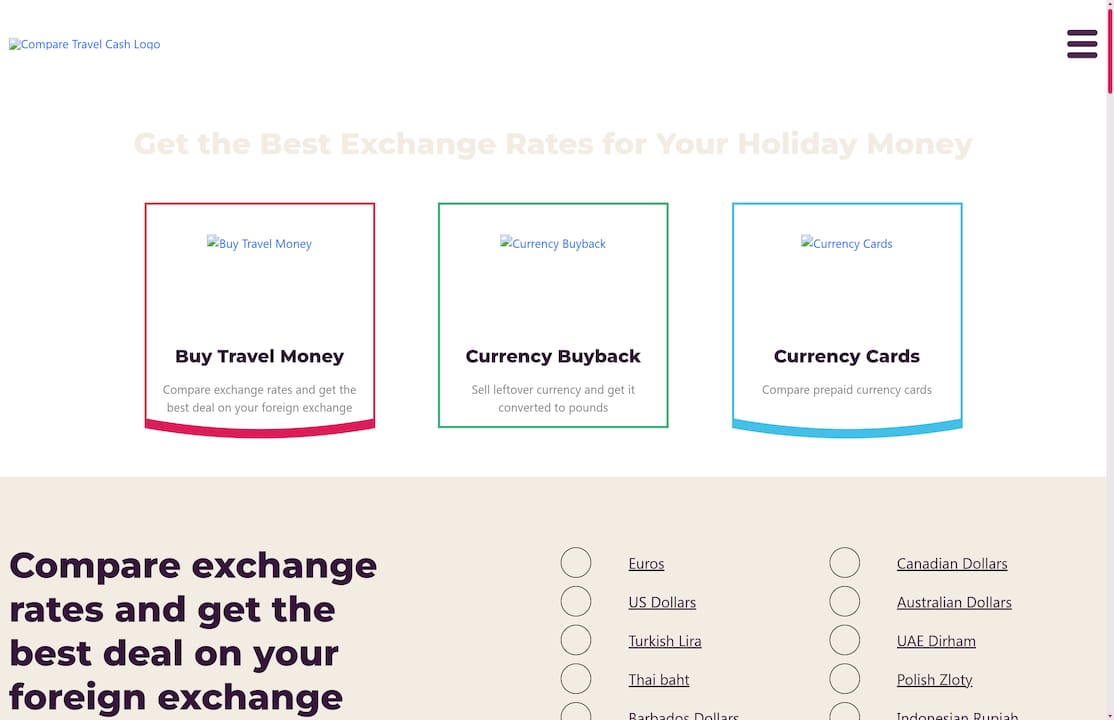
Whether you are buying Euros for a European city break or US Dollars for a long-haul trip, Comparetravelcash lets you compare travel money rates across online specialists, high-street providers, and prepaid card options in seconds. You can also track rates over time and set alerts to catch the right moment to buy. Stop guessing and start comparing before your next trip.
FAQ
How much can I save by buying currency online vs at the airport?
Online specialists typically offer rates 4%–7% better than airport kiosks. On a £1,000 exchange, that saving can reach £40–£70 in your pocket.
Is buying currency online safe in the UK?
Yes, provided you use a provider authorised by the Financial Conduct Authority. FCA-regulated platforms are required to handle customer funds responsibly and disclose all costs clearly.
What is the effective cost of a currency exchange?
The effective cost combines the exchange rate margin, booking fees, and delivery charges into a single comparable figure. It is the only metric that gives you a true like-for-like comparison between providers.
Should I use a broker or an online travel money site?
For holiday cash under £10,000, an online travel money specialist is usually sufficient. For larger transfers, specialist brokers offer tighter margins and personalised support that can save considerably more.
Can I buy less common currencies online?
Yes. Online platforms typically carry a broader range of currencies than physical branches. Currencies like Thai Baht or Turkish Lira are available for immediate purchase online, whereas a high-street branch may need several days to source them.