Knowing the currency exchange do’s and don’ts before you travel is the single most effective way to protect your holiday budget from hidden fees. The core rule is simple: always pay in the local currency at card terminals and ATMs abroad, never in pounds sterling. Ignoring this one principle can cost you between 3% and 7% extra on every transaction through a practice called Dynamic Currency Conversion (DCC). The Financial Conduct Authority (FCA) regulates UK payment providers, but DCC charges originate on the merchant’s side, placing them outside your card issuer’s control. Comparetravelcash exists precisely to help UK travellers compare rates and avoid these traps before they even leave home.
1. What is Dynamic Currency Conversion and why must you always refuse it?
Dynamic Currency Conversion is a fee-generating mechanism used by foreign merchants and ATM operators to convert your transaction into pounds sterling at the point of sale, rather than letting your bank handle it. The problem is that the merchant sets the exchange rate, not your bank. That rate is almost always worse.
DCC adds a markup of 3% to 7% on top of the mid-market rate. That means a €500 hotel bill could cost you an extra £15 to £35 for no benefit whatsoever.
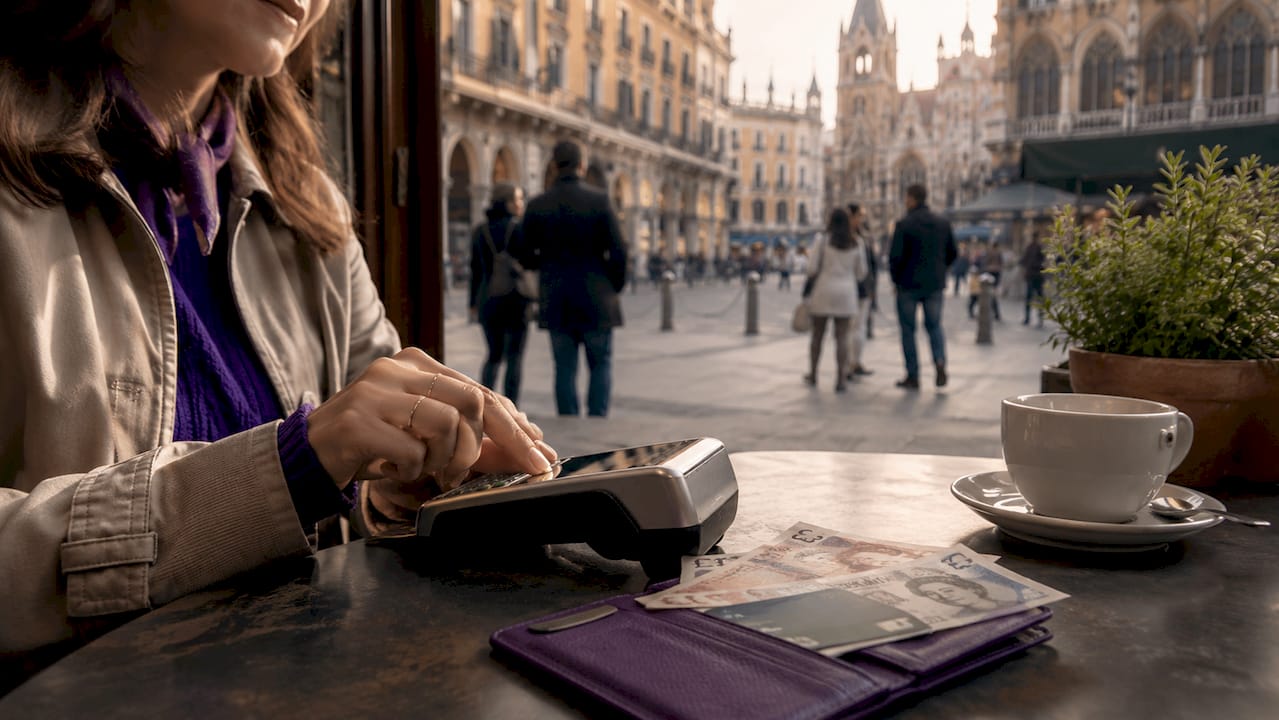
The trap is subtle. The terminal or ATM screen asks whether you want to pay in pounds or in the local currency. It often frames the pounds option as a convenience. It is not a convenience. DCC is a merchant-side profit mechanism designed to obscure the true cost of the conversion.
Always select the local currency option. Your bank or card provider will then apply their own exchange rate, which is consistently cheaper than any DCC rate offered at the terminal.
- At a restaurant terminal: choose euros, not pounds
- At a foreign ATM: select “withdraw without conversion” or the local currency option
- At a hotel checkout: insist on being charged in the local currency
- If a receipt shows pounds and you did not agree: query it immediately with the merchant
Pro Tip: If a terminal only shows a pounds amount and gives no local currency option, ask the cashier to reprocess the transaction in the local currency. Most card machines have this capability.
2. How to choose the best method to exchange currency
The method you use to exchange currency matters far more than trying to time the market. Spreads and fees vary dramatically depending on where and how you convert your money.
| Exchange method | Typical spread | Additional fees |
|---|---|---|
| Airport kiosk | 8%–15% | Often yes |
| Hotel desk | 8%–12% | Sometimes |
| High street bank (pre-trip order) | 1%–4% | Occasionally |
| ATM abroad (no-fee card) | 1%–2% | Usually none |
| Prepaid travel card | Variable | Loading and ATM fees possible |
Airport currency kiosks charge spreads of 8%–15%, making them the most expensive option available to travellers. That spread represents the gap between the mid-market rate and what you actually receive. On a £500 exchange, you could lose £40 to £75 before your holiday has even started.
Home bank pre-trip orders typically carry a 1%–4% spread, which is far more reasonable. Ordering currency online through your bank a week before travel is one of the most cost-effective methods available, particularly for popular currencies like euros and US dollars.
Using a no-foreign-transaction-fee card at an ATM abroad reduces your cost to a 1%–2% spread with usually no explicit fees on top. This is the most cost-effective method for most travellers, provided you withdraw sensible amounts and avoid DCC prompts.
Prepaid travel cards can carry loading, exchange, and ATM fees that erode their apparent convenience. Always read the fee schedule before loading a prepaid card, and use Comparetravelcash to compare prepaid card deals before committing.
Pro Tip: Withdraw larger amounts less frequently at foreign ATMs. Many machines charge a fixed fee per withdrawal, so three small withdrawals cost three times the fixed fee of one larger one.
3. Key do’s when exchanging currency at ATMs and card terminals
The ATM and card terminal are where most currency exchange mistakes happen in real time. A few firm habits will save you money on every trip.
Do pay in local currency every time. Paying in local currency lets your bank or card provider handle the conversion, which is almost always cheaper than accepting the merchant’s DCC rate. This applies at restaurants, shops, hotels, and ATMs without exception.
Do use a card with no foreign transaction fee. Many UK current accounts and travel-focused cards charge 0% on overseas transactions. These cards pass the mid-market rate or a rate very close to it, keeping your costs at the lower end of the 1%–2% spread range.
Do withdraw cash in one or two larger amounts. Fixed ATM fees make small, frequent withdrawals expensive. Plan your cash needs for a few days and withdraw accordingly.
- Always decline the ATM’s conversion offer and choose the local currency
- Use ATMs attached to reputable banks rather than standalone machines in tourist areas
- Check your card’s daily withdrawal limit before travelling
- Notify your bank before you travel to avoid transactions being blocked
Do not use a credit card for ATM cash withdrawals abroad. Credit card cash advances typically attract an immediate fee plus a higher interest rate from the moment of withdrawal. Use a debit card or a dedicated travel card instead.
Pro Tip: Check whether your UK bank reimburses foreign ATM fees. Some accounts, particularly premium current accounts, cover these charges entirely.
4. Common currency exchange mistakes to avoid
The most costly currency exchange mistakes are not dramatic errors. They are small, repeated decisions that quietly drain your travel budget.
Exchanging money at the airport is the most common mistake. DCC prompts and airport kiosk exchanges target travellers at vulnerable moments, using the pressure of departure to push high-fee products. The spread at an airport kiosk can be three to ten times higher than what you would pay through a bank or a no-fee card at an ATM.
Trying to time the currency market is a waste of effort. Experts advise focusing on method, not timing, when seeking the best exchange rate for short-term travel. Currency markets move constantly, and predicting short-term movements is not realistic for the average traveller. The method you choose will have a far greater impact on your final rate than the day you buy.
Common mistakes to watch for:
- Exchanging large amounts at hotel desks, which typically offer rates similar to airport kiosks
- Accepting a prepaid card without reading its fee schedule, including ATM and inactivity fees
- Not comparing rates before buying travel money, leaving significant savings on the table
- Ignoring the mid-market rate as a benchmark, making it impossible to judge whether a rate is fair
- Carrying all your travel money in cash, which creates security risks and removes flexibility
Not comparing rates before you travel is the easiest mistake to fix. Comparetravelcash aggregates rates from multiple UK providers in one place, so you can see at a glance who is offering the best deal on euros, US dollars, Turkish lira, or any other currency you need. Spending five minutes comparing rates before you book can save you a meaningful amount on a typical holiday budget.
5. What the mid-market rate actually means for your money
The mid-market rate is the midpoint between the buying and selling prices of any two currencies on the global market. It is the rate you see on Google or financial news sites. No retail provider offers this rate exactly. Every provider adds a spread or markup on top of it to cover their costs and generate profit.
Understanding the mid-market rate gives you a benchmark. When a provider quotes you a rate, you can compare it against the mid-market rate to calculate the effective spread. A 1%–2% spread is competitive. A spread above 5% is expensive. A spread above 8% is the territory of airport kiosks and hotel desks.
The spread is the real cost of currency exchange, not any headline “no commission” claim. Many providers advertise zero commission while applying a wide spread. The two figures together tell the full story. Always check both before exchanging money.
6. When to buy your travel money for the best rate
Buying your travel money at least one to two weeks before departure consistently produces better rates than buying at the airport or on the day of travel. Pre-trip orders through your bank or a reputable online provider give you time to compare rates without the pressure of a departure gate behind you.
Rate tracking tools let you set a target rate and receive an alert when it is reached. Comparetravelcash offers rate tracking for UK travellers so you can monitor movements and buy when the rate suits your budget.
Avoid buying all your currency in one go if you are travelling for several weeks. Split your purchase across two or three transactions to average out any short-term rate movements. This is not market timing. It is a simple risk management habit that costs nothing extra.
7. Jason’s take: what years of travelling taught me about exchange rates
What I have learned about DCC the hard way
The first time I encountered a DCC prompt, I accepted it. The terminal said “pay in pounds” and it felt reassuring to see a familiar currency on the screen. I did not realise until I checked my statement that I had paid a rate nearly 5% worse than my bank’s rate. That was an expensive lesson on a modest transaction. On a larger purchase, it would have been genuinely painful.
What I have come to understand is that DCC is not a service. It is a revenue stream for the merchant or ATM operator. The framing of “convenience” is deliberate. Travellers who are tired, rushed, or unfamiliar with the local currency are the most likely to accept it without questioning.
The habit I now follow without exception: always press the local currency option, even when the screen makes it feel like the wrong choice. If the terminal does not offer a clear local currency option, I ask the cashier before the transaction completes. This one habit has saved me money on every trip since.
Pre-planning matters just as much. Checking rates on Comparetravelcash before I travel means I arrive knowing what a fair rate looks like. That knowledge makes it much harder for an airport kiosk or hotel desk to overcharge me without my noticing. Awareness is the cheapest protection you have.
— Jason
How Comparetravelcash helps you get a better deal
Getting the best exchange rate starts before you pack your bags. Comparetravelcash compares live travel money rates from multiple UK providers, so you can see exactly who is offering the most competitive deal on your currency.
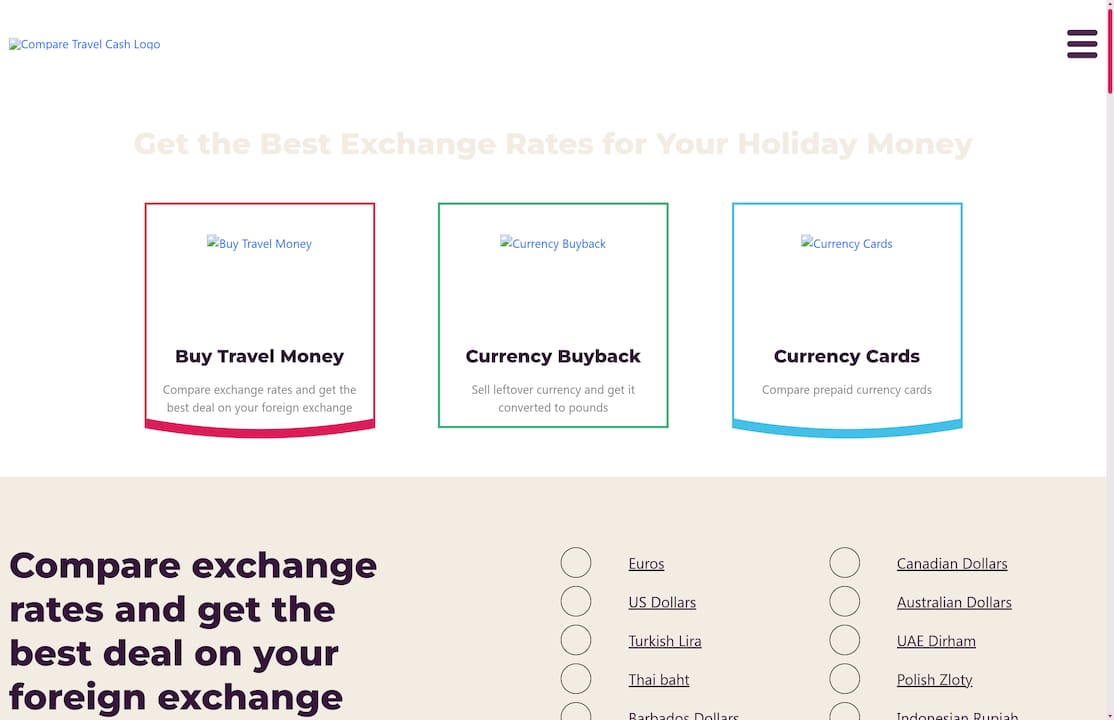
Whether you are buying euros for a European city break, US dollars for a transatlantic trip, or Turkish lira for a summer holiday, Comparetravelcash puts the rates side by side so the decision is straightforward. You can also compare currency buyback rates to maximise the value of any leftover cash when you return. For a full picture of what is available right now, check the latest travel money rates from leading UK providers and book online before you travel.
FAQ
What is Dynamic Currency Conversion?
Dynamic Currency Conversion (DCC) is a process where a foreign merchant or ATM converts your transaction into your home currency at the point of sale. DCC adds a markup of 3%–7% above the mid-market rate, making it consistently more expensive than letting your bank handle the conversion.
Should I exchange currency at the airport?
Airport currency kiosks are the most expensive exchange option, with spreads of 8%–15% plus additional fees in many cases. Use them only in a genuine emergency and exchange the minimum amount you need.
What is the cheapest way to exchange currency abroad?
Using a no-foreign-transaction-fee debit card at a reputable bank ATM abroad is the most cost-effective method for most travellers, with a typical spread of 1%–2% and no explicit fees. Always decline the DCC conversion offer at the ATM.
Is it better to exchange currency before or after travelling?
Exchanging before you travel through your bank or an online provider gives you access to better rates and more time to compare. Buying at the destination, particularly at airports or hotels, almost always costs more.
How do I know if I am getting a fair exchange rate?
Check the mid-market rate on a financial site or currency tool before you exchange. Any spread below 2% is competitive. A spread above 5% is expensive, and above 8% you are paying a significant premium for convenience.