Paying in local currency is the single most reliable way to avoid hidden fees when spending abroad. This principle, formally known as transactional currency optimisation, underpins every smart travel money decision you will make on your trip. Dynamic Currency Conversion, Visa and Mastercard exchange rates, and foreign transaction fees all interact in ways that cost you money if you are not paying attention. The good news is that understanding the role of local currency for travellers takes about ten minutes and can save you hundreds of pounds on a single holiday.
Why does local currency matter for travellers?
Local currency payment means settling a transaction in the official currency of the country you are visiting, rather than asking the merchant or ATM to convert the amount into pounds sterling on the spot. Paying in local currency consistently produces the cheapest overall cost, even when your card charges a foreign transaction fee. The reason is straightforward: your card network, Visa or Mastercard, applies the mid-market rate with a modest markup, whereas a merchant or ATM performing the conversion on your behalf applies a far less favourable rate.
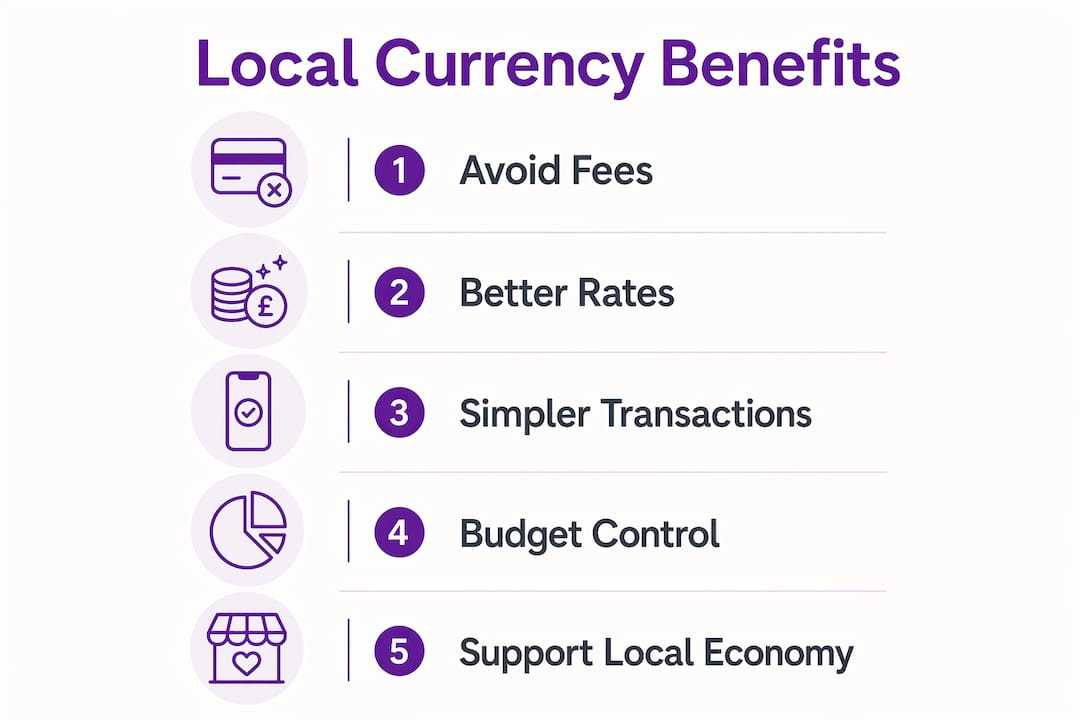
The local currency benefits for tourists extend beyond pure cost savings. Paying in the destination’s currency means small vendors, market stalls, and taxi drivers can process your payment without confusion. It also removes the risk of being billed twice through covert back-and-forth conversions, a problem that hotels sometimes trigger by quoting in local currency and then converting to your home currency at checkout. The importance of local currency in travel is both financial and practical.
How does dynamic currency conversion affect travellers’ costs?
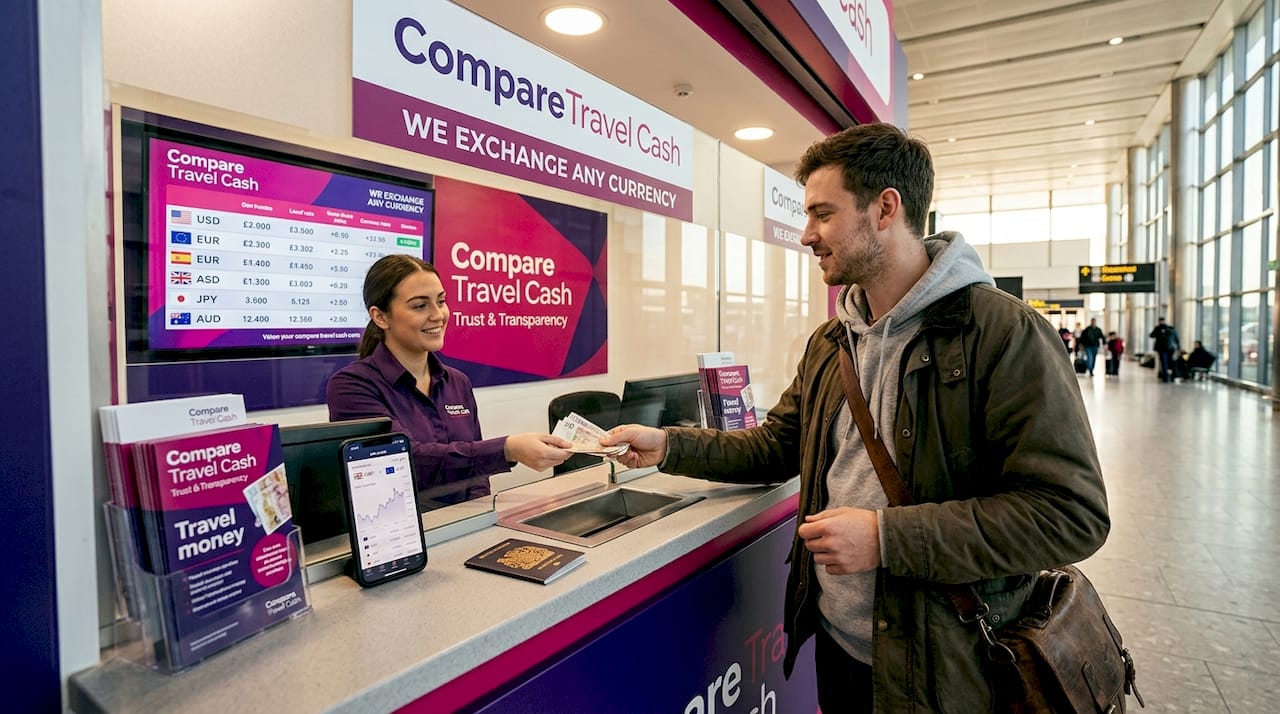
Dynamic Currency Conversion, or DCC, is the mechanism that makes paying in your home currency abroad so expensive. When you tap your card at a terminal in Rome, Barcelona, or Bangkok and the screen asks whether you want to pay in pounds or in the local currency, that is DCC being offered. Choosing pounds hands the currency conversion from Visa or Mastercard to the merchant’s payment processor, which applies its own rate.
The financial penalty is significant. DCC markups typically run between 3% and 10% above standard exchange rates. On a £1,000 holiday spend, that is between £30 and £100 lost to a single, avoidable choice at the payment terminal. This is the hidden cost that most travellers never see itemised on their statement.
Some travellers accept DCC because seeing the pound amount on screen feels reassuring. The logic is understandable but flawed. You are not gaining certainty; you are paying a premium for the illusion of it. The rate displayed is set by the merchant’s processor, not by any regulated body, and it is almost always worse than what your bank would apply.
- Always select the local currency option when a card terminal asks which currency to pay in.
- If an ATM offers to convert the amount to pounds before dispensing cash, decline and choose to be charged in local currency.
- Check your receipt immediately. If it shows a sterling amount rather than the local currency, query it before leaving the counter.
- DCC markups can reach 8 to 12% above bank or card network rates at some ATMs, making this one of the costliest traps in travel spending.
Pro Tip: Set your card’s default to always charge in local currency if your bank’s app allows it. Barclays, Monzo, and Starling all offer settings or notifications that flag DCC attempts before you confirm payment.
Cash versus card: what is the right balance for travellers?
Carrying physical local currency alongside your cards is not optional. It is a practical necessity in most destinations. The recommended cash-to-card ratio for 2026 is approximately 70% card to 30% cash in developed countries, shifting to a 50/50 split in cash-heavy regions such as Germany and rural Southeast Asia. Arriving with £100 to £200 worth of local currency covers your first day: airport transport, a meal, a SIM card, and any small purchases before you locate a reliable ATM.
The table below summarises cash needs and ATM strategy by destination type:
| Destination type | Recommended cash split | Suggested arrival cash | Best ATM strategy |
|---|---|---|---|
| Western Europe (excl. Germany) | 70% card / 30% cash | £100 equivalent | Bank ATMs in city centres |
| Germany, Austria | 50% card / 50% cash | £150 equivalent | Bank ATMs; avoid tourist-area kiosks |
| Rural Southeast Asia | 50% card / 50% cash | £150 equivalent | Withdraw at bank branches |
| Japan | 40% card / 60% cash | £200 equivalent | 7-Eleven and Japan Post ATMs |
| North America | 80% card / 20% cash | £80 equivalent | Bank ATMs; check for surcharges |
| Cuba, Iran | Cash only | £300+ equivalent | No international cards accepted |
Card discipline matters as much as cash planning. The 2026 recommended card setup is one no-foreign-transaction-fee credit card for larger purchases and a debit card reserved for ATM withdrawals. Cards such as the Halifax Clarity, Chase UK debit card, or Starling Bank card charge no foreign transaction fees and apply Mastercard or Visa rates directly. Carrying both a credit and debit card also protects you if one is blocked or lost.
Pro Tip: Never rely on a single card abroad. Keep your debit card in a separate location from your credit card. If your wallet is stolen, you still have access to funds.
How to safely carry and manage local currency abroad
Managing local currency efficiently is as much about security as it is about spending. The first rule is to split your cash and cards across multiple secure locations. A money belt worn under clothing, a small amount in your wallet for daily use, and a backup card stored separately in your luggage reduces the impact of any single theft or loss.
Here is a practical approach to follow on every trip:
- Before departure: Order your local currency from a reputable provider rather than buying at the airport. Airport and hotel bureaux typically charge 8 to 12% more than bank or card network rates. Use a comparison tool to find the best rate before you travel.
- On arrival: Withdraw a modest amount from a bank ATM in the arrivals area if you did not pre-order cash. Avoid the currency exchange desks in the terminal itself.
- During your stay: Set a daily cash budget in local currency. Spend down your notes before moving to a new destination or returning home, as exchanging currency for travel back into sterling always involves a spread that costs you money.
- At your hotel: Check every bill carefully. Hotels sometimes apply secondary currency conversions at checkout that inflate the final charge. Ask to see the rate used and query any line item that references your home currency.
- On departure: Spend remaining small notes on food, transport, or duty-free. Convert larger leftover amounts back before leaving the destination country, where buyback rates are generally better than at UK airports.
Specialist travel credit cards and multi-currency prepaid cards add another layer of control. Cards that hold multiple currencies, such as those compared on Comparetravelcash, let you lock in rates in advance and spend in local currency without triggering conversion fees at the point of sale. This is particularly useful for frequent travellers or those visiting multiple countries on a single trip.
Pro Tip: Learn to spot bad exchange rates by checking the mid-market rate on Google or XE.com before you exchange. Any rate more than 3% away from mid-market is worth questioning.
How does local currency use vary by region and technology?
The importance of local currency in travel is not uniform across the globe. Japan remains one of the most cash-dependent economies among developed nations, with many restaurants, shrines, and smaller shops accepting only yen. Germany and Austria have a strong cultural preference for cash payments even in urban areas. Rural Southeast Asia, including parts of Thailand, Vietnam, and Cambodia, relies heavily on physical notes for everyday transactions. In these destinations, running out of local currency is a genuine inconvenience, not a minor inconvenience.
At the other extreme, some countries make international card use nearly impossible:
- Cuba does not accept most international Visa or Mastercard transactions. Travellers must carry sufficient local currency, obtained in advance or at official exchange houses on arrival.
- Iran is similarly closed to international card networks. Cash in euros or US dollars, converted locally, is the only practical option.
- Parts of rural India and Nepal have limited card infrastructure outside major cities, making local currency the default for most transactions.
Emerging digital payment methods are beginning to change the picture. UPI, India’s Unified Payments Interface, is expanding internationally and offers cost advantages for Indian travellers, but acceptance remains uneven outside South and Southeast Asia. Stablecoin payments and dollar-pegged digital currencies are being trialled in some travel markets, but they are not yet a reliable substitute for physical local currency.
One structural factor worth understanding is dominant currency pricing. Many travel services, particularly hotels and airlines in emerging markets, peg their prices to the US dollar. This means that even when the local currency weakens, the cost to foreign visitors does not automatically fall. You may still be paying a dollar-equivalent price, just settled in local notes. Awareness of this dynamic helps you interpret pricing more accurately and avoid assuming that a weak local currency always means cheaper travel.
The broader trend in smart travel money management in 2026 prioritises efficient transaction timing and method over simply carrying large amounts of physical cash. Digital tools, rate alerts, and multi-currency cards complement local currency use rather than replace it. Always carry traditional local currency as a backup, regardless of how sophisticated your digital payment setup is.
What I have learned from years of watching travellers get this wrong
The single most common mistake I see is travellers accepting DCC without realising what they have agreed to. They see the pound amount on the screen, think it is helpful, and confirm. By the end of a two-week holiday, those small decisions have added up to a meaningful sum. I have reviewed enough travel money statements to know that DCC alone can account for 5 to 8% of total holiday spending for travellers who do not know to decline it.
The second mistake is treating cash as an afterthought. People land with no local currency, pay extortionate airport rates, and then overspend because they have not set a daily budget. Pre-ordering currency from a comparison platform before departure, even a modest amount, removes that first-day panic and the poor decisions it leads to.
Technology is genuinely useful here, but it requires a baseline of traditional currency discipline to work well. A Starling or Monzo card is excellent for card payments in local currency. It does not help you when the market vendor only takes cash, or when the ATM network is down. The travellers who manage their money best are those who combine a no-fee card with a sensible cash reserve in local currency, planned in advance rather than improvised on arrival.
— Jason
Compare rates and find the best travel money before you go
Getting the best value from your local currency starts before you leave the UK. Comparing exchange rates across multiple providers takes minutes and can save you significantly on a typical holiday spend.
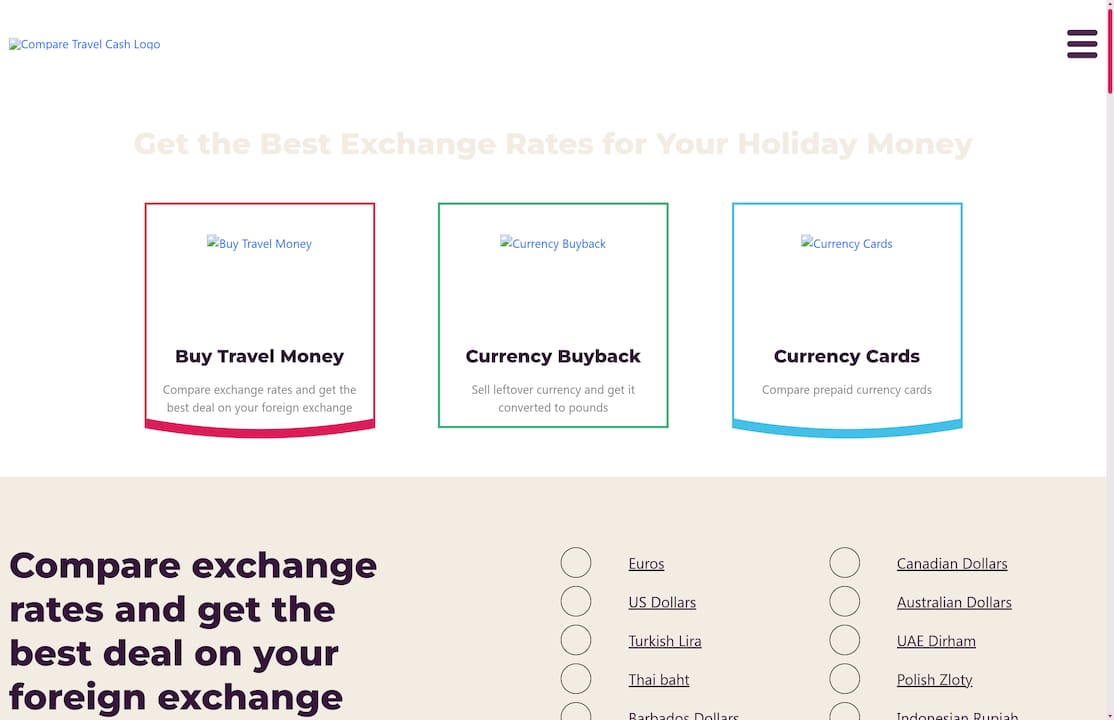
Comparetravelcash makes it straightforward to compare travel money rates from providers across the UK, so you are not stuck accepting whatever rate the airport offers. You can also compare prepaid currency cards that hold multiple currencies and charge no conversion fees at the point of sale. Whether you are heading to Europe, Southeast Asia, or further afield, locking in a competitive rate before departure means more money in your pocket once you arrive.
FAQ
What is the role of local currency for travellers?
Local currency allows travellers to pay at the destination’s standard rate without triggering Dynamic Currency Conversion markups, which typically add 3 to 10% to every transaction. Paying in local currency is consistently the cheapest payment method when spending abroad.
Should I always decline DCC at card terminals?
Yes. Accepting DCC hands the currency conversion to the merchant’s processor, which applies a less favourable rate than your card network. Always select the local currency option at terminals and ATMs to avoid paying a premium.
How much local currency should I carry on arrival?
Carrying the equivalent of £100 to £200 in local currency covers initial expenses such as transport, food, and a SIM card. Adjust upward to £200 or more for cash-heavy destinations like Japan or rural Southeast Asia.
Are airport currency exchange desks worth using?
Airport and hotel exchange desks typically charge 8 to 12% more than bank ATM or card network rates. Pre-ordering currency from a comparison platform before departure, or withdrawing from a bank ATM on arrival, produces a significantly better rate.
Do digital payment methods replace local currency abroad?
Not yet. Options like UPI offer cost advantages in specific markets but acceptance remains uneven internationally. Always carry local currency as a backup, regardless of your digital payment setup.