Planning currency exchange in advance is the single most effective way UK travellers can protect their spending power before a trip. Most people leave it too late, ending up at an airport bureau de change paying a premium that can reach 8–12% above the mid-market rate. That is money lost before you have even boarded the plane. Pre-ordering your travel money through an online provider or bank locks in a competitive rate, guarantees you have cash the moment you land, and removes the stress of scrambling for currency at the worst possible moment.
What are the financial benefits of planning currency exchange in advance?
The financial case for advance currency exchange is straightforward. Airport FX counters charge premiums primarily because of captive demand. You are there, your flight is in two hours, and you have no real alternative. That captive position costs you money every single time.
To put real numbers on it: £500 exchanged at a Heathrow bureau de change might yield €519, whereas the same £500 converted using a competitive debit card or pre-ordered online could return closer to €590. That is a €71 difference on a modest holiday budget. On a family trip exchanging £2,000, the gap becomes significant enough to cover a decent dinner out.

The table below illustrates how exchange costs vary across typical provider types for a £500 conversion:
| Provider type | Typical markup above mid-market rate | Approximate euros received for £500 |
|---|---|---|
| Airport bureau de change | 8–12% | €519–€535 |
| High street bank | 3–6% | €553–€568 |
| Online specialist provider | 1–3% | €573–€585 |
| Multi-currency prepaid card | 0–2% | €580–€590 |
The pattern is clear. The more convenient the exchange point, the more you pay. Online providers and prepaid cards sit closest to the mid-market rate because they operate with lower overheads and compete directly on price.
- Pre-ordering avoids paying a convenience premium at the airport
- Online providers often offer cashback deals or fee waivers on delivery
- Locking in a rate removes exposure to sudden adverse currency movements
- You can compare dozens of providers in minutes using a tool like Comparetravelcash
Pro Tip: Check whether your chosen provider offers free home delivery above a minimum order value. Many online currency specialists waive delivery fees for orders over £500, making the total cost even lower than collecting in person.
When is the best time to plan your currency exchange?
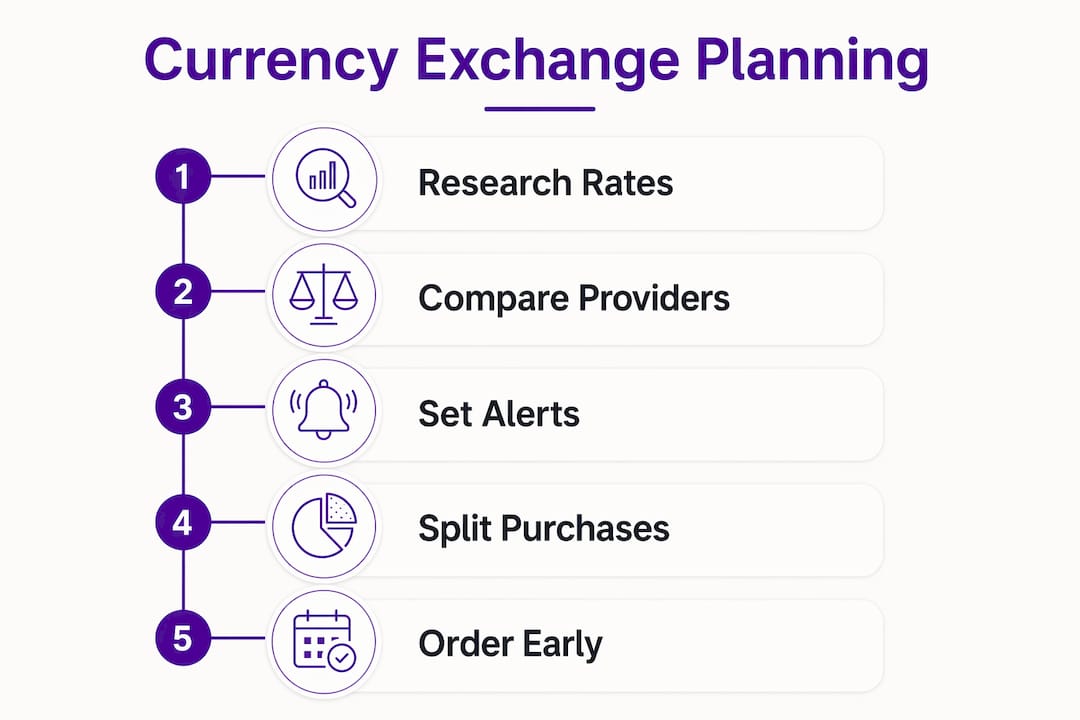
Timing is where many travellers get it wrong. Buy too early and you risk missing a better rate. Buy too late and you face delivery failure or, worse, a forced airport exchange. The optimal window is 2–3 weeks before your departure date, which balances competitive pricing with safe delivery logistics.
Here is a practical timing framework to follow:
- Six to eight weeks before departure. Start monitoring the exchange rate for your destination currency. Use a rate alert tool to track movements without obsessing over daily fluctuations.
- Three to four weeks before departure. If you are travelling during a busy season such as summer or Christmas, place your order now. Delivery cut-off timing is crucial during peak periods when postal services slow and providers face higher demand.
- Two to three weeks before departure. This is the standard recommended window for most travellers. Order your main currency allocation, allowing enough time for home delivery or branch collection without pressure.
- One week before departure. If you are splitting your purchase to average out rate fluctuations, place your second order now. Splitting into two or three tranches over several weeks reduces the risk of buying everything at a single unfavourable rate.
- Days before departure. Confirm your order has arrived. Test any prepaid travel card with a small transaction. Do not leave card activation until the airport.
Ordering a prepaid multi-currency card deserves special mention. These cards need to be ordered, activated, and tested before you travel. Leaving card setup until the week of departure creates unnecessary risk if there are postal delays or verification issues.
Pro Tip: Factor in UK bank holidays when calculating your delivery window. A bank holiday can add two to three days to standard delivery times, which matters when your buffer is already tight.
How does planning ahead reduce stress and improve budgeting?
Pre-ordering currency does more than save money. It removes a category of decision-making from your travel day entirely. Exchanging before departure locks in a known rate, eliminates volatile last-minute choices, and means you arrive with immediate spending power rather than hunting for an ATM or queue.
Consider what arrival day actually looks like without pre-planned currency. You land after a long flight, you need a taxi or a bus, you might need to pay for luggage storage or a SIM card, and the only exchange option nearby charges a 10% markup. That is not a hypothetical. It is the standard experience at most major international airports.
The behavioural benefits are equally real:
- No queue stress. Airport bureau de change queues can stretch to 20 minutes during peak hours. Pre-ordering means you walk straight through.
- Known budget from day one. When you know exactly how much foreign currency you have, daily spending becomes easier to track and control.
- Reduced emotional decision-making. Pre-exchange supports behavioural control, preventing stress-driven choices made under time pressure and rate volatility.
- Emergency buffer planning. Having a small cash reserve set aside before you travel means a card failure or an ATM outage does not derail your trip.
- Better multi-country trip management. If you are visiting several countries, pre-loading currency for each destination removes the need to find exchange points in unfamiliar locations.
Clear budget control from arrival day is particularly valuable for families and group travellers, where one person’s poor exchange decision affects everyone’s spending for the entire trip.
What strategies can travellers use to plan currency exchange effectively?
Effective currency exchange planning combines rate comparison, smart timing, and a sensible cash versus card split. No single approach works for every trip, but the following strategies cover the most common scenarios UK travellers face.
Compare multiple providers before committing. Rates vary significantly between providers, and the difference on a £500 order can easily reach £30 to £50. Comparetravelcash aggregates rates from multiple UK providers in one place, making it straightforward to identify the best deal without visiting multiple websites individually. You can also review tips for exchanging money abroad to understand which provider types suit different trip profiles.
Split your purchase across two or three weeks. Rather than converting your entire holiday budget in one transaction, divide it into two or three portions bought at different times. This approach averages out short-term rate movements and reduces the risk of buying everything at a single peak. It is a straightforward hedge that requires no financial expertise.
Use a multi-currency prepaid card alongside a cash buffer. Splitting currency into immediate, planned, and emergency categories gives you flexibility and reduces the risk of payment disruption. A prepaid card handles most day-to-day spending, while a cash buffer covers markets, taxis, and anywhere that does not accept cards. The cash versus card decision depends on your destination, but most experienced travellers use both.
Avoid destination bureaux de change entirely. The same captive-demand pricing that makes airport exchanges expensive applies equally to hotel lobbies, tourist-area exchange kiosks, and cruise ship currency desks. These locations know you are unlikely to walk away, and their rates reflect that.
- Plan your immediate cash needs separately from your main budget. Arrival-day expenses such as transport, tips, and small purchases require physical cash even in card-friendly destinations.
- Keep a digital payment option such as a Wise or Revolut card as a backup, particularly for multi-country trips where card acceptance varies.
- Check whether your destination has reliable ATM networks before relying on cash withdrawals abroad. Some countries have limited ATM availability outside major cities.
Pro Tip: Set a rate alert on Comparetravelcash or a similar platform two to three weeks before your trip. You will receive a notification when the rate hits your target, removing the need to check manually every day.
My honest view on planning currency exchange ahead
I have watched travellers make the same mistake repeatedly: they spend weeks researching hotels and flights down to the last penny, then hand £30 or £40 straight back to an airport bureau de change because they left currency to the last minute. The maths is not complicated. A 10% markup on £600 is £60. That is a taxi, a meal, or an excursion gone before the holiday starts.
The argument I hear most often against planning ahead is that exchange rates might improve closer to departure. That is true. They might also get worse. The 2–3 week window is not about catching the perfect rate. It is about getting a genuinely competitive rate without the logistics risk of leaving it too late. Splitting your purchase across two tranches is the practical middle ground if you want some exposure to rate movement without betting everything on a single day.
What I find most underrated is the arrival-day benefit. Knowing you have the right currency in your wallet when you land changes the tone of the entire trip. No queue, no stress, no mental arithmetic about whether you are being overcharged. You just get on with it.
The airport bureau de change is a convenience tax. Pay it once and you will understand why advance planning is worth the small effort it requires.
— Jason
Compare rates now and secure your travel money
Planning your currency exchange is straightforward when you have the right tools. Comparetravelcash lets you compare live travel money rates from multiple UK providers in one place, so you can see exactly where the best deal is before you order.
Whether you are buying euros for a summer holiday, US dollars for a city break, or Turkish lira for a beach trip, comparing rates online takes minutes and can save you a meaningful amount on every trip. Use Comparetravelcash to compare travel money rates across providers and book directly online with home delivery or click-and-collect. If you prefer a card-based approach, the prepaid currency card comparison page covers the leading multi-currency options available to UK travellers right now.
FAQ
Why should you plan currency exchange before travelling?
Planning currency exchange before travelling secures better rates from online providers and banks, which typically charge 1–6% above the mid-market rate compared to 8–12% at airport bureaux de change. It also guarantees you have cash immediately on arrival for transport, tips, and other first-day expenses.
How far in advance should you buy holiday money?
The recommended window is 2–3 weeks before departure for most travellers, or 3–4 weeks during busy seasons such as summer and Christmas. This allows time for home delivery and avoids the risk of being forced into an expensive last-minute airport exchange.
Is it cheaper to exchange currency before or after travelling?
Exchanging currency before you travel is almost always cheaper. Airport exchange rates are a “terrible money move” due to captive-audience pricing, and destination bureaux de change carry similar markups. Pre-ordering through an online specialist or bank consistently delivers better value.
Should you use cash or a prepaid card abroad?
Most experienced travellers use both. A prepaid multi-currency card handles day-to-day spending at competitive rates, while a small cash buffer covers markets, taxis, and locations that do not accept cards. Having cash ready on arrival also reduces friction in destinations where card acceptance is unpredictable.
Can splitting your currency purchase save money?
Splitting a currency purchase into two or three tranches over several weeks averages out short-term rate fluctuations and reduces the risk of converting your entire budget at a single unfavourable rate. It is a low-effort strategy that suits travellers with a flexible timeline before departure.