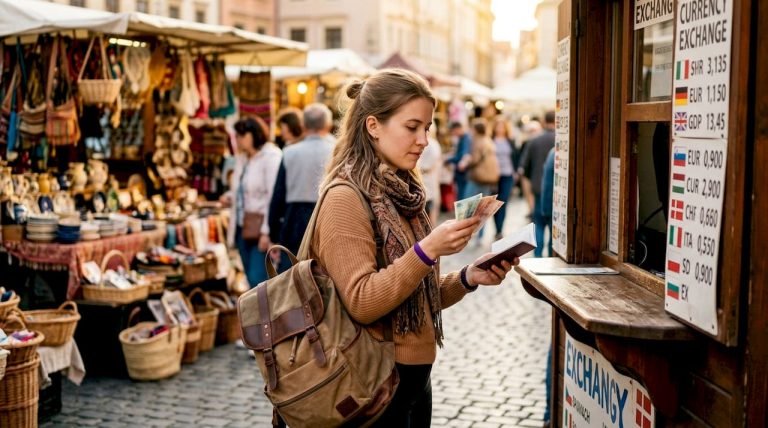
Most UK travellers spend weeks researching flights, hotels, and itineraries, yet give barely a moment’s thought to how they’ll actually pay for things once they land. That oversight can be costly. Exchange rate differences and poorly chosen travel money products quietly drain your budget before you’ve even ordered your first meal abroad. This guide breaks down exactly how travel money fits into your overall holiday budget, which products suit different travellers, and what practical steps you can take right now to protect your spending power on your next international trip.
Table of Contents
- How travel money impacts your holiday budget
- Setting a realistic travel budget: Where travel money fits in
- Choosing the right travel money products for your needs
- Maximising the value of your travel money: Smart, practical strategies
- The overlooked secret to stress-free travel: Your travel money routine
- Find the best travel money deals for your next trip
- Frequently asked questions
Key Takeaways
| Point | Details |
|---|---|
| Travel money matters | Your travel money choices can add or subtract hundreds from your holiday costs. |
| Plan for all expenses | Build travel money into your budget, allowing for fees and emergencies. |
| Compare and save | Shopping around for rates and products helps you keep more of your spending money. |
| Avoid hidden charges | Knowing where and when to exchange means dodging costly fees abroad. |
How travel money impacts your holiday budget
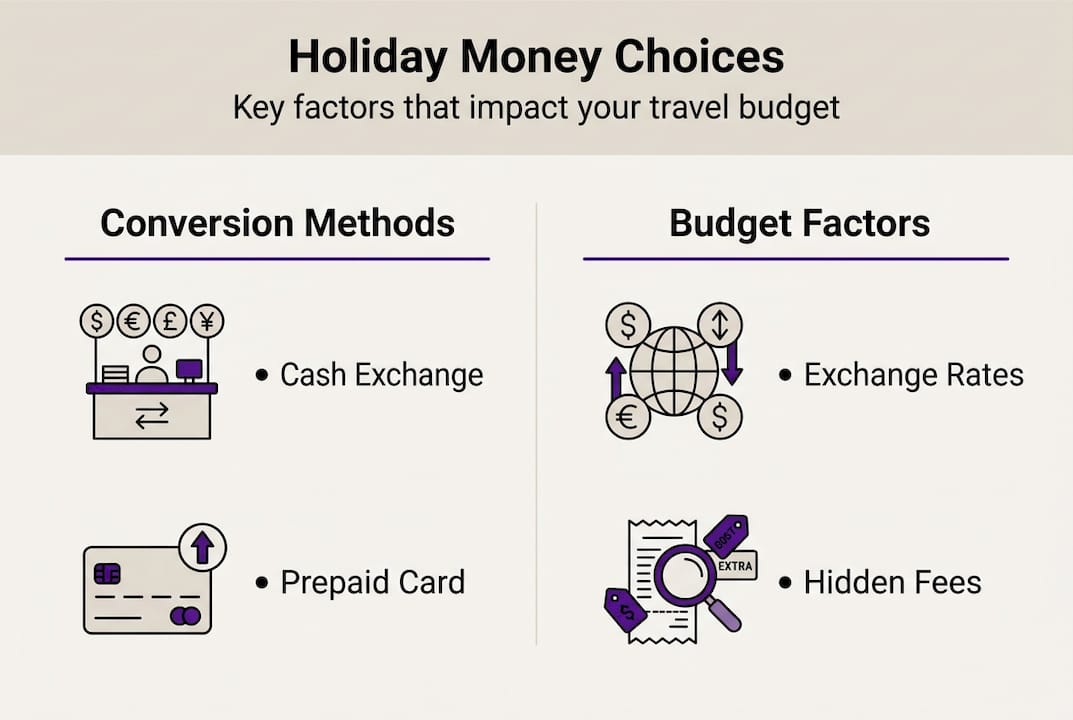
Travel money is a broad term covering everything you use to pay for goods and services abroad: physical foreign currency, prepaid currency cards, and bank-issued debit or credit cards used overseas. Each option comes with its own cost structure, and understanding those costs is the first step towards smarter budgeting.
The problem is that most people treat travel money as an afterthought. They pick up a handful of euros at the airport, tap their regular debit card for larger purchases, and assume the costs are roughly the same. They rarely are. Poor decisions around exchange rates and your budget can quietly inflate your trip costs through currency conversion losses, ATM withdrawal charges, and unfavourable markups built into the rate itself.
Key stat: Exchange rate differences can cost UK travellers £50 to £200 on an average trip, depending on how and where they buy their currency.
To put that in perspective, here is how the same £1,000 travel budget plays out across different money options:
| Travel money method | Typical cost to convert £1,000 | Estimated loss vs best rate |
|---|---|---|
| Airport bureau de change | £850–£870 equivalent | Up to £150 |
| High street bank card (with fees) | £880–£900 equivalent | Up to £120 |
| Specialist prepaid currency card | £940–£960 equivalent | Up to £60 |
| Online currency broker (pre-ordered) | £960–£980 equivalent | Minimal |
The gap between the worst and best options is significant. That is money you could spend on experiences, meals, or simply keeping a financial cushion for emergencies.
Some of the most overlooked travel money expenses include:
- ATM withdrawal fees abroad, which can be a flat charge per transaction plus a percentage
- Dynamic currency conversion (DCC), where a foreign terminal offers to charge you in GBP at a poor rate
- Airport and hotel bureau de change rates, which carry the highest markups of any provider
- Non-sterling transaction fees on standard UK bank cards, often 2.75% to 3% per purchase
- Inactivity or loading fees on prepaid cards if you do not use them frequently enough
For answers to common travel money questions, it helps to understand the full picture of where costs hide before you even start comparing providers. The importance of budgeting your travel funds properly cannot be overstated when every percentage point of markup directly reduces your spending power on the ground.
Setting a realistic travel budget: Where travel money fits in
Effective travel budgeting begins before any cash or cards are ordered. Most people build their holiday budget around flights and accommodation, then treat everything else as a variable. A smarter approach puts travel money planning at the centre from day one.
Here is a practical step-by-step process for building a budget with currency costs factored in properly:
- List your spending categories. Accommodation, food, transport, activities, shopping, and emergencies. Assign a daily estimate to each based on your destination.
- Research the local cost of living. What costs £10 in the UK might cost the equivalent of £5 or £20 abroad. Use recent traveller reports or destination guides to calibrate your estimates.
- Check current exchange rates. Look at the mid-market rate (the real rate, with no markup) as your baseline. This tells you what your pounds are genuinely worth before any provider takes their cut.
- Factor in realistic conversion costs. If you plan to use a high street card, add 2.75% to your budget. If you are pre-ordering currency online, the margin is smaller but still real.
- Choose your cash and card mix. Decide how much physical cash you need for markets, taxis, or smaller vendors, and how much you will rely on cards for larger purchases.
- Plan for emergencies. Set aside a contingency amount in your travel money plan. A lost card or unexpected expense can derail a tight budget fast.
Understanding your currency exchange options early gives you the flexibility to lock in a good rate when one appears. Rates fluctuate daily, and waiting until the last minute almost always means paying more.
It also helps to get familiar with travel money terms like markup, mid-market rate, and buy-back rate before you start comparing. These are not complicated concepts, but knowing them stops providers from obscuring true costs behind jargon. Solid personal budgeting basics apply just as much to holiday spending as to everyday finances.
Pro Tip: Always pad your travel money budget by at least 10%. Prices change, plans shift, and unexpected costs appear. That buffer prevents you from scrambling for cash or making expensive last-minute currency decisions.
Choosing the right travel money products for your needs
You have budgeted and planned. Now, which type of travel money should you actually carry? The honest answer is that no single product is perfect for every traveller. The right choice depends on your destination, your spending habits, and how much risk you are comfortable with.
Here is a side-by-side comparison of the three main options:
| Product | Best for | Typical fees | Security |
|---|---|---|---|
| Physical cash | Small vendors, markets, tipping | No transaction fees once bought | Risk of loss or theft |
| Prepaid currency card | Budget control, multiple currencies | Low to zero transaction fees | PIN-protected, replaceable |
| Bank debit or credit card | Convenience, larger purchases | 0–3% per transaction, ATM fees | Fraud protection |
Prepaid multi-currency cards can help you track and control spending abroad by locking in a rate when you load the card, which removes the uncertainty of daily rate fluctuations. They are particularly useful for longer trips or destinations where you will be moving between countries.
The pros and cons of each option at a glance:
- Cash: No fees on individual transactions, universally accepted, but risky if lost and inconvenient to carry in large amounts
- Prepaid card: Excellent spending control, often fee-free abroad, but requires planning ahead to load and may have inactivity charges
- Bank card: Convenient and widely accepted, but non-sterling fees and ATM charges can add up quickly without a specialist travel card
For a detailed breakdown, the travel cash vs currency cards comparison covers the key differences clearly. You can also read product reviews for specific providers before committing. A Wise multi-currency account is another option worth considering for frequent travellers who want near-mid-market rates.
Pro Tip: Never rely on just one travel money product. Carry a small amount of local cash for emergencies, use a prepaid card for day-to-day spending, and keep a backup bank card separate from your main wallet. This combination protects you against card failures, ATM outages, and unexpected cash-only situations.
Maximising the value of your travel money: Smart, practical strategies
With your ideal travel money mix sorted, the final step is making every pound work harder during your trip. Small habits and informed decisions can meaningfully extend your budget without sacrificing your experience.
Follow these steps to get the most from your travel money:
- Compare rates before you buy. Comparing rates can save you up to 5% on foreign currency purchases. Use a comparison tool to check multiple providers in one place rather than visiting each individually.
- Avoid airport and hotel kiosks. These locations carry the highest markups because they rely on convenience. Buy your currency in advance online or from a reputable high street provider.
- Watch for hidden fees. Some providers advertise a strong headline rate but add a service fee or delivery charge. Always calculate the total cost, not just the rate.
- Refuse dynamic currency conversion. When paying by card abroad, always choose to pay in the local currency, not GBP. DCC typically adds 3% to 7% to the transaction with no benefit to you.
- Withdraw cash strategically. If you need to use an ATM abroad, make fewer, larger withdrawals rather than multiple small ones. This minimises flat-rate transaction fees.
- Track your daily spend. Use a budgeting app or your prepaid card’s spending tracker to monitor outgoings in real time. Catching overspending early prevents budget blowouts.
For a full guide on avoiding travel money fees and how to compare currency providers effectively, the resources are there to help you plan with confidence. Practical expense control tips apply equally well to travel spending as they do to everyday life.
Pro Tip: Set your phone to alert you to significant card transactions while abroad. Most banking apps offer this feature. It helps you catch unauthorised charges instantly and keeps your spending visible at all times.
The overlooked secret to stress-free travel: Your travel money routine
Here is something most travel guides will not tell you: the biggest source of holiday stress is rarely a delayed flight or a dodgy hotel. It is running out of money, paying more than you expected, or realising mid-trip that your card is being charged fees you did not anticipate.
Travel money is treated as admin. Something to sort at the last minute, at the airport, while already flustered. That mindset costs people real money and real peace of mind.
The contrarian truth is that spending 30 minutes planning your travel money before you go sets the tone for the entire trip. People who recall their best holidays almost always had smooth financial logistics in the background. Those who remember their worst trips often cite a money mishap as the turning point.
The exchange rate impact on your budget is measurable and avoidable. Build your travel money kit early: compare rates, choose your products, load your card, and carry a small cash backup. It takes less time than packing your suitcase, and it pays dividends every single day of your trip.
Find the best travel money deals for your next trip
Ready to put these strategies into action? The difference between a stretched budget and a comfortable one often comes down to where and when you buy your travel money.
At CompareTravelCash.co.uk, you can compare exchange rates from multiple UK providers in seconds, check live offers, and find the best deal for your specific currency needs. Whether you want to browse Hays Travel money rates or explore prepaid currency card deals, everything is in one place. Stop paying more than you need to. Compare before you buy and keep more of your money for the trip itself.
Frequently asked questions
What is the best way for UK travellers to carry money abroad?
A mix of prepaid currency cards and a small amount of cash is safest for most destinations. Prepaid multi-currency cards help control spending and reduce fees, while cash covers situations where cards are not accepted.
How early should I buy my holiday money?
It is best to buy travel money one to two weeks before your trip to secure a competitive rate. Comparing rates before you travel gives you time to act when a good rate appears rather than accepting whatever is available at the last minute.
What is dynamic currency conversion, and should I use it?
Dynamic currency conversion lets you pay in GBP abroad, but it almost always applies a worse rate than paying in local currency. Choosing local currency avoids hidden conversion fees and keeps more money in your pocket.
How can I avoid hidden fees on my travel money?
Compare rates in advance, avoid airport kiosks, and check your card provider’s overseas charges before you travel. Hidden fees can significantly increase your travel costs, so reading the small print before you commit is always worth the effort.