Imagine queuing at the airport bureau de change, passport in hand, only to discover you’re getting a rate that’s 10% worse than what you could have locked in online the night before. That gap is real money: on a £500 currency order, it could mean losing £50 before your holiday even starts. Booking travel money online is faster, safer, and almost always cheaper than buying at the airport or on the high street. This guide walks you through exactly what you need, how the process works, and how to avoid the traps that catch even experienced travellers off guard.
Table of Contents
- What you need to book travel money online
- Step-by-step: How to book travel money online
- Travel cash or prepaid card: Choosing the best option
- Common mistakes and pro tips for travel money online
- The truth experts won’t tell you about booking travel money online
- Compare and book with confidence
- Frequently asked questions
Key Takeaways
| Point | Details |
|---|---|
| Plan in advance | Order travel money online early to secure the best rates and ensure timely delivery. |
| Compare options | Always compare rates and fees for cash and prepaid cards to maximise your funds. |
| Use a mix of cash and card | Carry 20–30% of your budget as cash and the rest on a prepaid card for optimum flexibility and security. |
| Beware of hidden fees | Never select ‘pay in GBP’ when abroad and look for small print on online orders to avoid unnecessary costs. |
What you need to book travel money online
Before you start comparing exchange rates, it pays to have a few things ready. Getting organised in advance means fewer delays and no nasty surprises at checkout.
Here’s what to prepare before placing your order:
- Valid ID: A passport or driving licence is required for in-store or Post Office collection. Home delivery typically doesn’t require ID at the door, but your details are verified at checkout.
- Payment method: Most providers accept debit cards, credit cards, or Apple Pay. Note that some charge a small fee for credit card payments.
- Destination currency: Know exactly which currency you need. If you’re visiting multiple countries, a best prepaid travel cards option may suit you better than buying separate cash bundles.
- Estimated spend: Work out roughly how much you’ll need for accommodation, food, transport, and activities.
- Delivery preferences: Check whether your order qualifies for free home delivery, and factor in lead times if you’re travelling soon.
As a rule of thumb, online ordering secures better rates than high street or airport counters, so the effort of ordering ahead pays off every time.
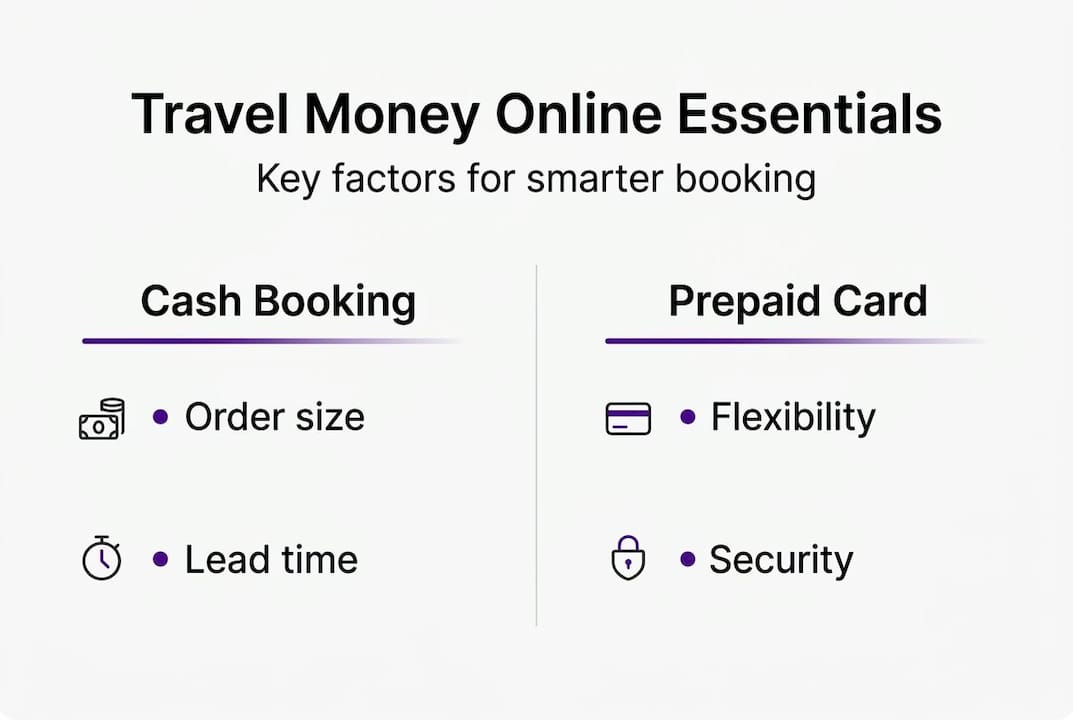
| Factor | Recommended approach |
|---|---|
| Order size | £200 minimum for best rates; check provider thresholds |
| Lead time | At least 5 to 7 days for home delivery |
| Free delivery | Usually on orders over £500 to £750 |
| Rural delivery | Allow extra days; consider click-and-collect instead |
| Multi-country trip | Consider a prepaid card over multiple cash orders |
If you’re heading somewhere with low card acceptance, such as rural parts of Turkey, Vietnam, or Morocco, you’ll want more physical cash than you might think. Check answers to common travel money questions if you’re unsure about your destination.
Pro Tip: Order slightly more than you think you’ll need. Unused foreign currency can be sold back to a buyback provider, often at a reasonable rate, so you won’t necessarily lose out.
Step-by-step: How to book travel money online
Once you’ve gathered what you need, here’s the foolproof process. Following these steps in order helps you lock in the best rate and avoid common delays.
- Estimate your spending budget: Use your itinerary to budget for your trip before you look at rates. Knowing your target amount stops you from over-ordering or scrambling to top up later.
- Compare rates across providers: Visit a comparison tool to compare travel money rates side by side. Rates shift daily, so check on the day you intend to buy.
- Place your order securely: Complete the checkout using a debit card or Apple Pay. Avoid credit cards unless you’ve confirmed there’s no surcharge.
- Choose delivery or collection: Home delivery is convenient but requires planning ahead. Click-and-collect from a store, Post Office, or airport branch suits last-minute bookers. Check minimum order thresholds for free delivery.
- Bring ID for collection: If collecting in person, take the same ID you used during checkout. Most providers require a matching passport or driving licence.
The order and collect process follows a clear sequence: estimate your amount, compare rates, order securely, choose delivery or collection, and provide ID when collecting. Sticking to this sequence avoids the most common booking errors.
| Delivery option | Lead time | Typical minimum order | Free delivery threshold |
|---|---|---|---|
| Home delivery | 3 to 5 working days | £100 | £500 to £750 |
| Click-and-collect (store) | Same day to 24 hours | £100 | N/A |
| Airport collection | Same day | £200 | N/A |
| Post Office | Next day | £50 | N/A |
Pro Tip: Lock in your rate as soon as you’re confident about your travel dates. Many providers guarantee the rate at the point of order, protecting you if the pound weakens before you travel.
Travel cash or prepaid card: Choosing the best option
One crucial decision: should you buy cash, get a card, or both? Here’s how to decide.
Prepaid travel cards such as Wise and Revolut offer better rates, stronger security, and real flexibility for multi-country trips. You load the card in advance, spend in local currency, and manage everything via an app. If the card is lost or stolen, you freeze it instantly. That’s a significant advantage over carrying a bundle of cash.
That said, cash is not obsolete. Many destinations, particularly rural areas and local markets, simply don’t accept cards. Car hire companies often place large holds on cards that can temporarily block your funds. Having physical currency available prevents these situations from becoming genuine emergencies.
| Feature | Physical cash | Prepaid card (e.g. Wise, Revolut) |
|---|---|---|
| Exchange rate quality | Good if ordered online | Excellent, near mid-market rate |
| Security | Risk of loss or theft | Freeze instantly via app |
| ATM withdrawals | N/A | Free up to monthly limit |
| Multi-currency support | One currency per order | Multiple currencies loaded |
| Card holds (car hire etc.) | Not affected | Can block available funds |
Most experienced travellers recommend holding 20 to 30% of your holiday budget as cash and keeping the rest on a prepaid card. This split gives you day-to-day flexibility while protecting the bulk of your money. Read the full cash vs currency card guide if you want a deeper breakdown.
Key advantages of multi-currency travel cards include:
- Load multiple currencies before departure
- Spend at or near the mid-market rate in many countries
- Instant freeze and card replacement if lost
- Spending notifications and budgeting controls via app
Pro Tip: Check your prepaid card’s ATM withdrawal limits before you travel. Some providers offer one or two free withdrawals per month, after which fees apply. Plan your cash top-ups accordingly.
Common mistakes and pro tips for travel money online
Even with a clear plan, small missteps can cost you. Here’s how to sidestep the most common issues.
The biggest single mistake UK travellers make is leaving it too late. Ordering within 24 hours of departure usually means paying a worse rate, accepting limited stock, or paying for express delivery. Order early to guarantee rates and availability, and never choose “pay in GBP” when abroad, as dynamic currency conversion (DCC) typically costs between 5% and 15% extra.
Here are the most common errors to avoid:
- Choosing DCC at the terminal: When a card machine asks if you want to pay in GBP or local currency, always choose local currency. GBP payment triggers DCC, which applies a poor exchange rate set by the merchant.
- Relying solely on cards: Cards can be declined, blocked for security reasons, or rejected entirely in some regions. Always carry some cash as a backup.
- Ignoring the collection window: Most providers hold your order for 7 to 14 days. Miss the window and you may forfeit the currency or face a rebooking fee.
- Forgetting bank holidays: Home delivery lead times don’t account for bank holidays. If you’re travelling just after a long weekend, order earlier than usual.
- Not keeping proof of purchase: Save your confirmation email. You’ll need it for collection and for any disputes or cancellations.
Always check whether your online travel money provider is regulated by the Financial Conduct Authority (FCA). Regulated providers offer stronger consumer protections if something goes wrong.
Pro Tip: Set a rate alert if your comparison tool offers one. When the pound strengthens to your target level, you’ll get a notification and can book immediately, locking in a better deal without watching rates all day. Find more tips for saving on travel money to keep more of your holiday budget intact.
The truth experts won’t tell you about booking travel money online
Most guides stop at the step-by-step advice. Here’s what they tend to gloss over.
Online rates can look excellent on a comparison table, but the headline figure doesn’t always tell the full story. Some providers advertise a sharp rate and then apply a service fee at checkout, or require a minimum order size that doesn’t suit your trip. Always calculate the total cost of the transaction, not just the rate.
There’s also a tendency to treat cash as outdated. It isn’t. Cards fail. Networks go down. Some merchants simply refuse them. Treating your prepaid card as your only payment method is a risk that catches travellers out regularly, particularly in parts of Southern Europe, Southeast Asia, and Central America.
Finally, convenience matters more than most people admit. A rate that’s 0.5% better from a provider whose delivery takes seven working days isn’t actually better if you’re travelling in five days. Explore your currency exchange options with the full picture in mind: rate, fees, delivery time, and collection convenience. Optimise for your actual situation, not just the number at the top of the comparison table.
Compare and book with confidence
Ready to put this into action? Here’s how you can make a smarter booking right now.
Saving money on travel money starts with a single search. CompareTravelCash.co.uk brings together live rates from multiple UK providers so you can see at a glance who’s offering the best deal today, not last week.
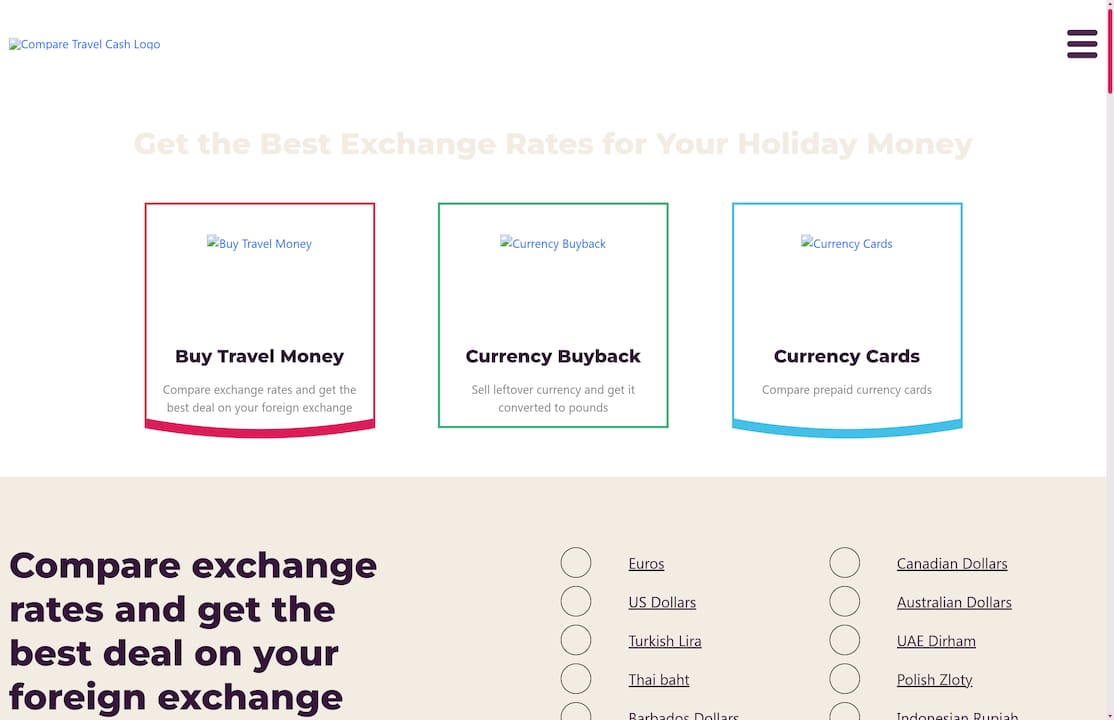
Whether you want to compare live cash rates for euros, dollars, or any other currency, or you’d prefer to compare prepaid currency cards for a multi-country trip, the tools are free and take seconds to use. No queuing. No guesswork. Just clear, up-to-date comparisons that help you book with confidence and keep more money for the trip itself.
Frequently asked questions
How far in advance should I order travel money online?
Order at least a week before your departure date to guarantee rates, ensure stock availability, and give home delivery enough time to arrive safely.
Can I cancel an online travel money order?
Most providers allow cancellation before dispatch or collection, but a cancellation fee may apply and the exchange rate is usually non-refundable once locked in at the point of order.
Is it better to buy cash or use a prepaid card abroad?
A mix of cash and card works best for most travellers: use a prepaid card for the majority of spending and keep 20 to 30% of your budget as physical cash for emergencies and cash-only situations.
What should I do if my prepaid card does not work while abroad?
Have a backup payment method ready, such as a second card or physical cash, as cards can fail due to security blocks, merchant restrictions, or large holds placed by car hire companies.
Recommended
- Compare currency exchange options: a guide for UK travellers
- Travel money explained: Best rates and avoiding fees
- How exchange rates affect your travel budget: UK guide
- Travel Tips Archives – Compare Travel Cash Blog
- How to file taxes across countries: a step-by-step expat guide | Settel Blog | Settel