Most UK holidaymakers focus on flights, hotels, and itineraries, but overlook one of the biggest drains on their travel budget: poor currency decisions. Research suggests many travellers lose more than £150 per trip through avoidable mistakes, from buying at the airport to ignoring hidden card fees. This checklist walks you through everything you need to know before you travel, covering cash versus cards, where to buy your currency, how to dodge hidden charges, and how to spend smartly once you arrive. Follow it and you will keep significantly more of your money where it belongs.
Table of Contents
- Set your holiday currency criteria
- Compare your main options: cash, cards, and digital wallets
- Where to buy: airports vs high street vs online
- Avoiding fees and hidden charges abroad
- Our perspective: the best holiday money habits most people overlook
- Compare the best travel cash and card offers today
- Frequently asked questions
Key Takeaways
| Point | Details |
|---|---|
| Avoid airport exchanges | Airports offer the worst exchange rates, costing you far more than high street or online providers. |
| Pay in local currency | Choosing to pay in the local currency abroad prevents hidden conversion fees of up to 18%. |
| Bring a mix of cash and cards | Carry 20-25% cash for small purchases and use fee-free cards for flexibility and security. |
| Compare rates before you buy | Shopping around ensures you secure the best deals and keep more money for your holiday. |
| Check for hidden card fees | Using the right cards abroad can save you over £20 per holiday on unnecessary charges. |
Set your holiday currency criteria
Before comparing any rates or products, it helps to establish what you actually need from your travel money. Think of this as setting your personal standards, the filters through which every option should pass.
Start with fees. The goal is to minimise them at every stage: when buying currency, when spending abroad, and when withdrawing cash. Holidaymakers lose £845M yearly on card fees abroad, with the average standard bank card costing £21.79 in charges per trip. That is money that could cover a restaurant meal or a day trip.
Next, think about safety. Carrying large amounts of cash is a risk, but relying entirely on one card is also dangerous if it gets lost or blocked. A balanced approach is always safer. Why exchange rates matter is something many travellers only realise once they have already lost money, so building awareness early makes a real difference.
Consider payment convenience too. Not every destination accepts cards for small purchases. Markets, taxis, beach bars, and street food vendors often expect cash. Planning for this reality avoids awkward moments and unnecessary ATM withdrawals at poor rates.
Here is a quick checklist of criteria to apply when assessing any travel money option:
- Fees: Are there purchase, withdrawal, or transaction fees?
- Exchange rate: How close is it to the mid-market rate (the real rate you see on Google)?
- Flexibility: Can you use it everywhere you plan to go?
- Security: Is it protected if lost or stolen?
- Top-up or buyback options: Can you add funds or sell unused currency back?
Understanding how exchange rates affect your travel budget is equally important. Even a small difference in the rate can mean tens of pounds lost on a typical holiday budget. Always check both the buying rate (what you pay to get foreign currency) and the selling rate (what you get back for unused notes), as the gap between them is where providers make their margin.
Pro Tip: Compare the rate you are being offered against the mid-market rate on Google or XE.com. Any provider charging more than 3% above mid-market is likely overcharging you.
Compare your main options: cash, cards, and digital wallets
With your criteria set, it is time to look at the main formats available to UK travellers. Each has genuine strengths and real weaknesses.
| Option | Exchange rate | Fees | Security | Section 75 protection | Convenience |
|---|---|---|---|---|---|
| Cash | Variable | Low once bought | Risk if lost | No | High for small payments |
| Debit card | Mid-market (fee-free cards) | Low to none | Blockable via app | No | High |
| Credit card | Mid-market (fee-free cards) | Low to none | Blockable via app | Yes (over £100) | High |
| Prepaid card | Near mid-market | Low | Replaceable | No | High |
| Digital wallet | Mid-market | Low | App-based | Varies | Limited abroad |
Cash remains essential for smaller purchases, tips, and destinations where card acceptance is patchy. Experts recommend taking roughly 20 to 25% of your budget as cash, with the remainder on fee-free cards or a prepaid option.
Fee-free debit cards from providers such as Starling, Chase, or Monzo offer mid-market rates with no foreign transaction fees, making them excellent for everyday spending. Credit cards with no foreign fees add an extra layer of protection through Section 75 of the Consumer Credit Act, which covers purchases between £100 and £30,000. This makes them particularly useful for booking excursions, car hire, or hotel stays abroad.
Prepaid currency cards sit in a useful middle ground. You load them in advance at a fixed rate, which protects you from rate fluctuations and helps with budgeting. You can compare prepaid currency cards to find the best-loaded rates and lowest fees before you travel.
Digital wallets such as Apple Pay or Google Pay are increasingly accepted in tourist-heavy areas, but they depend on your underlying card’s terms. They are a useful complement, not a replacement for physical cards or cash.
Key features to look for in a travel card:
- No foreign transaction fees
- Instant app notifications for every payment
- Easy card lock and unlock via mobile
- Fee-free ATM withdrawals (at least up to a monthly limit)
- 24/7 customer support
A full currency exchange options guide can help you weigh up these choices in more detail, especially if you are travelling to multiple countries on one trip.
Where to buy: airports vs high street vs online
Knowing what to buy is only half the battle. Where you buy your currency has an enormous impact on how much you actually receive.
Airports are consistently the worst place to exchange money. The captive audience, high overheads, and minimal competition allow providers to apply brutal markups. UK holidaymakers lose an average of £169 on every €1,000 exchanged at airports compared to better alternatives, with Gatwick ranking as the worst offender at a staggering £274 loss per €1,000 in 2026.
| Exchange location | Amount received for £1,000 (approx.) | Estimated loss vs online |
|---|---|---|
| Online specialist | Best available rate | Baseline |
| High street bureau | Moderate rate | £40 to £80 |
| Airport | Worst rate | £169 to £274 |
High street bureaux such as the Post Office or Marks and Spencer Money offer better rates than airports, but they still lag behind online specialists. Rates vary by branch and by day, so it is worth checking before you visit rather than assuming you are getting a fair deal.
Online currency specialists consistently offer the most competitive rates. Many also provide secure home delivery, meaning your currency arrives before you even pack your bag. Ordering at least a week before departure gives you time to compare, order, and receive your cash without any last-minute stress.
Here is a practical buying checklist:
- Never buy at the airport unless it is a genuine emergency
- Order online at least five to seven days before travel
- Check for delivery fees as some providers offer free delivery above a minimum order
- Avoid dynamic bureaux that display rates without commission but hide fees in the spread
- Use a comparison site to see multiple providers side by side before committing
The difference between buying currency online vs buying on the high street can easily exceed £100 on a typical family holiday budget. That is not a marginal saving. It is a meaningful one.
Avoiding fees and hidden charges abroad
Once you have your currency and cards sorted, the next challenge is protecting your spending power once you arrive.
The biggest trap is dynamic currency conversion, or DCC. This is when a foreign shop, restaurant, or ATM offers to convert your bill into pounds on the spot. It sounds helpful. It is not. DCC can add up to 18% extra per transaction, using an exchange rate set by the retailer rather than your card provider. Always decline and pay in local currency instead.
‘DCC adds up to 18% extra per transaction, making it one of the most expensive mistakes a traveller can make at the point of sale.’
Here is a numbered checklist for protecting your money from hidden charges:
- Always choose local currency when prompted at any payment terminal or ATM abroad
- Use a fee-free card for all card payments to avoid non-sterling transaction fees
- Avoid standard bank ATMs abroad as most charge withdrawal fees of £1.50 to £5 per transaction
- Set a daily spending limit on your travel card via its app for added security
- Check your card’s ATM policy before you travel as some fee-free cards still charge for cash withdrawals
- Notify your bank before departure to avoid your card being blocked for suspicious activity
- Keep a backup card in a separate location in case your primary card is lost or stolen
For more detail on how to get the best rates and avoid the most common pitfalls, it is worth reviewing your full payment setup before you depart.
Pro Tip: Enable instant transaction alerts on your travel card app. If a fraudulent charge appears, you can freeze the card within seconds, long before your bank would normally flag it.
Our perspective: the best holiday money habits most people overlook
Most travel money guides stop at ‘use a fee-free card and avoid airports.’ That is sound advice, but it misses the habits that genuinely separate savvy travellers from those who return home having lost far more than they needed to.
Tracking exchange rates for two weeks before your trip is one of the most underused strategies. Rates move daily, and buying at the right moment can make a noticeable difference to your final amount. Understanding currency value helps you recognise when a rate is genuinely competitive rather than just marketed as such.
The ‘cash versus card’ debate also distracts people from the smarter move: splitting funds across a fee-free credit card, a prepaid card, and a modest amount of cash. This is not about chasing the best rate on every pound. It is about building flexibility and resilience into your holiday money plan.
Section 75 protection on credit cards is genuinely under-used. If a tour operator collapses or a hotel fails to deliver what was promised, that protection can recover hundreds of pounds. Use a credit card for any single purchase over £100 abroad, then pay it off immediately to avoid interest.
Sometimes the peace of mind from a prepaid card, knowing exactly how much you have loaded and what rate you locked in, is worth more than squeezing an extra percentage point from a comparison. Best practice is building flexibility into your holiday money plan, not optimising a single variable.
Compare the best travel cash and card offers today
You now have a clear checklist for smarter holiday spending. The next step is putting it into action before your trip.
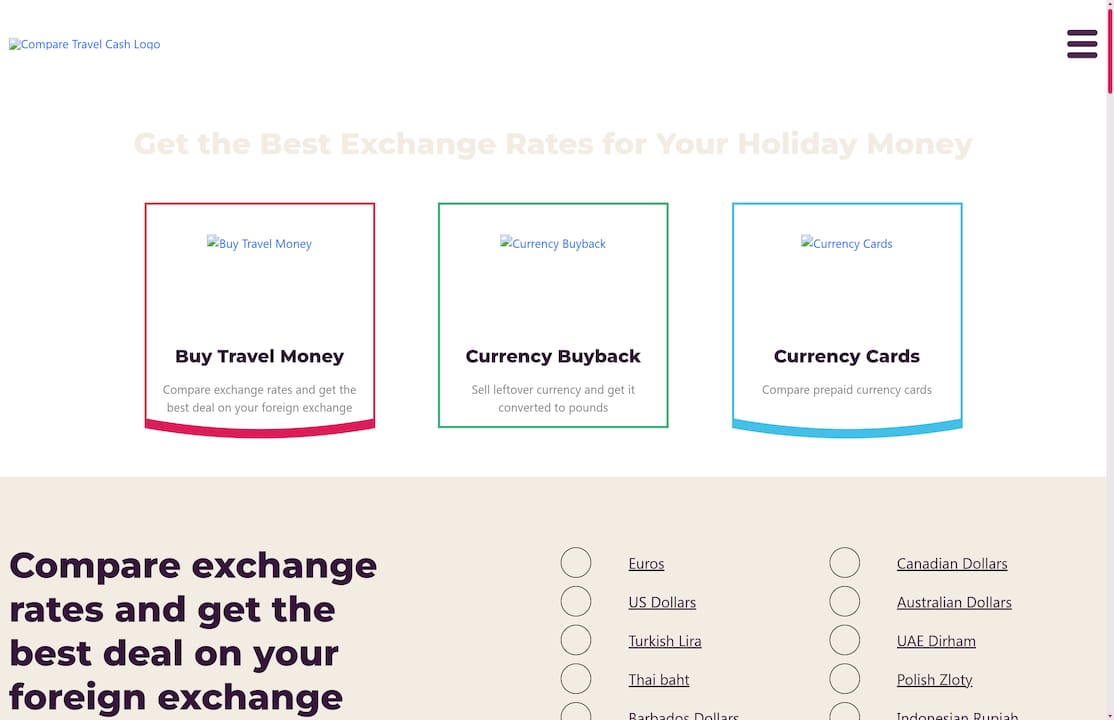
CompareTravelCash.co.uk lets you instantly compare exchange rates online from multiple UK providers, so you can see at a glance who is offering the best rate for your destination currency today. Whether you are buying euros, dollars, or something more exotic, the comparison tools do the hard work for you. You can also browse the latest best multi-currency card deals to find a prepaid or travel card that suits your trip. Check rates before you buy, not at the airport, and you will start your holiday with more money in your pocket.
Frequently asked questions
How much holiday cash should I take?
Bring 20 to 25% of your travel money as cash for small expenses such as tips and market purchases, using fee-free cards for everything else to maximise security and savings.
Is it better to buy holiday currency in the UK or abroad?
UK rates are almost always better, particularly when bought online. Airport and overseas rates can cost hundreds of pounds more per £1,000 exchanged, with Gatwick being the most expensive location in the UK.
How do I avoid card fees abroad?
Use a fee-free travel card, always choose local currency when prompted at payment terminals, and avoid withdrawing cash on standard bank cards, which cost an average of £21.79 in fees per trip.
What is dynamic currency conversion?
It is when foreign retailers or ATMs offer to convert your bill into pounds at the point of sale, but this typically adds up to 18% extra to the cost, so always decline and pay in local currency instead.