Every year, UK travellers heading to Eurozone destinations lose money not through bad luck, but through avoidable mistakes. Choosing the wrong provider, leaving currency purchases to the last minute, or unknowingly accepting Dynamic Currency Conversion fees of 3–7% can quietly drain your holiday budget before you’ve even landed. The good news is that with a bit of preparation and the right approach, you can secure genuinely competitive euro exchange rates, sidestep hidden charges, and arrive at your destination with more money to spend on what actually matters.
Table of Contents
- Understanding your options for buying euros
- Preparing to secure the best euro exchange rate
- How to actually buy euros: step-by-step
- Avoiding common pitfalls and hidden currency fees
- What most guides miss about buying travel euros
- Compare euro exchange rates for your next trip
- Frequently asked questions
Key Takeaways
| Point | Details |
|---|---|
| Compare euro rates | Shopping around for euro exchange rates before you travel can save you a significant amount. |
| Avoid DCC charges | Always pay in euros, not pounds, when abroad to avoid Dynamic Currency Conversion fees of 3-7%. |
| Plan in advance | Pre-booking euros online or with high street specialists usually secures much better exchange rates than buying at the airport. |
| Check provider fees | Look out for commissions, load fees, and buyback rates to avoid hidden costs when buying or selling euros. |
Understanding your options for buying euros
Now that you see the importance of getting it right, let’s break down the main options you can use to buy euros. Each method carries its own trade-offs between cost, convenience, and safety.
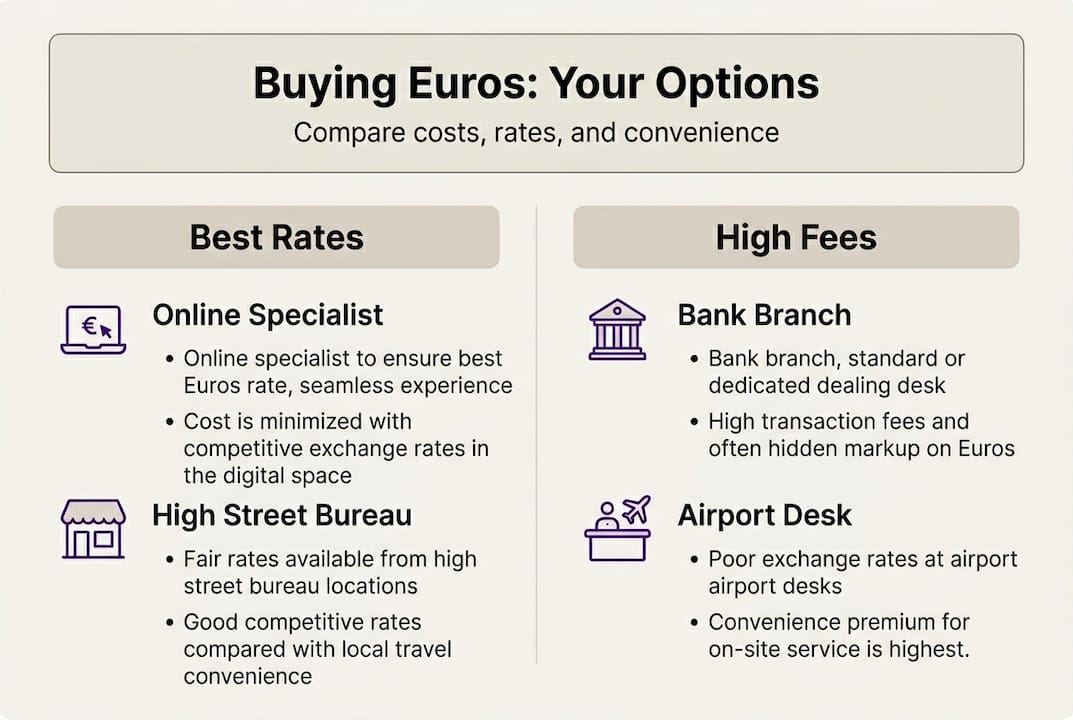
High street currency bureaux such as Post Office Money or Travelex are widely accessible and allow you to walk in and collect euros on the spot. Rates are generally better than airport desks, though not always the sharpest available.
Online currency providers typically offer the most competitive rates. You order in advance and choose between home delivery or click-and-collect. These providers have lower overheads, which they pass on through better rates.
Banks are convenient if you already have an account, but many charge currency conversion fees and their exchange rates often include a significant markup above the mid-market rate (the “true” rate seen on Google or Reuters).
Airport currency desks are the most expensive option in nearly every case. The captive audience means rates can be far worse than those available online or on the high street.
Prepaid currency cards let you load euros at a set rate and spend abroad like a debit card. They offer protection and rate-locking, and exploring your currency exchange options thoroughly before deciding is always worth doing.
| Provider type | Exchange rate quality | Typical fees | Convenience |
|---|---|---|---|
| Online specialist | Excellent | Low or none | Order in advance |
| High street bureau | Good | Low to moderate | Walk-in |
| Bank | Fair | Moderate to high | Walk-in or online |
| Airport desk | Poor | High | Immediate |
| Prepaid card | Good | Variable | Requires setup |
For a clearer picture of current pricing, comparing euro rates from multiple providers simultaneously is the fastest way to spot real value.
Pro Tip: Never buy euros at the airport unless it is an absolute emergency. Airport desks rely on travellers who have run out of time, and they price accordingly. Even a high street bureau visited the day before departure will almost always offer a better deal.
Preparing to secure the best euro exchange rate
Once you understand your options, you’re ready to prepare for the best rates by following a few key steps.
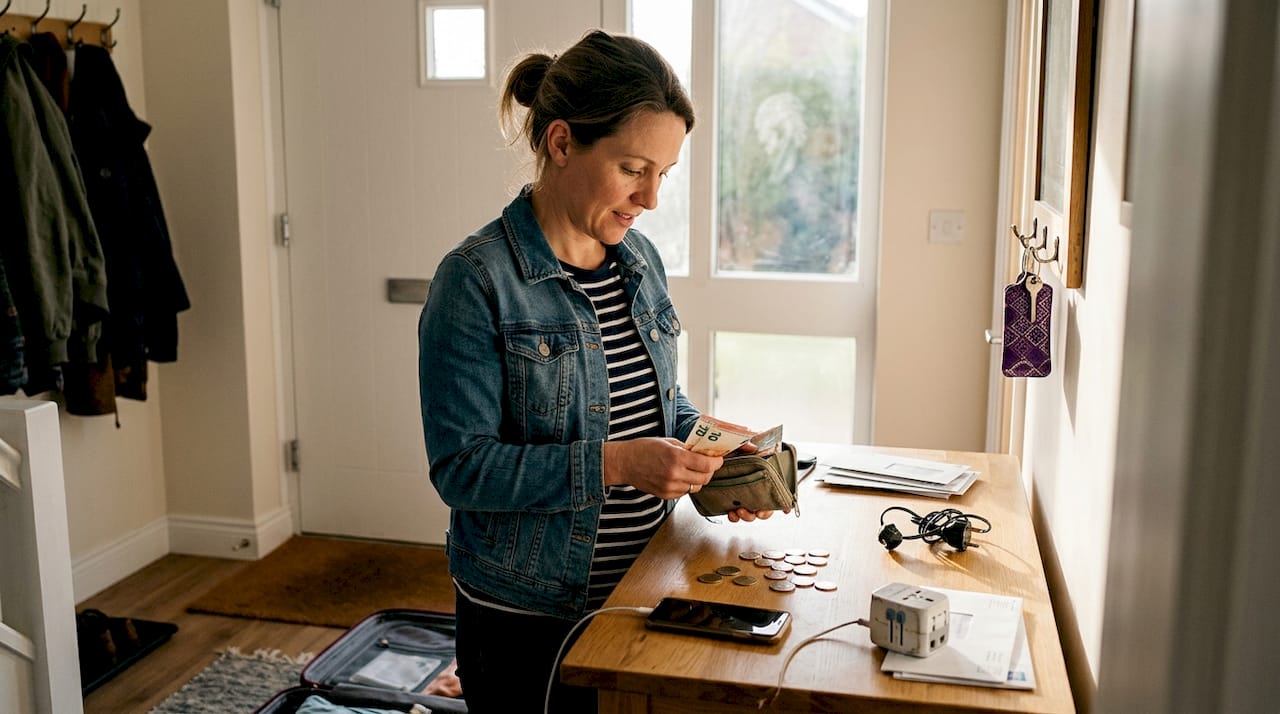
Exchange rates are not fixed. They move daily, sometimes significantly, in response to economic data releases, political events, interest rate decisions by the European Central Bank, and seasonal travel demand. Understanding this helps you act at the right moment rather than just accepting whatever rate is on offer.
Here is a practical process to follow before your trip:
- Start monitoring rates early. Set up a rate alert through a comparison tool or currency app at least three to four weeks before you travel.
- Identify your target rate. Look at recent rate history to understand what counts as a strong rate versus an average one.
- Check understanding euro trends and seasonal patterns. Summer demand for euros can push rates slightly in providers’ favour.
- Pre-book online. Providers often offer more competitive rates with lower or no commission when you book in advance online rather than walking in on the day.
- Lock in when satisfied. Once your target rate appears, book immediately. Rates can move against you quickly.
To illustrate how much provider choice affects value, consider this example for a £500 euro purchase:
| Provider | Rate (GBP/EUR) | Euros received | Difference vs. best |
|---|---|---|---|
| Online specialist | 1.18 | €590 | Best rate |
| High street bureau | 1.14 | €570 | €20 less |
| Bank | 1.11 | €555 | €35 less |
| Airport desk | 1.07 | €535 | €55 less |
That €55 difference on just £500 is real money. It covers a dinner out, a day trip, or a couple of museum entries. For finding top euro rates before your trip, comparing multiple providers on the same day is essential rather than optional.
How to actually buy euros: step-by-step
Ready to lock in your rate? Here’s how to actually buy euros, step by step.
- Research current rates. Use a comparison tool to check live rates from multiple providers in one place. Note any delivery fees, minimum order amounts, or collection requirements.
- Choose your method. Decide whether you want cash delivered to your door, click-and-collect from a local branch, or euros loaded onto a prepaid card. Your choice may depend on how much you need and how soon you travel.
- Prepare your documents. Most providers require valid photo ID. A passport or driving licence is standard. For online orders above certain thresholds, you may also need to verify your address.
- Place your order. Complete the transaction online or in person. For online orders, payment is usually by bank transfer or debit card. Avoid credit card payments where possible, as these may incur additional charges.
- Collect or receive your euros. For home delivery, use a tracked and insured service. For in-branch collection, bring your order confirmation and ID. Once abroad, remember that paying in euros rather than pounds avoids Dynamic Currency Conversion fees of 3–7%.
If you prefer a card-based approach, reviewing best multi-currency cards gives you a clearer sense of which options work best for Eurozone travel. It is also worth reading up on cash vs currency card trade-offs before committing to one method entirely.
Pro Tip: If ordering online for click-and-collect, choose a branch in a town or city centre rather than an airport or tourist-heavy location. Some providers maintain separate rate structures for airport locations even for pre-booked orders.
Avoiding common pitfalls and hidden currency fees
With your euros in hand (or on card), here’s how to ensure you don’t give those savings back to hidden fees and poor decisions.
Even travellers who do their homework can fall into traps once they are on the ground. These are the five most costly mistakes to watch out for:
- Accepting Dynamic Currency Conversion (DCC) abroad. When a card machine or ATM asks if you want to pay in pounds rather than euros, always decline. DCC adds 3–7% unnecessarily to your bill and benefits the merchant’s bank, not you.
- Buying currency at the airport. Even with advance booking savings, airport desks charge a premium. Plan ahead and avoid this entirely.
- Ignoring card foreign transaction fees. Many standard UK debit and credit cards add a fee of 2–3% on every overseas purchase. Check your card’s terms before you travel, or consider using cards abroad that are designed for overseas spending.
- Failing to compare before loading a currency card. The rate at which you load euros onto a prepaid card varies by provider. Comparing at the point of loading is just as important as comparing when buying cash.
- Not checking buyback rates before buying. If you return with leftover euros, the rate you receive when selling leftover euros back will vary significantly. Knowing this in advance helps you buy only what you need.
Key stat: Dynamic Currency Conversion can add an unnecessary 3–7% to every card transaction abroad. On a €1,000 holiday spend, that is between €30 and €70 lost purely through a single poor choice at the payment terminal.
One final point: only ever use providers authorised by the Financial Conduct Authority (FCA). Unlicensed currency exchangers, whether online or in person, carry real financial and legal risk. Check the FCA register before sending any money.
What most guides miss about buying travel euros
Most articles on this subject focus on finding the single best rate available on a given day. That is useful advice, but it misses a broader truth.
The traveller who saves most over time is not the one who obsessively chases the peak rate once. It is the one who builds a repeatable system: setting rate alerts, pre-booking online, comparing providers consistently, and always paying in local currency abroad. These habits, applied every trip, compound into meaningful savings.
There is also a false economy worth naming. Some travellers spend considerable energy finding a marginally better rate on their cash purchase, then lose more than they saved by ignoring recurring card fees or accepting DCC without thinking. The exchange rate process matters, but so does every transaction you make once abroad.
For frequent Eurozone travellers, a systematic approach beats luck every time. Treat euro buying as a small financial decision worth a few minutes of your attention, not an afterthought on the way to departures.
Compare euro exchange rates for your next trip
Ready to make your euro exchange smarter? Here’s how Compare Travel Cash can help.
CompareTravelCash.co.uk brings together live rates from trusted UK providers so you can see at a glance who is offering the best deal right now. No guesswork. No wasted time calling banks or walking between bureaux.
Check the latest euro exchange rates to see today’s best offers, browse prepaid euro cards if you prefer a card-based solution, or compare online euro rates from multiple providers in seconds. Whether you are heading to France, Spain, Italy, or anywhere else in the Eurozone, securing the best rate starts with a quick comparison.
Frequently asked questions
When is the best time to buy euros before my trip?
Aim to buy euros 1–3 weeks before travelling, as advance booking secures better rates than last-minute airport exchange. Monitoring rates over a few weeks also helps you recognise when a good rate appears.
Should I use a card or cash when spending euros abroad?
Use a card with low fees where possible, but always choose to pay in euros rather than pounds. DCC adds 3–7% in fees every time you pay in sterling abroad, which quickly erodes any savings you made when buying your currency.
Where can I find the best euro exchange rates in the UK?
Online currency providers and high street specialists consistently offer more competitive rates than banks or airport desks. Using a comparison platform lets you identify the best current option without contacting each provider individually.
What documents do I need to buy euros?
You usually need valid photo ID such as a passport or driving licence, particularly for larger transactions or online orders. Some providers may also request proof of address for orders above a set threshold.
Can I sell unused euros back in the UK for a good rate?
Yes, but buyback rates vary considerably between providers, so comparing before you sell is just as worthwhile as comparing when you buy. Returning to the same provider you bought from is not always the best option.