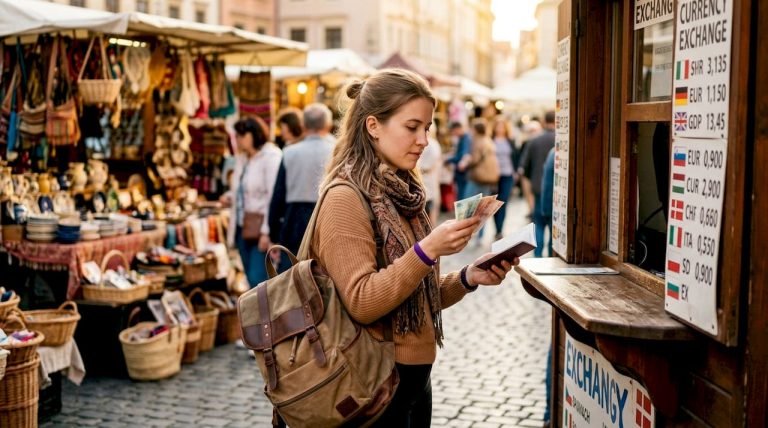
Forex for travellers is defined as the process of converting British pounds into a foreign currency so you can pay for goods and services while abroad. The industry term is “foreign exchange” or “FX,” and understanding it can save you a meaningful amount of money on every trip. Airport bureaux de change charge 5–15% above the mid-market rate, making them the single most expensive way to buy foreign currency in the UK. The mid-market rate is the true exchange rate you see on Google or Reuters. Every provider marks up from that rate to make their profit, and knowing that gap is the first step to spending less on currency.
What is forex for travellers and how does it work?
Foreign exchange for tourists works by converting one currency into another at an agreed rate. That rate is always derived from the mid-market rate, also called the interbank rate. No consumer ever receives the mid-market rate directly. Every bank, bureau, or card provider adds a markup on top of it.
The markup is the provider’s profit margin. A 3% markup on £1,000 costs you £30 before you have even boarded your flight. High-street banks typically apply a 3–6% margin on currency exchange. That is better than an airport, but still far worse than the best alternatives available to UK travellers today.
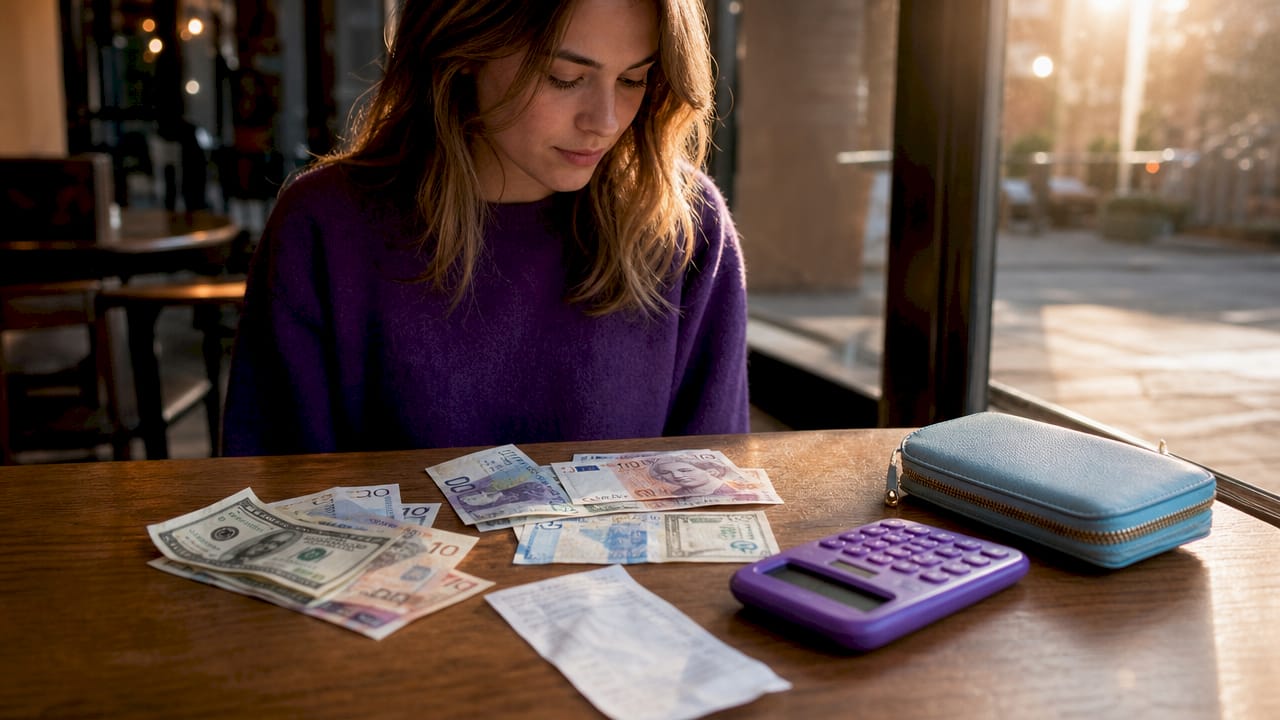
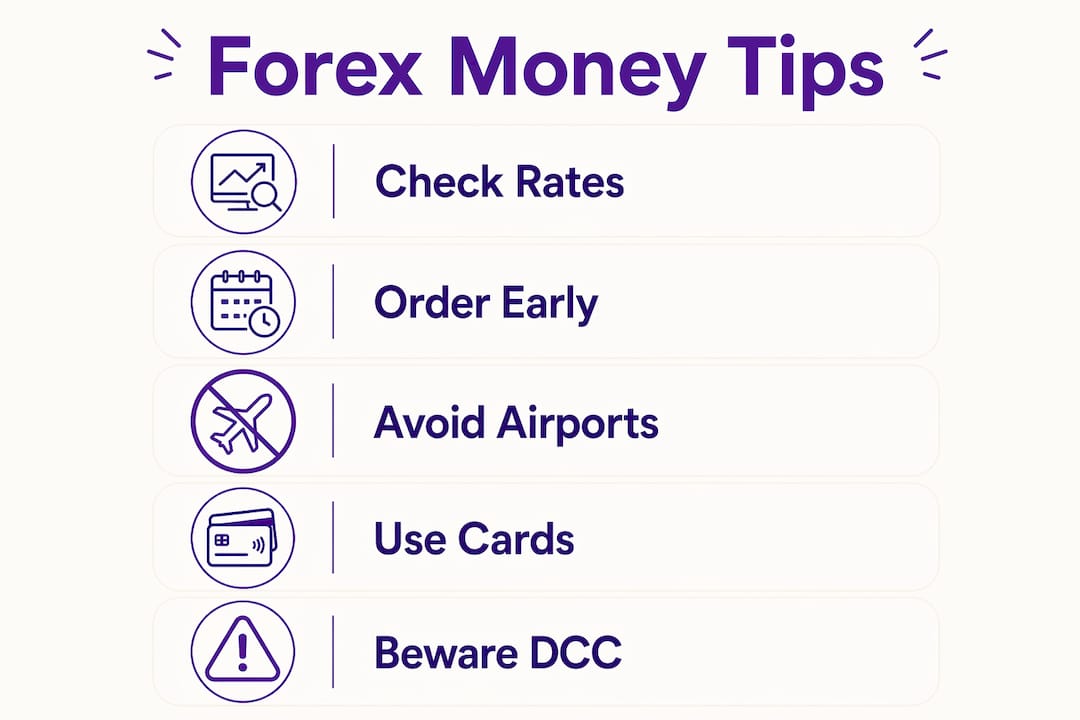
Dynamic currency conversion (DCC) is a separate trap. When a card machine abroad offers to charge you in pounds rather than the local currency, it is applying DCC. DCC typically adds a 3–7% surcharge on top of whatever rate your card already uses. Always choose to pay in the local currency. Declining DCC is one of the simplest and most effective forex tips for any trip.
| Exchange method | Typical markup above mid-market rate | Best for |
|---|---|---|
| Airport bureau de change | 5–15% | Emergencies only |
| High-street bank | 3–6% | Convenience |
| Online pre-order provider | 1–2% | Planned cash needs |
| Travel-optimised debit card | 0–1% | Everyday spending abroad |
| Prepaid forex card | 0–1.5% (watch weekend fees) | Multi-currency trips |
What are the common methods for obtaining foreign currency?
The five main ways UK travellers access foreign currency each carry different costs and levels of convenience.
- Airport bureaux de change. These are the most convenient and the most expensive. Changing £500 at Heathrow buys roughly €519, compared to around €590 via a travel-optimised debit card. That gap of €71 is the real cost of convenience.
- High-street bank branches. Banks offer a safer rate than airports, but their 3–6% margin still leaves money on the table. They are a reasonable fallback if you need physical cash before departure.
- Online pre-order services. Ordering currency online through a reputable provider typically costs 1–2% above mid-market rate. You collect at a branch or receive delivery, and you lock in the rate at the time of ordering.
- Travel-optimised debit and prepaid cards. Cards designed for overseas spending offer rates closest to the mid-market rate. They are the best forex option for most travellers on most trips.
- ATM withdrawals abroad. Using a travel card at a foreign ATM gives you a competitive rate, but always decline the ATM’s offer to convert the amount into pounds. That offer is DCC in another form.
- Specialist currency brokers. For large sums, such as buying property abroad or funding a long trip, specialist brokers can negotiate rates that beat any retail option.
Pro Tip: Order your currency online at least a week before travel. Rates fluctuate daily, and last-minute orders at the airport cost significantly more.
How to save money on forex: tips for UK travellers
Cutting your forex costs does not require complicated planning. A few deliberate choices before and during your trip make a real difference.
- Use a no-foreign-transaction-fee debit card. Travel-optimised debit cards offer rates close to the mid-market rate with little or no markup. This is the single most effective change most UK travellers can make.
- Avoid airport bureaux de change. The 5–15% markup at airport exchanges is a convenience tax. If you need cash on arrival, withdraw a small amount from an ATM using your travel card instead.
- Order cash online before you travel. For destinations where cash is still king, pre-ordering from an online provider at 1–2% above mid-market is a far better deal than any airport rate.
- Always pay in local currency. Decline every offer to pay in pounds when abroad. DCC adds 3–7% to your transaction, and the merchant or ATM keeps that fee.
- Watch for weekend surcharges. Some fintech travel cards add roughly 1% on weekend transactions because currency markets are closed. If you know you will spend heavily on a Saturday, load your card at a fixed rate beforehand.
- Plan your cash needs in advance. Most UK travellers need only £50–£150 in local cash for a short European trip. Carrying more than you need means converting unused currency back at a loss.
Pro Tip: Check the mid-market rate on Google before you exchange any currency. If a provider’s rate is more than 2% away from it, look elsewhere.
For a fuller breakdown of how to cut costs across different destinations, the UK traveller’s currency guide covers the full range of strategies in detail.
What is a forex card and how can it benefit travellers?
A forex card is a prepaid card loaded with one or more foreign currencies before you travel. It locks in an exchange rate at the time of loading, which protects you from rate movements during your trip. Forex cards are widely accepted anywhere that takes Visa or Mastercard.
The benefits over carrying cash are clear:
- Security. If a forex card is lost or stolen, you can freeze it instantly through an app. Lost cash is gone permanently.
- Rate certainty. Loading euros at today’s rate means you know exactly what your holiday budget is worth, regardless of what happens to the pound.
- Reduced transaction fees. Most forex cards charge no foreign transaction fee when you spend in the loaded currency.
- Multi-currency flexibility. Many cards hold several currencies simultaneously, which is useful for trips across multiple countries.
The main risk is the hidden weekend surcharge. Some fintech providers add a weekend markup when FX markets are closed, which catches many travellers off guard. Read the fee schedule before you load.
| Payment method | Foreign transaction fee | Rate quality | Security |
|---|---|---|---|
| Standard UK debit card | 2–3% | Poor | Good |
| Travel-optimised debit card | 0% | Near mid-market | Good |
| Prepaid forex card | 0% (in loaded currency) | Locked rate | Excellent |
| Credit card | 1–3% | Variable | Good |
Comparetravelcash lists and compares prepaid currency cards from multiple providers, so you can see fee structures side by side before committing.
Common mistakes UK travellers make with forex
Several recurring errors cost UK travellers money on every trip. Recognising them in advance is the cheapest form of travel insurance.
- Assuming high-street banks give the best rate. Many UK travellers believe banks offer the best currency deals, but specialist travel cards and online providers consistently beat them.
- Ignoring the mid-market rate. Without a benchmark, you cannot judge whether a rate is fair. Always check the mid-market rate before exchanging.
- Accepting DCC at the point of sale. Paying in your home currency abroad should always be declined. The rate applied by the merchant is almost always worse than your card’s own rate.
- Not reading the fee schedule on travel cards. Weekend surcharges, ATM withdrawal fees, and inactivity charges are buried in the small print. Read them before you travel.
- Going all-in on cash or all-in on cards. The best approach combines a small amount of local cash for markets and taxis with a travel card for larger purchases.
- Waiting until the day of departure. Last-minute exchanges at the airport cost the most. Planning even a week ahead opens up significantly better options.
Small percentage differences compound quickly across a two-week holiday. A 5% saving on £2,000 of spending is £100 back in your pocket, which is a decent dinner abroad.
What I have learned about forex after years of travelling from the UK
After travelling extensively from the UK, the single clearest lesson is that most currency losses are avoidable. They happen not because of bad luck, but because of habit. People use the airport bureau because it is there. They accept DCC because the machine defaults to it. They assume their bank is looking after them.
Travel cards changed how I manage money abroad entirely. The rate difference between a travel-optimised debit card and a high-street bank is not dramatic on any single transaction, but it adds up across a two-week trip in a way that genuinely matters. I now carry a small amount of pre-ordered cash for the first day and use a travel card for everything else. That combination covers almost every situation without overpaying on either side.
The weekend surcharge on some fintech cards surprised me the first time I encountered it. I had loaded a card on a Friday evening, spent heavily on Saturday, and noticed the rate was slightly worse than expected. Reading the fee schedule in advance would have told me to load the card on a Thursday instead. It is a small detail that costs real money if you miss it.
My advice is to treat forex planning the same way you treat booking flights. A little research before you travel, using a tool like Comparetravelcash to compare exchange rates across providers, consistently delivers better results than deciding on the day.
— Jason
How Comparetravelcash helps you find the best travel money rates
Getting a good exchange rate is straightforward when you can see all your options in one place.
Comparetravelcash compares travel money rates from providers across the UK, so you can see at a glance who is offering the best deal for your currency before you commit. The platform covers cash exchange, prepaid currency cards, and buyback rates, giving you a complete picture of your options. Checking rates takes less than a minute and can save you a meaningful amount on every trip. Whether you are heading to Europe, the US, or further afield, comparing before you buy is the simplest forex tip there is.
FAQ
What is the mid-market rate and why does it matter?
The mid-market rate is the true exchange rate between two currencies, found midway between the buy and sell prices on global markets. Every consumer rate is marked up from this figure, so knowing it tells you how much any provider is charging you above the real rate.
Is it cheaper to exchange currency before or after travelling?
Exchanging before travel is almost always cheaper. Airport bureaux de change charge 5–15% above the mid-market rate, while online pre-order services typically charge 1–2%.
What is dynamic currency conversion and should I avoid it?
Dynamic currency conversion (DCC) is when a foreign card machine offers to charge you in pounds instead of the local currency. You should always decline it, as DCC adds a 3–7% surcharge on top of your card’s existing rate.
How much cash should I take on a European trip?
Most UK travellers need only £50–£150 in local cash for a short European trip. A travel card covers the rest more cheaply and more securely than carrying large amounts of cash.
Are prepaid forex cards worth using?
Prepaid forex cards offer near mid-market rates, strong security, and no foreign transaction fees when spending in the loaded currency. The main caveat is that some providers add a weekend surcharge, so check the fee schedule before loading.