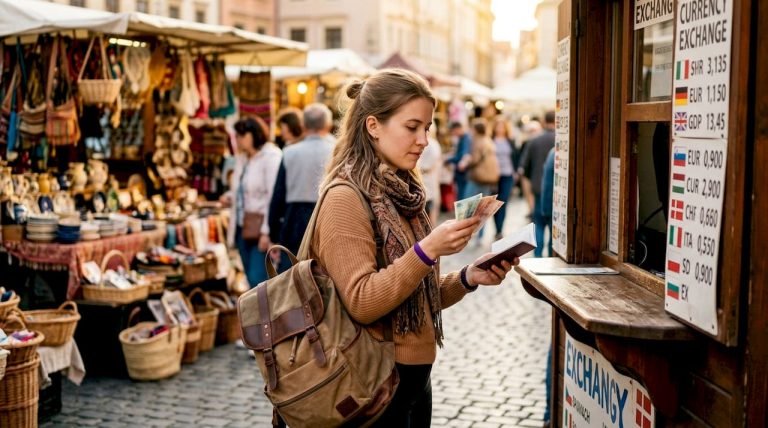
Every year, UK holidaymakers hand over hundreds of pounds in unnecessary fees simply because they exchanged money at the wrong place, at the wrong time, or without checking who they were dealing with. Knowing how to exchange money safely is not complicated, but it does require a few deliberate choices made before you reach the airport. This guide covers everything: how to spot the traps, how to prepare properly, how to handle cash abroad, and how to verify every transaction so you never leave money on the table.
Table of Contents
- Understanding the problem with unsafe money exchanges
- Preparing to exchange money safely before your trip
- Executing safe currency exchange while travelling abroad
- Verifying your exchange and managing risks
- The inconvenient truth about currency exchange services
- How CompareTravelCash.co.uk helps you exchange money safely and save
- Frequently asked questions
Key Takeaways
| Point | Details |
|---|---|
| Avoid airport exchanges | Airport currency exchanges levy high markups and fees that reduce your spending power abroad. |
| Order currency early | Secure better rates and availability by ordering foreign currency from your bank 1-2 weeks before travelling. |
| Use local currency payments | Always pay in the local currency to avoid costly merchant markups from dynamic currency conversion. |
| Choose specialist cards | Specialist travel cards offer near-fee-free foreign spending and ATM withdrawals, saving money and hassle. |
| Verify and count cash | Check all cash carefully on exchange and keep receipts to prevent fraud or errors when exchanging money abroad. |
Understanding the problem with unsafe money exchanges
Most travellers focus on the destination and forget about the mechanics of spending money once they arrive. That oversight costs real money. The single most common mistake is exchanging currency at the airport, where convenience comes with a heavy price tag.
Airport currency exchanges mark up rates by 5 to 10% compared to banks, meaning a £500 exchange could cost you £25 to £50 extra before your holiday has even started. Some airport bureaux push the markup even further. Airport bureaux add 5 to 12% markups on their rates, and if you then pay by card at a local restaurant that offers to charge you in pounds, you face an additional 3 to 5% from Dynamic Currency Conversion (DCC). DCC is a merchant-side trick where the terminal offers to handle the currency conversion for you. It sounds helpful. It is not.
Beyond pricing, there are safety risks worth knowing about:
- Unlicensed exchange bureaux operating in tourist areas may short-change you or pass counterfeit notes
- Street money changers offering “better rates” are almost always scams
- DCC at card terminals adds a hidden markup that many travellers miss entirely
- Pre-loaded debit cards from unregulated providers may lack the consumer protections of FCA-regulated accounts
- Busy, chaotic exchange counters create distraction moments where notes can be miscounted or swapped
“The worst exchange decisions are usually made under time pressure. Rushing through an airport with a flight to catch is exactly when you are most likely to accept poor rates without checking.”
Pro Tip: Before travelling, learn how to spot bad exchange rates so you can identify a rip-off on sight, not in hindsight.
Understanding these exchange safety risks sets the foundation for every decision you make from this point forward.
Preparing to exchange money safely before your trip
Good preparation is where the real savings happen. Most of the work that protects your money takes place before you even pack your bag.
Follow these steps in the weeks before departure:
- Order foreign currency from your UK bank or a comparison service at least one to two weeks ahead. UK travellers should order currency 1 to 2 weeks before departure to secure better rates and guarantee availability, particularly for less common currencies like Thai Baht or Turkish Lira.
- Choose an FCA-regulated provider. FCA-authorised providers keep client funds segregated and carry out Know Your Customer (KYC) checks, which means your money is handled within a regulated framework that offers legal recourse if something goes wrong.
- Set up two-factor authentication (2FA) on your banking app and any travel money app before you travel.
- Set daily spending limits on your debit and credit cards as a safeguard against fraud if a card is compromised.
- Make copies of your passport, travel insurance, and any exchange receipts. Store them separately from the originals, ideally in a secure cloud folder.
Here is a quick comparison of common pre-trip exchange options:
| Exchange method | Typical rate vs mid-market | FCA regulated | Convenience |
|---|---|---|---|
| UK high street bank | 2 to 4% below mid-market | Yes | Moderate |
| Online currency specialist | 1 to 2% below mid-market | Yes | High |
| Airport bureau | 5 to 12% below mid-market | Sometimes | Very high |
| Travel money comparison site | 1 to 2% below mid-market | Verified providers | Very high |
| Street changer | Unknown, high risk | No | High |
Understanding buying foreign currency securely helps you identify which providers deserve your business and which do not. And if you are considering ordering online, there is solid advice on buying travel money online that covers what to check before placing an order.
Pro Tip: Check the currency conversion steps for your destination currency in advance. Some currencies have limited availability in the UK, and ordering early prevents last-minute scrambles.
Always note the mid-market rate (the rate you see on Google or XE.com) before approaching any provider. That figure is your benchmark. Any provider charging more than 3% away from it deserves scrutiny.
Executing safe currency exchange while travelling abroad
Once you are abroad, the safe money exchange tips you prepared at home become your daily operating procedures. The key decisions are where you withdraw cash, how you pay by card, and how you avoid the most common tourist traps.
ATM withdrawals
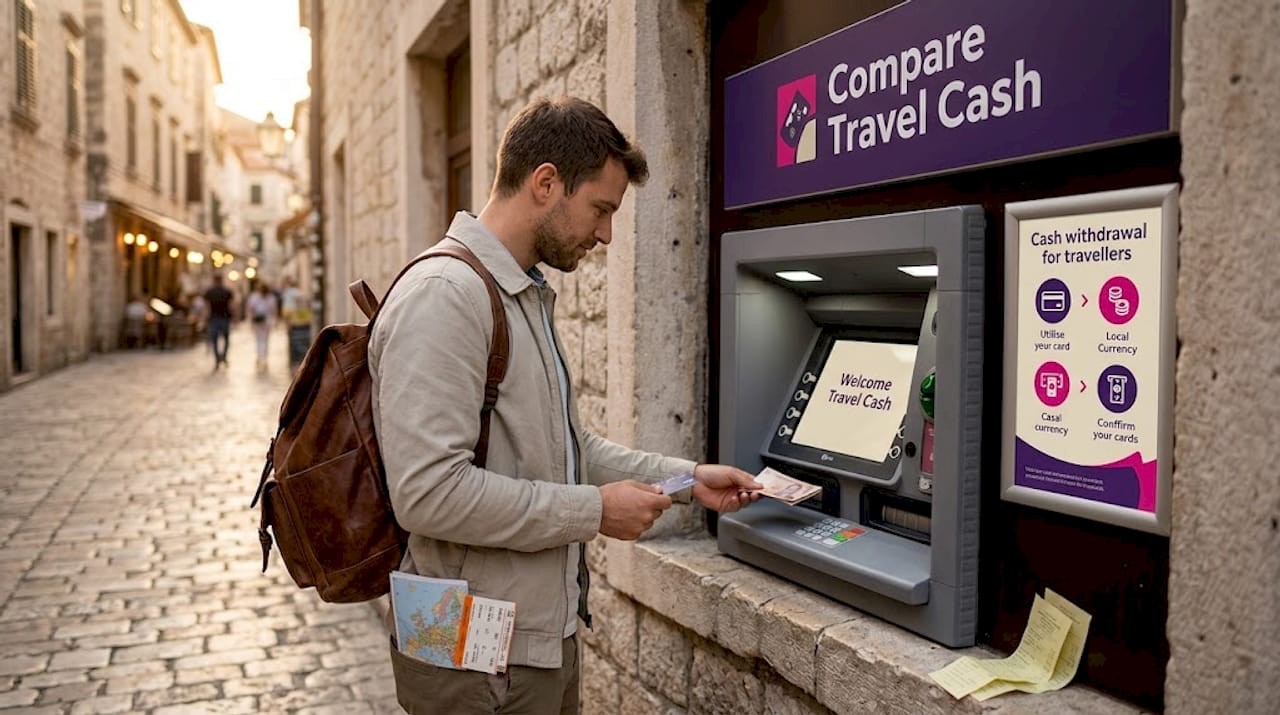
Use bank ATMs with known partnerships to withdraw local currency with lower fees and better rates than any exchange kiosk can offer. Most major UK banks have international ATM partnerships. Starling, Monzo, and Chase UK, for example, offer fee-free or low-fee overseas withdrawals. Avoid standalone ATMs in tourist areas; these often charge significant flat fees on top of poor rates.
Card payments
Always pay in the local currency when using your card abroad. This is the single most important rule of card use overseas. When a merchant offers to charge you in pounds, decline. Paying in foreign currency lets your UK card handle the conversion at known rates, which are almost always better than the merchant’s DCC rate.
Specialist travel cards
A good travel card versus cash comparison often reveals that specialist cards outperform cash for spending, particularly for large purchases like accommodation or car hire. Here is how the main options stack up:
| Payment method | Foreign transaction fee | Exchange rate quality | Best use case |
|---|---|---|---|
| Standard UK debit card | 2.75 to 3% | Near mid-market | Low-value purchases only |
| Specialist travel card | 0% | Near mid-market | Daily spending abroad |
| Airport exchange cash | N/A | 5 to 12% markup | Rarely worth it |
| Bank ATM withdrawal | 0 to 2% flat fee | Near mid-market | Cash for local markets |
| DCC card payment | 3 to 5% extra | Poor | Avoid entirely |
Here are the money exchange safety precautions to keep front of mind while spending abroad:
- Never hand your card to someone who takes it out of sight
- Use ATMs attached to bank branches rather than freestanding units on the street
- Cover the keypad when entering your PIN
- Check your banking app daily for unauthorised transactions
- Carry a backup card from a different network in a separate location
Pro Tip: Apply the travel money saving tips before you go so you know exactly which card to reach for in each situation, rather than working it out under pressure at the checkout.
Verifying your exchange and managing risks
Exchanging money is not finished the moment you receive your notes. Verification is part of the process, and skipping it is how mistakes become permanent losses.
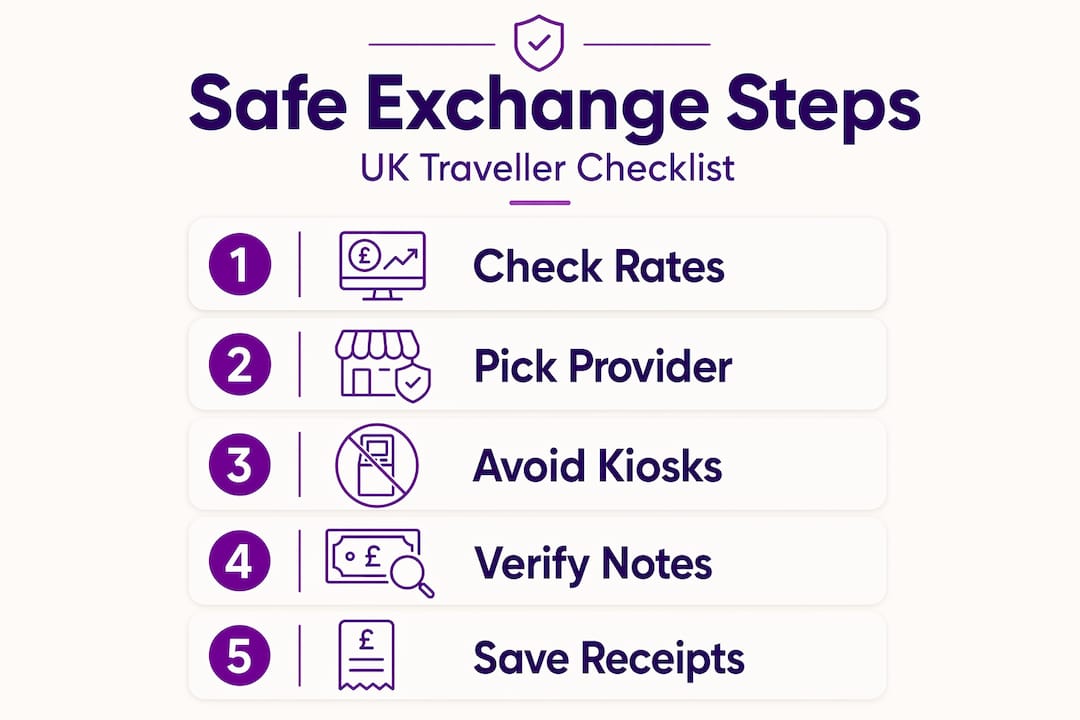
Count your money carefully in front of the agent immediately after the transaction. Check the notes against the amount on your receipt. Do not walk away first. Many discrepancies are easiest resolved before leaving the counter, and once you have left the premises, most bureaux will not accept any claim.
Follow these steps every time you exchange cash:
- Count the full amount note by note while still at the counter
- Inspect larger denomination notes for security features: watermarks, security threads, colour-shifting ink
- Request smaller denominations where possible, as large notes are harder to spend and harder to authenticate in busy conditions
- Keep your receipt in a safe place; it is your only proof of the transaction
- Note the name and address of the exchange bureau in case you need to report an issue later
When it comes to cards, set up instant spending notifications through your banking app. If your card is lost or stolen, you need to block it fast. Store the international contact number for your bank separately from your card, whether in your email or written down in your luggage.
Pro Tip: Use identifying poor exchange rates as your checklist before you hand over any cash at an exchange counter. A two-minute check can prevent a costly mistake.
The inconvenient truth about currency exchange services
Here is something most travel articles will not say plainly: there is no single best way to exchange money abroad, and anyone who tells you otherwise is oversimplifying.
No single exchange method fits all situations. The traveller who changes all their money at a bank branch before departing and relies entirely on cash will overpay when the rate moves against them. The traveller who relies entirely on a travel card will struggle at a rural market in Morocco or a small restaurant in rural Greece that only accepts cash.
The traveller who does nothing in advance and wings it at the airport will simply overpay on every transaction.
What actually works is combining methods. Order a modest amount of local currency before you travel, enough for your first day or two. Use a specialist travel card for the majority of your spending. Withdraw cash in local currency from partner ATMs as needed, in amounts that reflect what you will actually spend rather than a large sum left sitting in your wallet.
There is also the timing question. Dollar-cost averaging monthly transfers smooths exchange rate fluctuations, an approach that most travellers never consider. If you are travelling somewhere for an extended period or making a large currency purchase, spreading the exchange across several weeks reduces the risk of buying everything at a rate peak.
The other overlooked risk is assuming that a provider is regulated simply because it looks professional or has a shopfront. Always verify FCA authorisation before exchanging significant sums. Check the FCA register directly at fca.org.uk. It takes less than a minute and it is the most effective single step for avoiding scams.
For practical guidance on how to put all of this together, the secure travel money online guide covers the full process from choosing a provider to confirming delivery.
The bottom line is this: safe currency exchange is not about finding one perfect solution. It is about layering several sensible choices and staying alert throughout the process.
How CompareTravelCash.co.uk helps you exchange money safely and save
Armed with everything above, the practical next step is putting it into action quickly and without spending hours comparing providers manually.
CompareTravelCash.co.uk brings together rates from multiple FCA-regulated providers in one place, so you can compare travel money exchange rates side by side before you commit. You can also browse the full currency card comparison to find a specialist travel card that matches how you spend abroad, whether that is fee-free ATM withdrawals, zero foreign transaction fees, or both. Rates are updated regularly, helping you time your purchase to avoid peak markups. You can even check Barclays travel money rates alongside specialist providers to see exactly what difference the right choice makes to your pocket.
Frequently asked questions
When is the best time to exchange currency for an international trip?
Exchange most of your currency through your bank or a comparison service one to two weeks before departure to secure better rates and ensure availability, avoiding costly last-minute airport exchanges.
How can I avoid Dynamic Currency Conversion fees when paying abroad?
Always pay in the local currency rather than pounds when a card terminal offers you the choice, as DCC adds 3 to 5% in hidden markups that go directly to the merchant.
Are specialist travel cards worth using for overseas spending?
Yes. Specialist cards provide near-perfect exchange rates without fees, unlike standard UK debit cards which typically charge 2.75 to 3% on every foreign transaction, making them one of the most cost-effective tools for travelling abroad.
What safety precautions should I take when exchanging cash abroad?
Count your money carefully in front of the agent before leaving the counter, check notes for security features, keep receipts, and only use reputable, well-staffed exchange bureaux that you have verified in advance.
Can I withdraw cash safely from ATMs overseas without high fees?
Yes. Using bank ATMs with known partnerships or specialist travel cards allows you to withdraw local currency at near mid-market rates with minimal fees, which is consistently cheaper than using airport kiosks or independent exchange bureaux.