Every year, UK travellers lose hundreds of pounds to poor exchange rates without realising it. The problem is rarely obvious. You hand over your cash, receive what looks like a fair amount in return, and only discover the true cost later. Airport rates are often 10-15% worse than the mid-market rate, meaning a family exchanging £1,000 could lose £100 to £150 before they even leave the terminal. Knowing exactly what to look for, and where the traps hide, is the most reliable way to protect your travel budget. This guide breaks down the key warning signs and practical strategies every UK traveller should know.
Table of Contents
- Know the real exchange rate: the mid-market benchmark
- Spotting common traps: high markups, commissions and hidden fees
- Avoiding dynamic currency conversion (DCC) rip-offs when paying abroad
- Best strategies for getting fair rates: practical steps for UK travellers
- Our perspective: saving money abroad is about vigilance, not luck
- Compare and save: find the best travel money rates today
- Frequently asked questions
Key Takeaways
| Point | Details |
|---|---|
| Use the mid-market rate | Always compare offered rates to the mid-market rate to avoid excessive markups. |
| Decline dynamic currency conversion | Always pay in the local currency when abroad to sidestep hidden DCC fees. |
| Beware ‘no commission’ claims | ‘No commission’ offers can hide poor value through wider spreads. |
| Order travel money ahead | Pre-order currency online or for branch collection to get better rates than at airports. |
| Mix cards and cash | A combination of cards and cash offers the best flexibility and value for UK travellers. |
Know the real exchange rate: the mid-market benchmark
Start by understanding what makes a ‘bad’ exchange rate. The mid-market rate, sometimes called the interbank rate, is the midpoint between the buying and selling prices of two currencies on global markets. It is the rate you see on Google or XE.com when you search for a currency pair. No bank or bureau de change will give you exactly this rate. They all add a margin to make a profit. The question is how large that margin is.
When you exchange currency, the provider buys it from you at a lower rate and sells it to you at a higher rate. The gap between those two figures is their profit. A reasonable margin sits between 1% and 3% of the mid-market rate. Anything above 5% is a red flag. Some airport kiosks and hotel exchange desks push margins to 10% or beyond, which is simply poor value by any measure.
Knowing how to compare rates before you exchange is straightforward. Check the mid-market rate on Google or XE.com immediately before you visit any provider. Then calculate what you should receive based on that rate, and compare it to what the provider is actually offering. The difference tells you the real cost.
Here are the key things to check before exchanging:
- The mid-market rate at the moment of exchange, not hours earlier
- The rate being offered by the provider, not just the advertised headline figure
- Any flat fees or service charges added on top of the exchange rate
- The total amount you will actually receive, after all deductions
- Whether the rate changes between the quote and the transaction
Pro Tip: Never rely on a rate displayed on a board outside a bureau de change. Always ask for the final amount you will receive in foreign currency before handing over any money. That figure is the only one that matters.
Rates more than 1-3% off the mid-market rate mean you are paying extra for the convenience of that particular provider. Sometimes that cost is worth it. Usually, it is not.
Spotting common traps: high markups, commissions and hidden fees
Now you know what the real rate is, let’s explore the main warning signs and hidden tactics used by exchange providers. The most common trap is the ‘no commission’ claim. It sounds reassuring. In reality, ‘no commission’ claims often mask wider spreads, meaning the provider simply builds their profit into a worse exchange rate rather than charging a visible fee. The total cost to you is the same or higher.
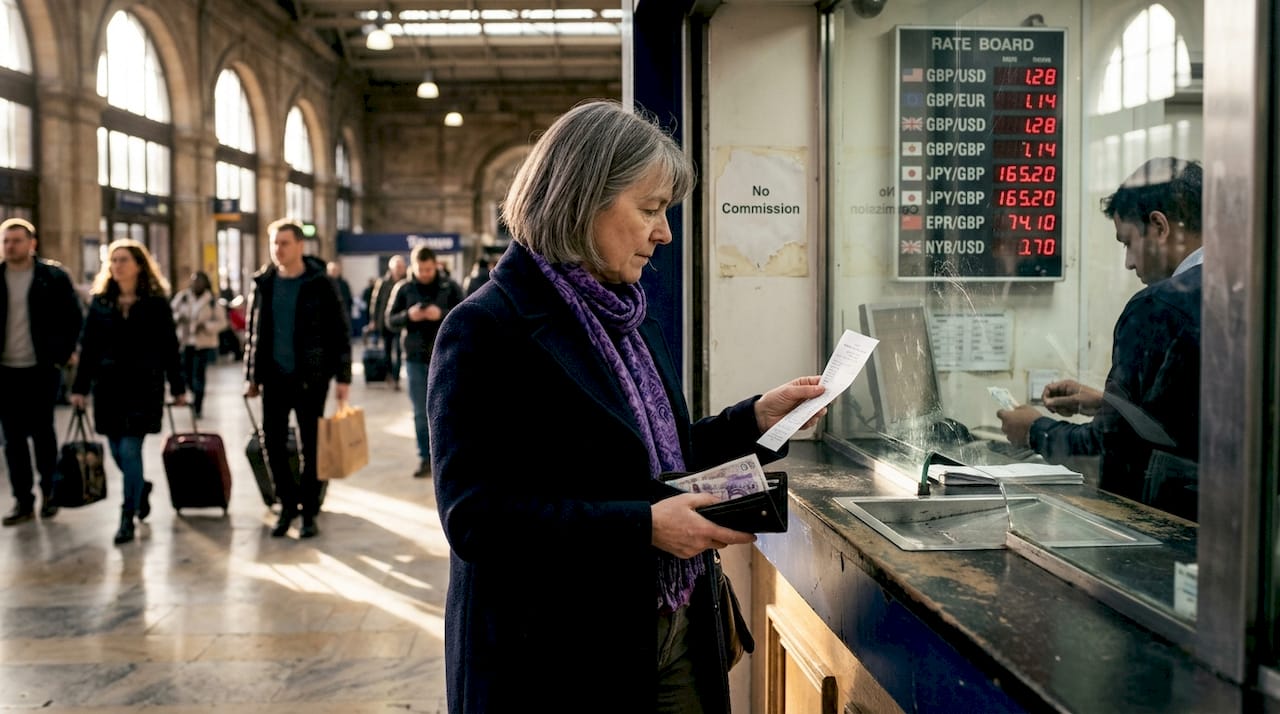
Here is a quick comparison showing how providers can disguise poor value:
| Provider type | Typical margin above mid-market | Commission/fee | True cost |
|---|---|---|---|
| Online specialist | 1-2% | Low or none | Low |
| High street bank | 2-4% | Sometimes flat fee | Medium |
| Airport bureau | 8-12% | Often ‘no commission’ | Very high |
| Hotel kiosk | 10-15% | Rarely disclosed | Extremely high |
| Supermarket travel money | 2-4% | Minimal | Low to medium |
The airport bureau pitfalls are particularly costly because travellers are under time pressure and have fewer alternatives. Hotel kiosks exploit a similar captive audience. Both rely on the fact that most people do not check the mid-market rate before exchanging.
Other hidden tactics to watch for include:
- Dynamic pricing where rates worsen at busy travel times
- Minimum exchange amounts that force you to convert more than you need
- Flat fees that make small exchanges disproportionately expensive
- Misleading ‘best rate’ signage that refers to a specific currency or amount only
These are among the most common travel money mistakes UK travellers make. The fix is simple: always calculate the total amount you receive, not the rate on the board.
Pro Tip: Use your phone’s calculator to divide the amount of foreign currency you will receive by the pounds you are handing over. That gives you the effective rate. Compare it to the mid-market rate on Google. The difference is your real cost.
Avoiding dynamic currency conversion (DCC) rip-offs when paying abroad
Beyond the advertised rates, the way you pay abroad also impacts how much you spend. Dynamic currency conversion, or DCC, is one of the most costly traps for UK card users overseas. It occurs when an ATM or card terminal abroad offers to convert your transaction into pounds on the spot, rather than charging you in the local currency.
It sounds helpful. It is not. DCC adds 3-10% markups and nearly half of UK travellers pay these fees without realising it. The conversion rate used is set by the local merchant or bank, not your card provider, and it is almost always unfavourable.
Paying in pounds abroad via DCC is one of the most avoidable ways to lose money on holiday. The local currency option is virtually always cheaper.
Here is exactly what to do when DCC is offered:
- Read the screen carefully. ATMs and card machines often default to the DCC option or phrase it in a way that makes it seem like the safer choice.
- Select ‘pay in local currency’ or decline the conversion. Look for wording like ‘without conversion’ or ‘charge in [local currency]’.
- Do not be rushed. Merchants sometimes present DCC quickly or with minimal explanation. Take your time.
- Check your receipt. Confirm the amount charged is in local currency, not pounds.
- Report persistent issues. If a merchant insists on DCC, you can dispute the transaction with your card provider.
Being aware of DCC is especially important when budgeting for travel, since these unexpected charges can quietly erode your spending money. Reviewing your currency exchange guide before you travel helps you prepare for these situations in advance.
Best strategies for getting fair rates: practical steps for UK travellers
Having seen the pitfalls, let’s focus on the smartest ways to secure the best exchange rates. The single most effective step is to plan ahead. Pre-ordering currency online for collection or delivery, and mixing cards with cash, maximises both flexibility and value. Last-minute exchanging at airports or hotels is almost always the most expensive option.
Here is a practical comparison of your main options:
| Method | Convenience | Typical rate quality | Best for |
|---|---|---|---|
| Online pre-order | High | Excellent | Most travellers |
| High street branch | Medium | Good | Those without delivery |
| Airport bureau | Very high | Poor | Emergencies only |
| Specialist travel card | High | Very good | Regular travellers |
| Hotel kiosk | Very high | Very poor | Avoid if possible |
Cash still has a clear role. Markets, small restaurants, taxis, and tips often require it. Carrying some local currency avoids the awkwardness of card-only situations. But for larger purchases, a fee-free travel card or credit card will usually give you a better rate than cash.
Use this checklist before your next trip:
- Check the holiday currency checklist and plan your currency needs in advance
- Compare travel cash vs card options to find the right mix for your destination
- Review online vs high street rates before committing to any provider
- Decide in advance whether using cards or cash makes more sense for your trip
- Always check two or three providers before exchanging, even if one looks competitive
The travellers who consistently get fair rates are not lucky. They are simply more organised and more willing to spend five minutes comparing options before committing.
Our perspective: saving money abroad is about vigilance, not luck
There is a common assumption that getting a good exchange rate requires catching a rare deal or using some insider trick. In our experience, that is not how it works. The real losses do not usually come from one obvious rip-off. They come from small, repeated markups that accumulate quietly across a trip.
Paying a 4% margin here, accepting DCC there, and exchanging at the airport because it felt easier adds up fast. The travellers who consistently keep more of their money are not doing anything dramatic. They are simply making rate-checking a habit rather than an afterthought.
The mindset shift matters more than any single tip. Treating exchange rate comparison as a normal part of trip planning, the same way you would compare flight prices or hotel costs, changes your outcomes over time. Avoiding common money mistakes is not about being obsessive. It is about being consistent. Five minutes of comparison before you exchange is almost always worth it.
Compare and save: find the best travel money rates today
Ready to apply what you’ve learned? Here’s how to turn knowledge into real savings. CompareTravelCash.co.uk lets you check live exchange rates from multiple UK providers in one place, so you can see exactly who is offering the best deal before you commit.
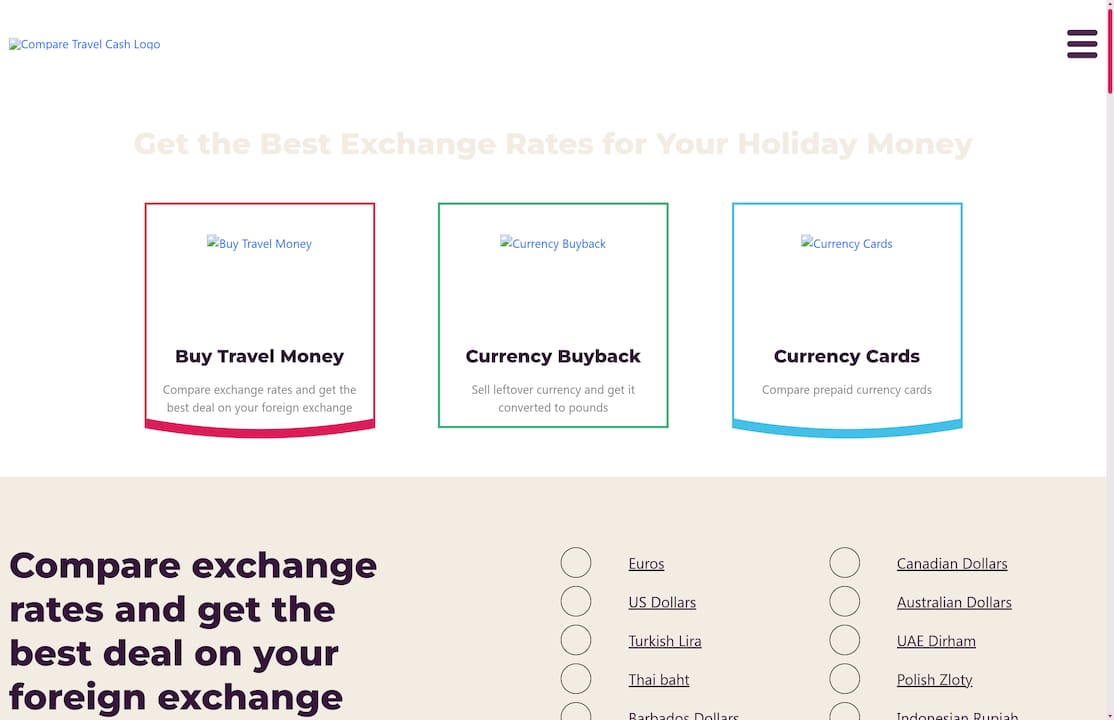
Whether you want to compare travel money rates across the market or specifically compare Marks and Spencer rates against other providers, the tools are free and updated in real time. Bookmark the site and check rates a few days before you travel. Locking in a competitive rate in advance, rather than scrambling at the airport, is one of the simplest ways to protect your travel budget.
Frequently asked questions
How much worse are airport exchange rates compared to banks or online?
Airport exchange rates can be 10-15% worse than the mid-market rate, often costing you far more than online or branch options. For a £1,000 exchange, that difference can amount to £100 to £150 in lost value.
What is the mid-market rate and where can I find it?
The mid-market rate is the real exchange rate found on Google or XE.com and acts as the fair standard for comparison. Any rate offered to you will be slightly worse, but the gap should be small.
Should I pay in pounds or local currency when using my card abroad?
Always choose to pay in the local currency and decline dynamic currency conversion to avoid extra 3-10% markups. Paying in pounds via DCC is almost never the cheaper option.
Is ‘no commission’ really a good deal?
‘No commission’ offers often hide wider spreads, so always check the actual rate given versus the mid-market. The absence of a visible fee does not mean the exchange is good value.
How can I get the best exchange rate before I travel?
Pre-ordering online and checking several providers gets better value than exchanging at the last minute. Using a comparison site to review live rates before you buy is the most reliable approach.
Recommended
- Why compare exchange rates: save more as a UK traveller
- Don’t Get Ripped Off by Bureau de Change at the Airports
- Travel money saving tips: Cut costs on your next trip
- Travel money exchange: How UK travellers get the best rates
- Kaip gauti geriausią valiutų kursą: patarimai 2026
- International Roaming Explained: Avoiding Costly Mistakes | Lumo eSIM Store