Choosing which currencies to bring on holiday sounds simple enough, but get it wrong and you could end up paying far more than necessary before you even reach your destination. UK travellers face a surprisingly complex set of decisions: which currencies to carry, how much cash to bring versus relying on cards, and when to lock in a rate versus leaving it to chance. This guide cuts through the confusion, covering the most popular travel currencies, where to find the best exchange rates, and practical advice for different types of travellers, from families heading to Europe to students backpacking across Southeast Asia.
Table of Contents
- How to choose the right currencies for your travels
- The most popular travel currencies for UK travellers
- Comparing exchange rates: Where can you get the best deals?
- Cash, cards, or both? Pros, cons and best mix for different travellers
- Situational tips: Making your currencies and cards go further
- Our perspective: Why currency flexibility beats hunting the absolute best rate
- Compare travel money and currency options for your next trip
- Frequently asked questions
Key Takeaways
| Point | Details |
|---|---|
| Top travel currencies | Euro, US Dollar, and British Pound are the most widely needed for UK trips. |
| Smart cash-card mix | Using about 20-25% cash and the rest on cards balances convenience and safety. |
| Compare rates online | Online comparison tools help spot the best travel money rates before you exchange. |
| Lock rates for safety | Prepaid cards and advance exchange protect against currency swings in volatile markets. |
| Expert tips matter | Avoid weekend markups, choose app-based banks, and check card fees to save more. |
How to choose the right currencies for your travels
Having previewed what this guide covers, let’s start by clarifying how to pick the currencies that make sense for your next trip.
The first question is straightforward: where are you going? Different destinations have very different attitudes towards foreign currency and cash. Countries like Japan and Thailand still rely heavily on physical notes for everyday transactions, while Scandinavia is famously card-first. Getting this wrong can leave you scrambling at an ATM with unfavourable fees, or worse, unable to pay at smaller local businesses.
Beyond destination, think carefully about your spending habits. Will you be eating at restaurants with card machines, or picking up street food? Booking excursions through local guides who only take cash? Planning a single large hotel payment or lots of small daily purchases? The answers shape how much cash you need, in which currency, and whether a prepaid card or fee-free debit card covers the rest.
Here are the key factors to assess before you travel:
- Destination’s cash reliance: Research whether your destination is card-friendly or predominantly cash-based for small purchases.
- Length of trip: Longer trips increase exposure to exchange rate fluctuations, making it worth locking in a rate early.
- Mix of spend types: Small local buys benefit from cash, while larger, traceable transactions suit cards.
- Currency volatility: Some currencies, like the Turkish Lira, fluctuate sharply. Locking a rate in advance can protect your budget.
- Your comfort with technology: App-based banking and prepaid cards require setup in advance, so plan accordingly.
Research consistently backs this two-pronged approach. According to the UK Travel Money Market Report, cash dominates for small transactions with 78% usage, particularly among older travellers, while cards are preferred for larger spends due to consumer protection. Experts recommend carrying 20 to 25% of your expected spending in cash, with fee-free cards covering the rest.
Pro Tip: Before you travel, look into currency exchange options available in the UK and consider exchanging before you travel to avoid poor rates at airports or overseas.
The most popular travel currencies for UK travellers
Now that you know what factors matter, let’s break down which currencies actually top the list for UK travellers and why.
The Euro and US Dollar dominate. Together, they account for the vast majority of travel money purchased by British holidaymakers each year. The Euro covers most of continental Europe, from Spain and France to Italy and Greece. The US Dollar goes further than the United States, widely accepted in the Caribbean, parts of Central America, and even some Southeast Asian tourist areas. Having either of these loaded on a prepaid card or in your wallet before you leave gives you a serious head start.
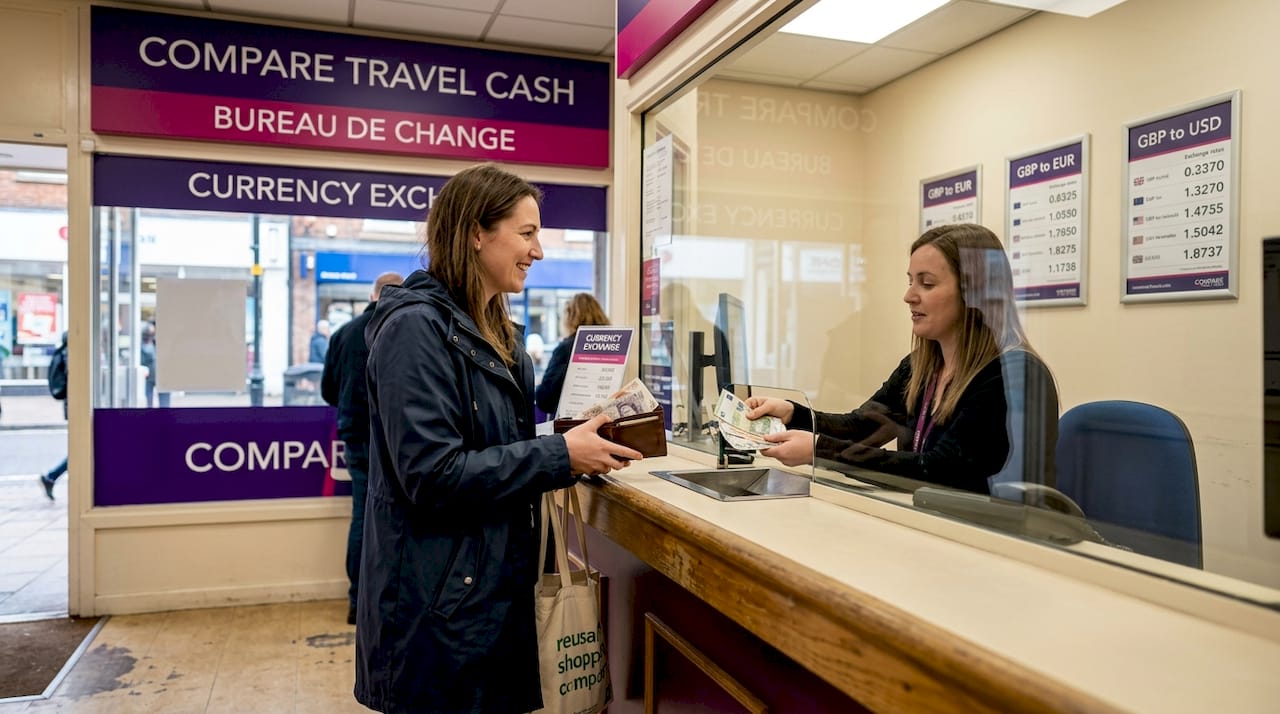
The Post Office Travel Money Card supports 23 currencies commonly needed by UK travellers, which gives a useful snapshot of what’s actually in demand. According to the UK Travel Money Market Report, Euros and US Dollars are the currencies most commonly pre-loaded on prepaid travel cards used by British holidaymakers.
Here’s a quick overview of the most relevant currencies and typical use cases:
| Currency | Code | Common destinations |
|---|---|---|
| Euro | EUR | France, Spain, Italy, Greece, Portugal, Germany |
| US Dollar | USD | USA, Caribbean, parts of Central America |
| Australian Dollar | AUD | Australia |
| Canadian Dollar | CAD | Canada |
| Swiss Franc | CHF | Switzerland |
| Japanese Yen | JPY | Japan |
| Thai Baht | THB | Thailand |
| South African Rand | ZAR | South Africa |
| UAE Dirham | AED | Dubai and the UAE |
| Turkish Lira | TRY | Turkey |
For most travellers, the Euro and USD are non-negotiable starting points. But if you’re heading further afield, currencies like the Japanese Yen, Thai Baht, or UAE Dirham require extra planning. Japan, for example, is a heavily cash-reliant society, and you’ll genuinely struggle without Yen in hand for transport, vending machines, and local eateries.
Some important points to note for less-common currencies:
- TRY (Turkish Lira): Highly volatile. Locking in a rate in advance is strongly advisable.
- JPY (Japanese Yen): Cash is king in Japan, so carry more than you think you’ll need.
- THB (Thai Baht): Widely accepted at resorts and city centres, but rural areas are cash-only.
- ZAR (South African Rand): ATMs are widely available in cities, but fees can be significant.
Checking out travel card options that support multiple currencies before you book is one of the best steps you can take early in the planning process.
Comparing exchange rates: Where can you get the best deals?
Knowing which currencies are in demand, the next step is comparing where to find the best exchange rates and how to avoid common pitfalls.
The gap between the best and worst exchange rates on offer in the UK can be surprisingly large. Airport bureaux de change are notorious for applying the highest markups, often 10 to 15% above the mid-market rate (the “real” rate you see on Google). High street banks are only marginally better. Online specialist providers, comparison platforms, and prepaid card operators consistently offer tighter spreads and better value.
Here’s how several common exchange options compare in terms of typical value for money:
| Provider type | Rate quality | Fees | Best for |
|---|---|---|---|
| Airport bureau de change | Poor | Often high | Emergency purchases only |
| High street bank | Below average | Fixed fees common | Convenient but costly |
| Online currency specialist | Good to excellent | Low or none | Planning ahead |
| Prepaid travel card | Good | Varies by card | Multi-currency trips |
| App-based bank (e.g. Wise, Starling) | Excellent | Minimal | Frequent travellers |
Follow these steps to compare effectively and avoid overpaying:
- Start with an online comparison tool. Look up live rates across multiple providers. Even a small difference per pound matters on larger sums.
- Check for loading fees and service charges. Some providers advertise attractive headline rates but add fees on top. Read the small print before ordering.
- Look at weekend rates specifically. Some digital card providers, including Revolut, apply weekend markups on volatile currencies because the interbank market is closed. This catches many travellers off guard.
- Lock in rates for volatile currencies early. For destinations like Turkey, where the Lira can shift dramatically within days, a prepaid card that lets you fix today’s rate can save a notable sum.
- Students and budget travellers should consider app-based banks. Providers like Starling and Wise offer fee-free ATM withdrawals up to a monthly limit, which makes a real difference for those travelling on a tight budget.
A useful tip for frequent travellers: signing up to rate alerts lets you track when your target currency hits a favourable rate, rather than guessing when to buy. Understanding how exchange rates shift can also have a notable impact on travel budgets, particularly for longer trips or those involving multiple currencies.
Key statistic: The difference between exchanging £500 at an airport bureau and an online specialist can easily reach £40 to £60 depending on the currency. That’s a meal out or a day’s spending, simply lost to an avoidable markup.
Cash, cards, or both? Pros, cons and best mix for different travellers
Exchange rates are only part of the equation. How you spend money abroad matters too.
The ongoing debate about cash versus cards is not one you need to take a firm side on. The evidence clearly supports using both, and the right balance depends largely on your travel style and destination.
The case for cash:
- Universally accepted, including at markets, street food stalls, taxis, and smaller guesthouses.
- No risk of card machine failures or connectivity issues in remote areas.
- Helps with budgeting: you can physically see what you’re spending.
- Essential for tipping in many cultures, particularly in the USA, Caribbean, and Southeast Asia.
The case for cards:
- Consumer protection applies to larger transactions (under Section 75 of the Consumer Credit Act for credit cards).
- Traceable in case of dispute or fraud.
- Avoids the risk of carrying large amounts of cash, which can be lost or stolen.
- Fee-free card options mean you can often access near-perfect exchange rates.
The recommended mix:
“Cash remains dominant for small transactions, with 78% usage particularly among older groups, but cards are preferred for larger spends due to protection. Carrying 20 to 25% of expected spend as cash abroad, complemented by fee-free cards, gives travellers both flexibility and security.” — UK Travel Money Market Report
For families, a prepaid card loaded with the destination currency, paired with a modest cash reserve, tends to work best. It limits exposure to theft while keeping daily spending flexible. Solo travellers may prefer a heavier reliance on app-based banking with a small cash backup. Students, especially those on extended trips, benefit most from fee-free digital accounts combined with carefully timed cash top-ups.
Pro Tip: Notify your bank and card providers before you travel. Unexplained foreign transactions can trigger fraud alerts that freeze your card at the worst possible moment.
Situational tips: Making your currencies and cards go further
Let’s wrap up with some expert, situation-specific tips that can stretch your travel budget even further.
Getting the basics right is important, but the real savings often come from the details. Here’s a practical checklist tailored to different scenarios:
- Avoid airport exchange desks for anything beyond an emergency. If you’ve forgotten to order currency in advance, withdraw the minimum you need at the airport and exchange the rest online once you’ve arrived and settled in.
- Watch the calendar when using digital cards. As highlighted in the Travel Money Guide from PocketWise, some providers like Revolut apply a weekend markup because interbank markets are closed on Saturdays and Sundays. Make larger exchanges on weekdays where possible.
- Lock volatile rates ahead of time. If you’re heading to Turkey, buy your Lira on a prepaid card before departure. The Lira has lost significant value in recent years, and a favourable rate locked weeks early can protect a meaningful portion of your budget.
- Students: choose app-based banks with free ATM limits. Accounts from providers like Starling, Monzo, or Wise offer fee-free withdrawals up to a set monthly limit. Use those limits wisely by withdrawing slightly larger amounts less frequently, rather than small amounts daily.
- Check cashback and buyback deals. If you return with unspent currency, some providers offer competitive buyback rates. Factor this into your calculation when choosing where to buy in the first place.
- Carry two payment methods at all times. Never travel with only one card or only cash. Equipment fails, cards get blocked, and cash gets lost. A backup is not optional.
For travellers managing multiple currencies across one trip, exploring multi-currency product reviews can help you identify the most efficient single solution rather than juggling several separate products.
Pro Tip: When withdrawing from an ATM abroad, always choose to be charged in the local currency rather than pounds sterling. Opting to pay in GBP triggers “dynamic currency conversion,” which lets the foreign bank apply its own, almost always worse, exchange rate.
Our perspective: Why currency flexibility beats hunting the absolute best rate
With strategies explained, here’s our take on the real money-saving approach for UK travellers.
There’s a certain type of traveller who spends hours refreshing exchange rate pages, trying to time the perfect moment to buy. We understand the instinct, but in reality, the time and stress involved rarely justify the small gains on offer. Currency markets move constantly and unpredictably, and even professional traders rarely get their timing exactly right.
What actually makes a difference is building flexibility into your travel money plan. Carry a mix of cash and cards. Use a prepaid card for currencies you can lock in, and a fee-free debit or digital card for day-to-day spending. Set up a rate alert for your target currency so you can buy when the market moves in your favour, rather than obsessing daily.
Understanding the types of exchange rates available to you, from the mid-market rate to retail buy rates and prepaid card rates, gives you a realistic sense of what “good” actually looks like. Once you know that, you stop chasing perfection and start making smart, practical decisions instead.
The travellers who consistently spend less on currency exchange are not those who found the magic moment to buy. They’re the ones who planned ahead, compared their options, and built in enough flexibility to avoid the worst rates whenever they came along.
Compare travel money and currency options for your next trip
Now that you’re equipped with knowledge, see how easy it is to put these tips into action.
CompareTravelCash.co.uk gives you the tools to make confident, well-informed decisions about your travel money. Whether you’re looking to get the best deal on Euros before a European city break or researching multi-currency card options for a longer adventure, the platform brings everything together in one place.
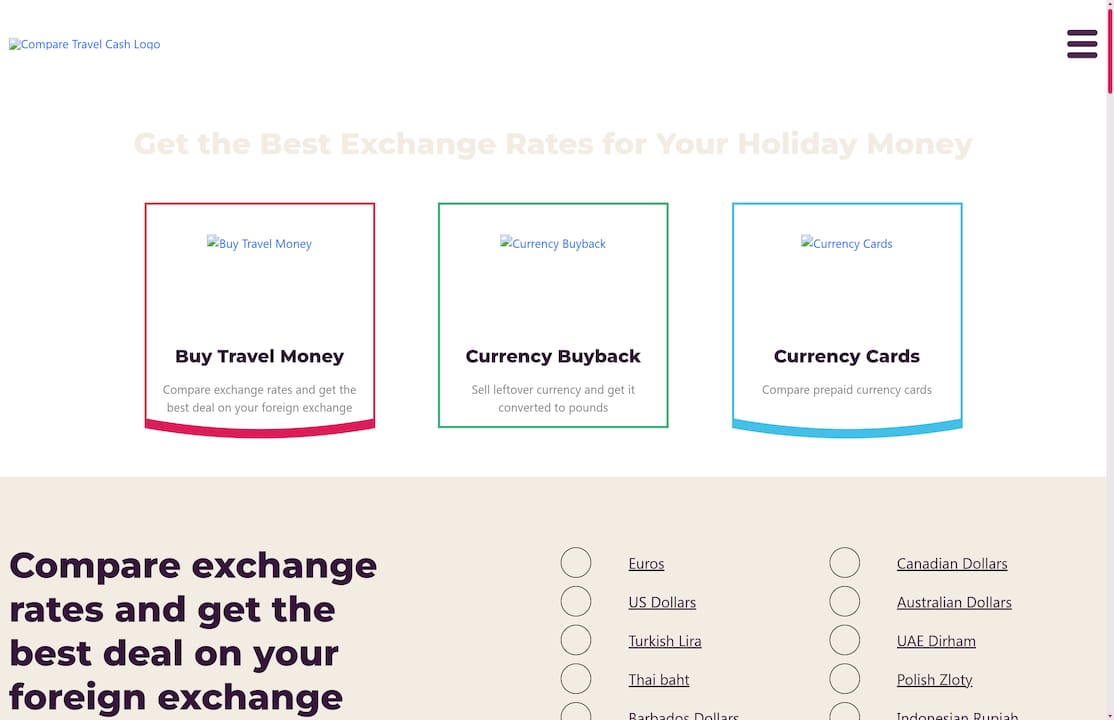
You can compare money rates from a wide range of UK providers instantly, check out multi-currency cards that let you load and lock rates for multiple destinations, and even review currency buyback rates so you know exactly what happens to leftover cash when you return. Comparing before you commit takes minutes and can save you a meaningful amount, every single trip.
Frequently asked questions
Which currencies are used most by UK travellers?
The most commonly used are the Euro, US Dollar, British Pound, Australian Dollar, and Canadian Dollar, with the Post Office Travel Money Card supporting 23 currencies popular among UK holidaymakers, including JPY, THB, AED, and TRY.
Is it better to use cash or cards when travelling?
A mix is best: use cards for larger payments where consumer protection applies, and carry cash (roughly 20 to 25% of your budget) for smaller purchases, with 78% of cash usage concentrated in small, everyday transactions.
How can I avoid bad exchange rates on holiday money?
Compare rates online before you travel, avoid airport bureaux de change, lock in rates for volatile currencies like the Turkish Lira, and watch out for weekend markups applied by some digital card providers such as Revolut.
Should students use digital or prepaid cards abroad?
Students benefit most from app-based banks that offer no-fee ATM withdrawals up to a monthly limit, combined with prepaid cards loaded with the local currency for destinations where locking in a rate makes sense.